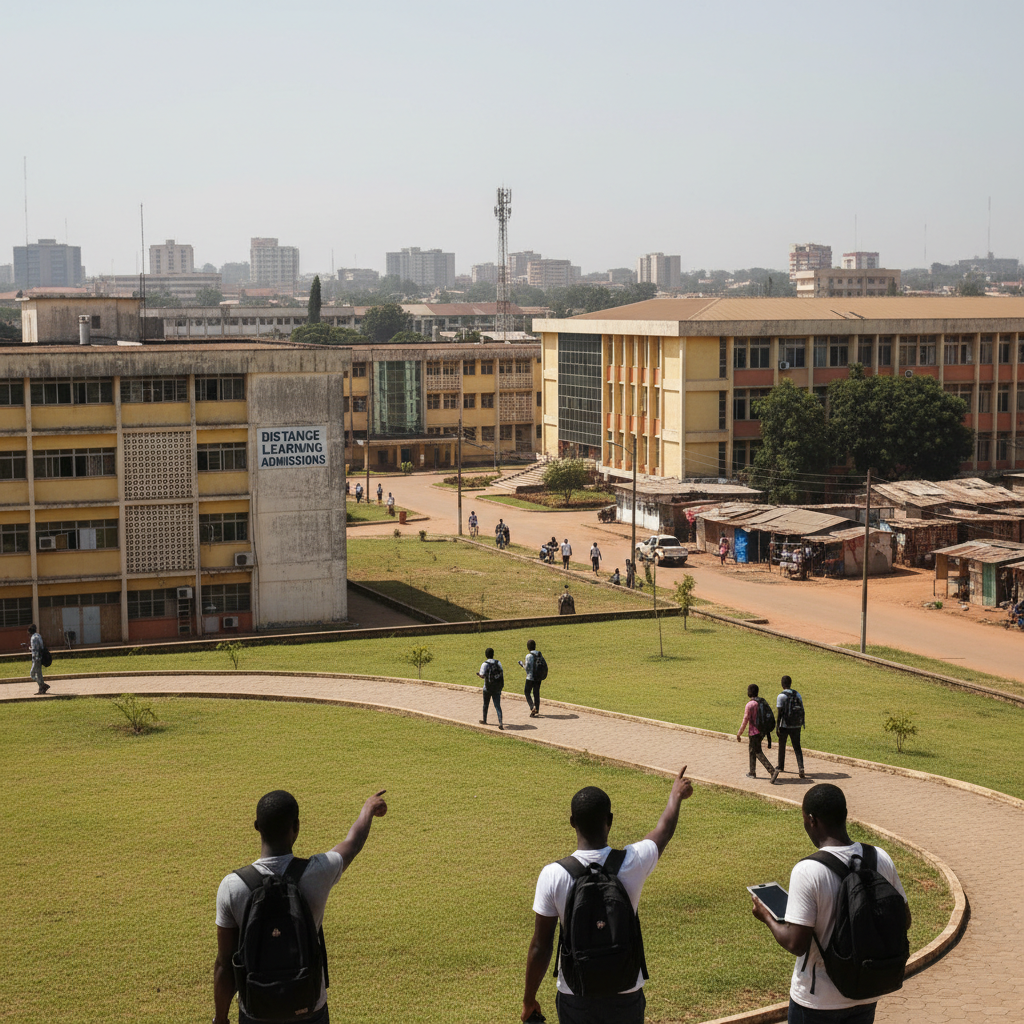
Ghana's Parliamentary Select Committee on Education has expressed significant worry regarding the high fees charged by universities for distance education programs. These fees often surpass the cost of regular, in-person university courses. The committee is urging the Ghana Tertiary Education Commission (GTEC) to investigate these pricing discrepancies.
Dr. Fred Kyei Asamoah, a committee member, highlighted the issue during a visit to the GTEC Headquarters in Accra. He stated that the expensive nature of distance learning programs deviates from international norms. In many other countries, distance education is typically more affordable than traditional programs. This trend suggests that universities might be taking undue advantage of individuals seeking flexible higher education opportunities.
This concern emerges within a broader context of tertiary education challenges in Ghana. The country faces pressure to expand access to higher learning while maintaining quality and affordability. University fees, both for regular and distance programs, directly impact household budgets and national human capital development. Previous discussions have also focused on the relevance of university programs to the job market, a point also raised by the committee.
Professor Ahmed Jinapor, Director-General of GTEC, clarified that GTEC does not currently regulate distance education fees. He explained that these programs are often considered private arrangements with faculty members working part-time. Professor Jinapor stated, "GTEC does not regulate the fees because those fees are not regulated by Parliament." He noted that GTEC's primary role is to ensure program quality and adequate infrastructure.
The committee's intervention signals a potential push for legislative changes to empower GTEC to regulate distance learning fees. If Parliament grants GTEC this authority, it could lead to fee caps and a re-evaluation of pricing structures for distance education. This would directly impact universities offering such programs and thousands of students across Ghana. Market forces currently dictate these fees, with some students paying over GHS 20,000 for certain programs. Greater oversight could make higher education more accessible and affordable, aligning with national development goals.
Beyond fees, Dr. Yaw Osei Adutwum, Ranking Member of the committee, raised concerns about the job market relevance of some university programs. He advised GTEC to seek funding for program ranking to guide students and society. This ranking would highlight which programs genuinely prepare graduates for employment. Professor Jinapor acknowledged this, noting that many graduates struggle to find jobs due to a "cut and paste" approach to program development by universities.
The committee's visit to GTEC represents a critical step in parliamentary oversight of the education sector. It aims to gather insights for future policy decisions and legislative interventions. Ensuring affordable and relevant tertiary education is crucial for Ghana's economic progress and workforce development. The coming months may see increased legislative scrutiny on university fee structures and program offerings.