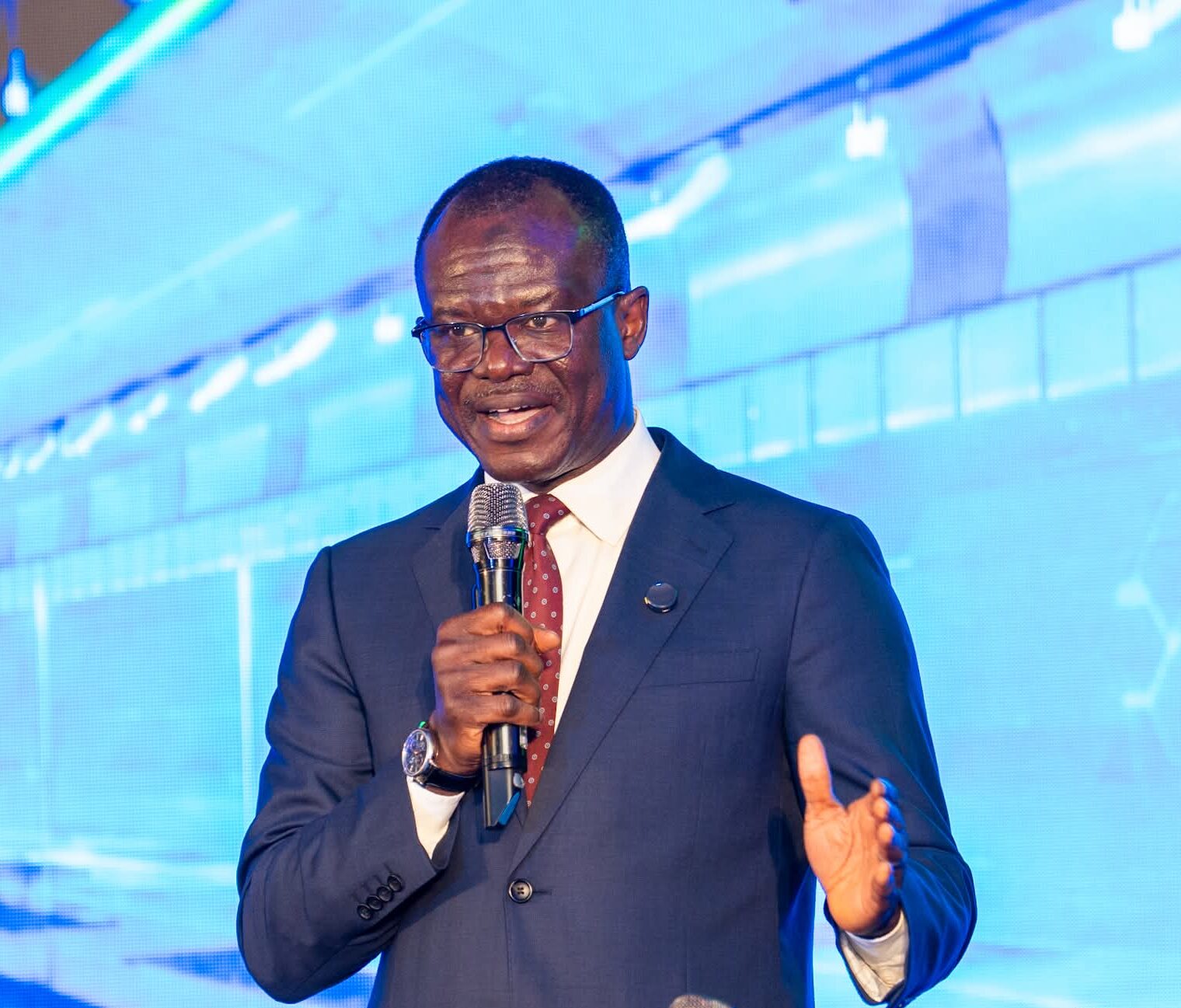
Ghana's Bank of Ghana (BoG) has warned that artificial intelligence (AI) cannot overcome poor data quality in economic policymaking. Dr. Zakari Mumuni, the First Deputy Governor, stated this at the 4th Annual Statistics and Data Science Conference in Tamale on August 26, 2026. He emphasized that "garbage in, garbage out" remains true, even with advanced AI systems.
Dr. Mumuni, speaking on behalf of Governor Dr. Johnson Pandit Asiama, highlighted that policymakers' main challenge is converting abundant data into timely and reliable intelligence. He stressed that good data must be well-collected, trustworthy, and relevant. This is crucial for the central bank's mandate, which relies on accurate statistics to inform its decisions.
This warning comes as Ghana, like many nations, increasingly explores digital transformation and data-driven governance. The BoG's stance underscores a broader national effort to improve data infrastructure and analytical capabilities. Reliable data is fundamental for accurate economic forecasts, inflation targeting, and effective resource allocation across various sectors.
Dr. Mumuni stated, "The greatest challenge facing policymakers today is no longer a shortage of data. It is turning an abundance of data into timely, reliable and actionable intelligence." He added that "No model rescues a forecast built on a thin foundation." This highlights the central bank's commitment to evidence-based policy, which requires robust data inputs.
The implications are significant for Ghana's economic stability and development trajectory. Decision-makers must invest in data quality, collection, and validation processes. Without this, even sophisticated AI tools risk producing flawed insights, potentially leading to incorrect policy choices. Markets and investors will closely watch how Ghana's institutions respond to this call for improved data integrity.
Dr. Mumuni stressed that data integrity is even more critical in the age of AI. He explained that AI can process enormous data volumes but cannot transform bad data into good data. If definitions are unclear or classifications inconsistent, even advanced models will produce misleading results. He warned, "Bad data in, very sophisticated garbage out."
He emphasized that sampling, validation, metadata, and revision remain fundamental to data quality. Data must also stay relevant through exercises like rebasing the Gross Domestic Product (GDP) and Consumer Price Index (CPI). New data sources from payment systems, tax, and telecom records must be governed responsibly.
Turning data into intelligence requires statistical modelling, faster intelligence through technology, and human judgment. The Bank of Ghana's Inflation Targeting framework uses econometric techniques and its Quarterly Projection Model. This framework helps answer critical questions: where the economy is, where it is heading, what could alter its trajectory, and what policy response is appropriate.
The BoG has already deployed AI and Big Data to develop its in-house electronic inflation nowcasting methodology, called e-Inflation. It also uses machine-learning models to complement standard GDP forecasting and text-mining analytics. Technology helps close the gap between an event happening and a policymaker knowing about it, improving response times.
However, Dr. Mumuni cautioned that technology must strengthen, not replace, human judgment. He recalled Governor Asiama's February 2025 pledge to adopt a more proactive approach using advanced analytics. He emphasized, "Technology can strengthen our intelligence, but it does not remove the need for human judgment. After all: People make policy."
Ultimately, the value of statistics lies in its impact, which demands collaboration. Stronger links between research and policy are essential to turn knowledge into action. Dr. Mumuni noted that no single discipline owns this future, requiring statisticians, economists, data scientists, technologists, and policymakers to work together.
He called for closer collaboration between universities and institutions like the Bank of Ghana and the Ghana Statistical Service. Research should not only be about policy but conducted with policy in mind. He outlined three priorities for the conference attendees: invest in data quality, embrace high-frequency and alternative data while maintaining statistical standards, and strengthen the bridge between research and practical policy questions.
Dr. Mumuni concluded, "The future we should want is not one in which machines make our decisions for us. It is one in which better data guides better policymaking." This vision promotes a future where research translates into practice, evidence informs policy, and innovation creates meaningful impact. The conference, hosted in Tamale, brought together government, academia, industry, and international partners to discuss data innovations.