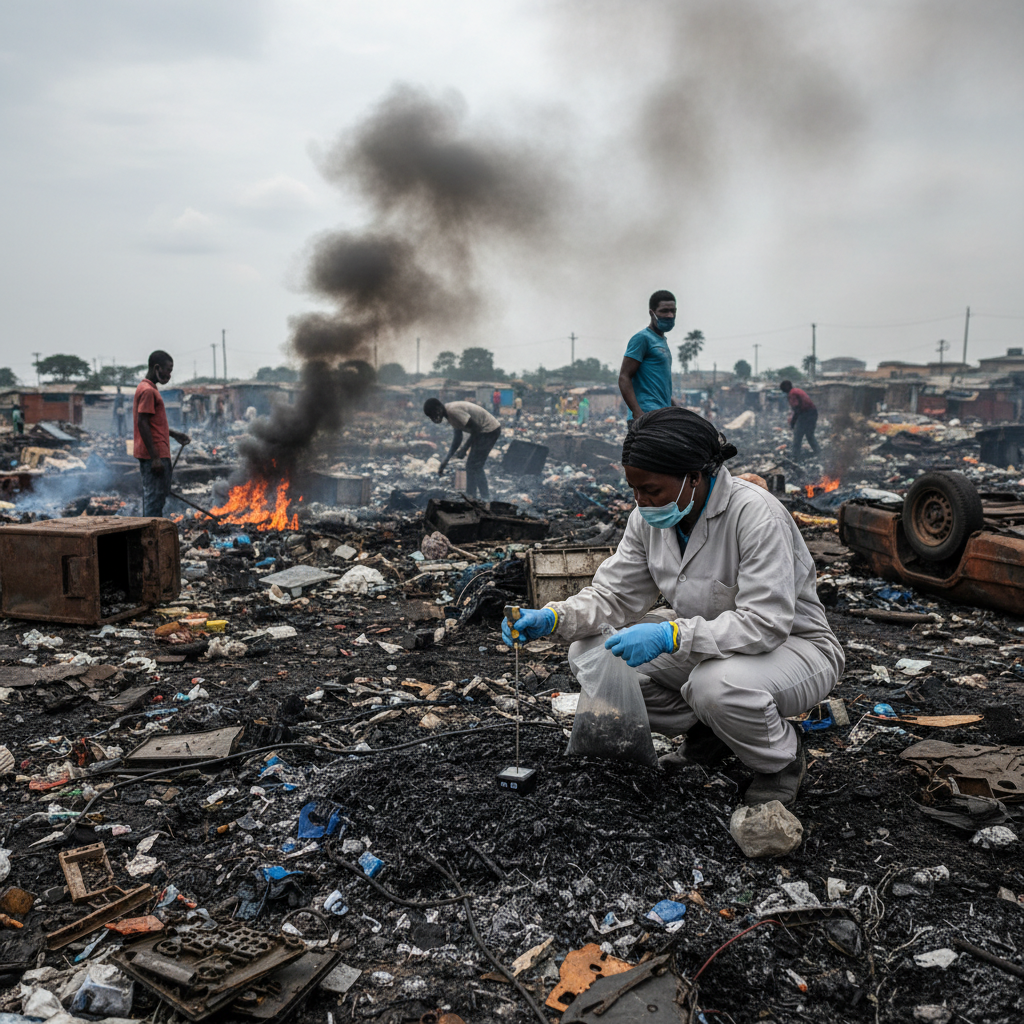
Soil samples from Agbogbloshie, Accra, show dangerous levels of heavy metal contamination. A new environmental study found mercury at 0.53 milligrams per kilogram (mg/kg). Cadmium was detected at 1.2 mg/kg in these samples.
The mercury level exceeds the recommended threshold of 0.2 mg/kg. Cadmium has reached the limit set by international environmental standards. These findings raise fresh concerns about public health and environmental safety in the area.
Agbogbloshie is known as one of Africa’s largest electronic waste processing sites. Discarded computers and mobile phones are dismantled there. Burning these electronics recovers valuable metals, but releases toxic substances. This practice has led to consistent findings of elevated toxic levels in soil, air, and water bodies.
Researchers examined soil samples from areas heavily affected by electronic waste. They used laboratory testing to measure the presence of toxic metals. Earlier studies also showed accumulation of lead, mercury, cadmium, copper, and zinc. These pollutants spread beyond recycling sites, impacting nearby communities.
Experts warn of serious health risks from prolonged exposure to heavy metals. Mercury can damage the nervous system, kidneys, and brain. Cadmium affects the lungs, kidneys, and bones. Children are particularly vulnerable to these contaminants' harmful effects.
The latest findings renew calls for stronger environmental monitoring. Authorities must also implement proper waste management practices. Comprehensive clean-up efforts are essential for the area. Environmental advocates urge intensified public education and enforcement of regulations. These actions aim to reduce pollution from electronic waste. Continued monitoring of soil quality is crucial to protect residents. It will also prevent further environmental degradation in this heavily polluted urban area. The economic implications for local communities dependent on informal recycling are significant. Public health costs associated with treating heavy metal poisoning could strain Ghana's healthcare system.