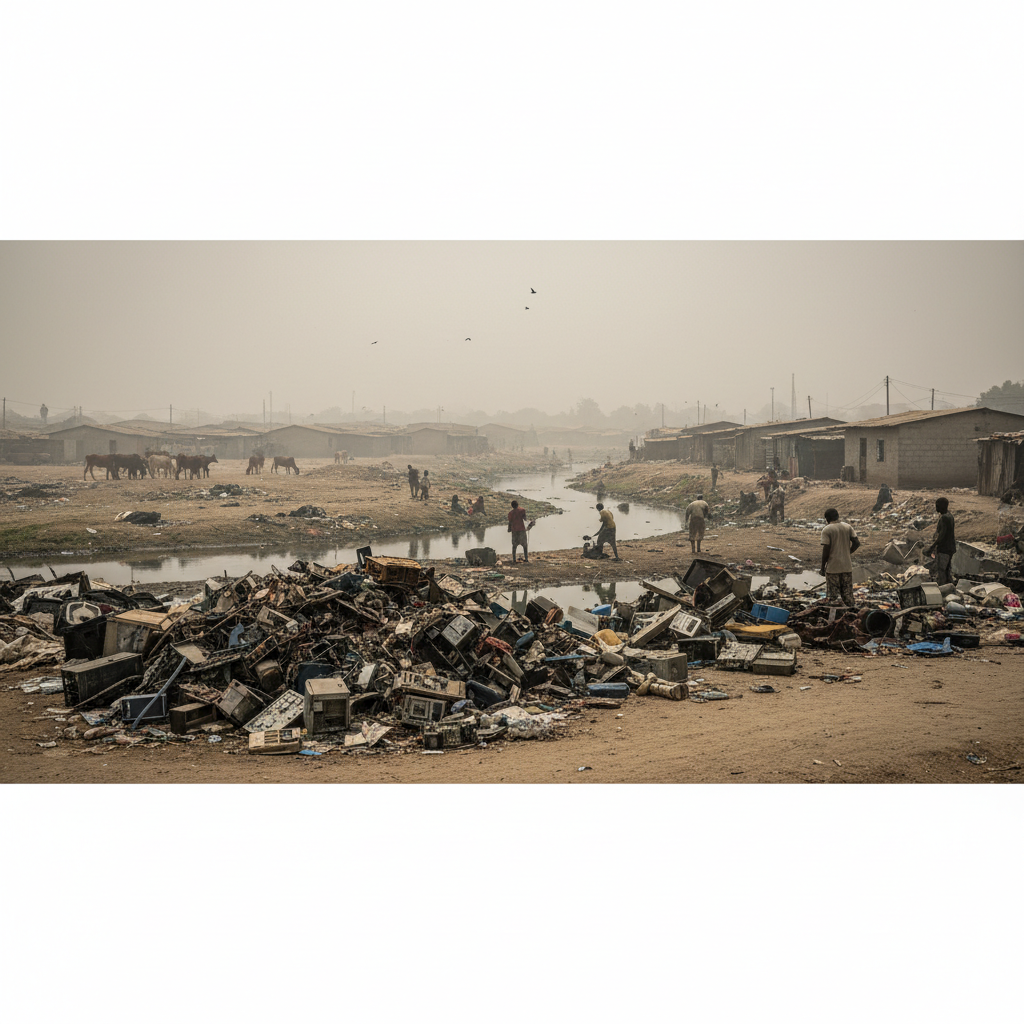
Agbogbloshie's long-standing electronic waste pollution now extends into Ghana's food chain, with studies revealing contamination in human breast milk and livestock milk. Researchers from the University of Ghana, supported by UNICEF findings, have uncovered this widespread issue impacting surrounding communities. The informal burning of e-waste releases heavy metals like lead and mercury, which then enter the environment and food supplies.
This contamination stems from decades of informal e-waste recycling at Agbogbloshie. The site is a major hub where discarded electronics are burned to recover valuable metals. This process releases hazardous pollutants, including lead, mercury, cadmium, arsenic, and persistent organic pollutants. These toxic substances are now found in food consumed by mothers, infants, and other residents.
The issue fits into Ghana's broader environmental and public health challenges. Agbogbloshie has been recognized as one of West Africa's primary informal electronic waste recycling centres. The uncontrolled burning practices there have long been a source of significant air and soil pollution. This new evidence highlights a direct threat to food security and the health of vulnerable populations, particularly children, in urban areas.
Dr. John Arko-Mensah, Senior Lecturer at the University of Ghana, confirmed the severity of the situation. He stated, "When materials are burned at Agbogbloshie, the chemicals in the emissions have many health implications." Earlier studies cited by Dr. Arko-Mensah detected elevated levels of heavy metals in breast milk samples from women near Agbogbloshie. He warned that prolonged exposure to these chemicals is linked to neurological disorders, cardiovascular disease, and certain cancers.
The health implications for children are particularly dire. UNICEF's Health Specialist, Dr. Rev. Emmanuel Kyeremanteng, emphasized that children's developing bodies absorb toxic metals more readily than adults. Exposure to lead and other hazardous substances can lead to neurological damage, developmental disorders, and long-term organ damage. More than 1.7 million children in Ghana are estimated to have blood lead levels above 5 micrograms per decilitre, a globally recognized public health concern.
Beyond human health, livestock also show signs of contamination. Dr. Arko-Mensah reported that milk samples from cattle grazing near Agbogbloshie contained high concentrations of heavy metals. Further assessments revealed persistent organic pollutants, such as dioxins and polychlorinated biphenyls (PCBs), known to cause cancer and reproductive problems. Dr. Arko-Mensah called for stronger environmental regulations and continued scientific monitoring.
The direct human cost is observed among traders at Agbogbloshie Market. Rama Alhasan, a 32-year-old pepper seller, described working for years near e-waste burning. She has a persistent cough, headaches, and her two-year-old child frequently suffers from respiratory illnesses. Rebecca Tetteh Narh, 23, who inherited her mother's pepper business, is aware of the smoke but believes a nose mask offers protection.
These findings underscore the urgent need for intervention regarding informal e-waste practices. Decision-makers must prioritize stricter enforcement of environmental laws and public health campaigns. The continued monitoring of food supply chains and the health of affected communities is critical. Improved e-waste management strategies and public awareness will be crucial next steps to protect Ghana's population.