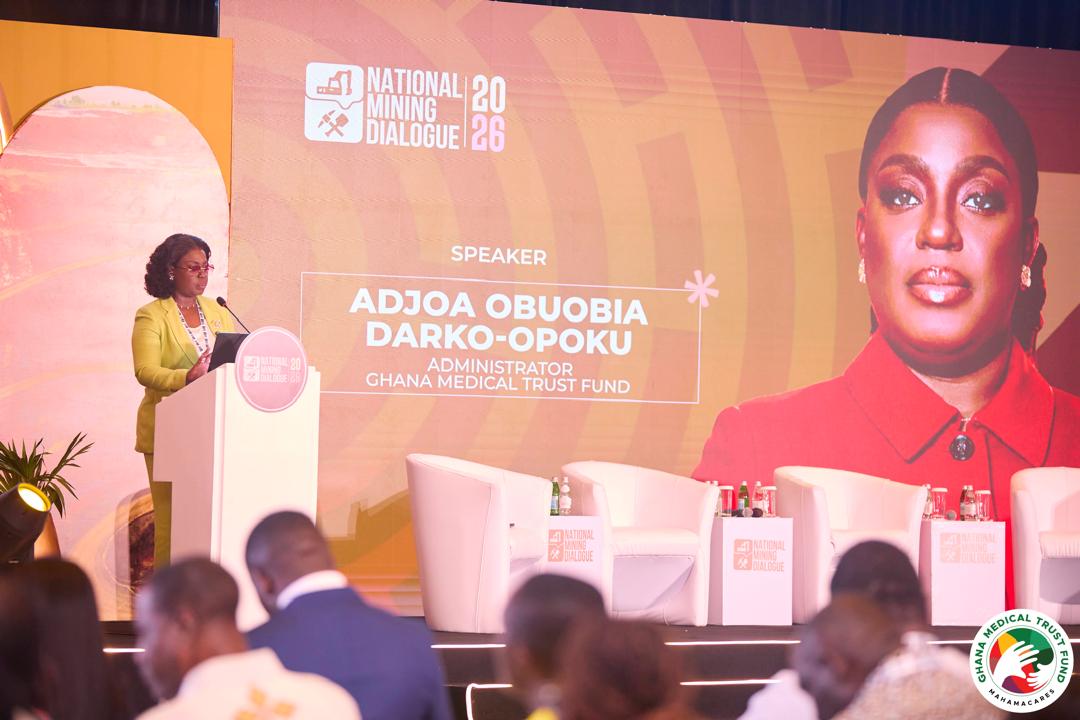
The Ghana Medical Trust Fund (GMTF) has directly challenged Ghana's mining industry to significantly increase its investment in the nation's healthcare infrastructure. Adjoa Obuobia Darko-Opoku, Administrator of the GMTF, stated that mining companies must redefine their social responsibility beyond traditional projects like roads and schools. She emphasized that the true wealth of Ghana lies in its people, not solely in its mineral resources.
This call to action came during the National Mining Dialogue 2026 in Accra, where Ms. Darko-Opoku addressed mining executives, investors, and policymakers. She highlighted that a failing national health system ultimately harms every industry, including mining. Her message underscored that wealth does not provide immunity from Ghana's healthcare challenges, stressing that in a medical emergency, local infrastructure is paramount.
The Administrator's remarks fit into a broader national conversation about equitable development and corporate contributions to public welfare. Ghana's economy relies heavily on its extractive sector, which often generates substantial profits. However, the benefits of these operations do not always translate into improved living standards for local communities. This challenge aligns with ongoing efforts to ensure that resource extraction contributes more directly to human capital development and sustainable growth across the country.
Ms. Darko-Opoku presented stark findings from a nationwide needs assessment conducted by the GMTF across major hospitals. The assessment revealed that Ghana's public tertiary health sector possesses only two functional MRI machines for advanced diagnostics. It also found just five mammogram machines for breast cancer screening and two public radiotherapy machines for cancer treatment nationwide. The entire northern sector of Ghana, serving millions, has only two practicing cardiologists with inadequate equipment.
These critical shortages mean that families often face financial ruin when seeking treatment for serious illnesses. Patients must travel long distances, incurring significant costs, only to find necessary equipment unavailable. Ms. Darko-Opoku urged mining companies to move beyond basic Corporate Social Responsibility (CSR) projects. She argued that a true social license means companies actively contribute to longer, healthier lives for people in their host communities. This goes beyond mere tolerance of their presence.
The GMTF Administrator invited mining companies to collaborate with the fund to identify specific healthcare needs in their operational areas. She proposed co-investing in urgently required medical equipment and sponsoring the training of medical specialists. Building robust healthcare infrastructure capable of serving communities long after mining operations cease was also a key recommendation. This approach aims to create a lasting legacy of health and well-being.
Ms. Darko-Opoku concluded by reminding corporate leaders that their ultimate legacy would be measured in lives saved, not just in gold extracted or quarterly profits. She asserted that Ghana's greatest resource is its people, not the gold beneath the soil. This powerful statement calls for a fundamental shift in how the mining sector views its role in national development. It encourages a legacy built on health, dignity, and survival for all Ghanaians.