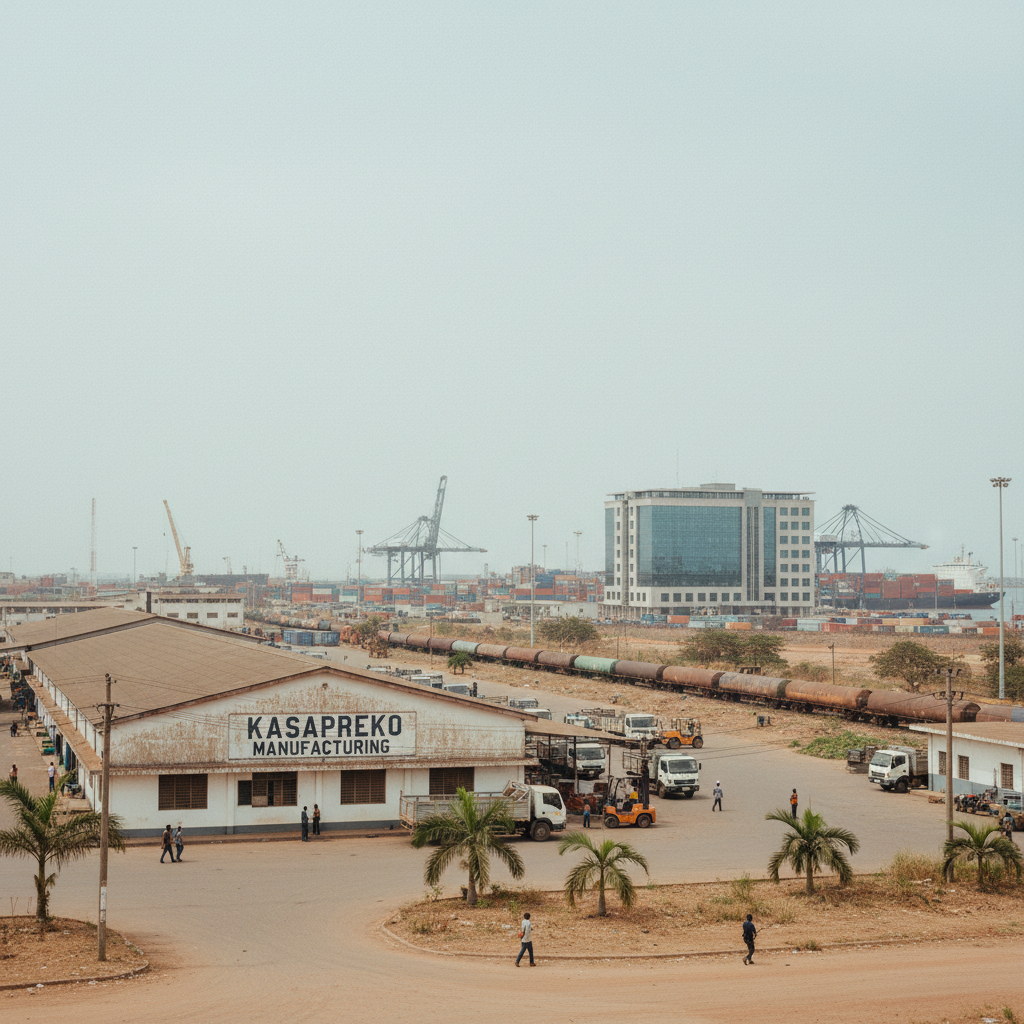
In 2025, Kasapreko PLC achieved an impressive turnover of GHS 3.5 billion. This figure significantly exceeded Unilever Ghana's GHS 1.03 billion revenue for the same period. The Ghanaian beverage giant also surpassed Guinness Ghana and FanMilk in revenue, establishing itself as the largest listed fast-moving consumer goods (FMCG) company in Ghana.
This remarkable performance challenges a long-standing notion that multinational companies would inevitably dominate Ghana's consumer goods sector. For many years, foreign-owned businesses were thought to possess insurmountable advantages in capital, technology, branding, and global experience. Kasapreko's success proves that indigenous Ghanaian companies can not only compete but also lead in a highly competitive market.
Kasapreko's rise demonstrates the critical importance of nurturing local enterprises within Ghana's broader economic strategy. While foreign investment injects capital and expertise, indigenous businesses like Kasapreko are more likely to reinvest profits locally. Their success fosters job creation, strengthens supply chains, and contributes directly to Ghana's economic self-reliance. This aligns with the strategies of developed nations like Japan and South Korea, which built powerful local champions alongside welcoming foreign investment.
Kwame Sowu Jnr., writing for JoyNews Online, noted this significant shift. He highlighted that Kasapreko's journey is not merely a corporate success story. It serves as proof that Ghanaian entrepreneurs can build companies capable of outperforming some of the world's most recognised brands. This success underscores that local ownership can be a strategic advantage, not a limitation.
The implications of Kasapreko's achievement are far-reaching for Ghana's economic future. It signals a need for policymakers to create an environment where more indigenous businesses can thrive and become sector leaders. This involves providing access to finance, ensuring efficient regulation, developing reliable infrastructure, and offering robust export support. Decisions by investors and the market will likely focus on identifying the next potential Ghanaian champions. Such progress will encourage further local investment and strengthen Ghana's economic sovereignty.
This success story should serve as a blueprint for other emerging Ghanaian businesses across various sectors. These sectors include engineering, pharmaceuticals, agribusiness, and renewable energy. The goal is not to replace multinational companies but to ensure that Ghanaian-owned companies also have every opportunity to grow into continental and global champions. Kasapreko's journey illustrates what is achievable with strategic vision and local dedication.