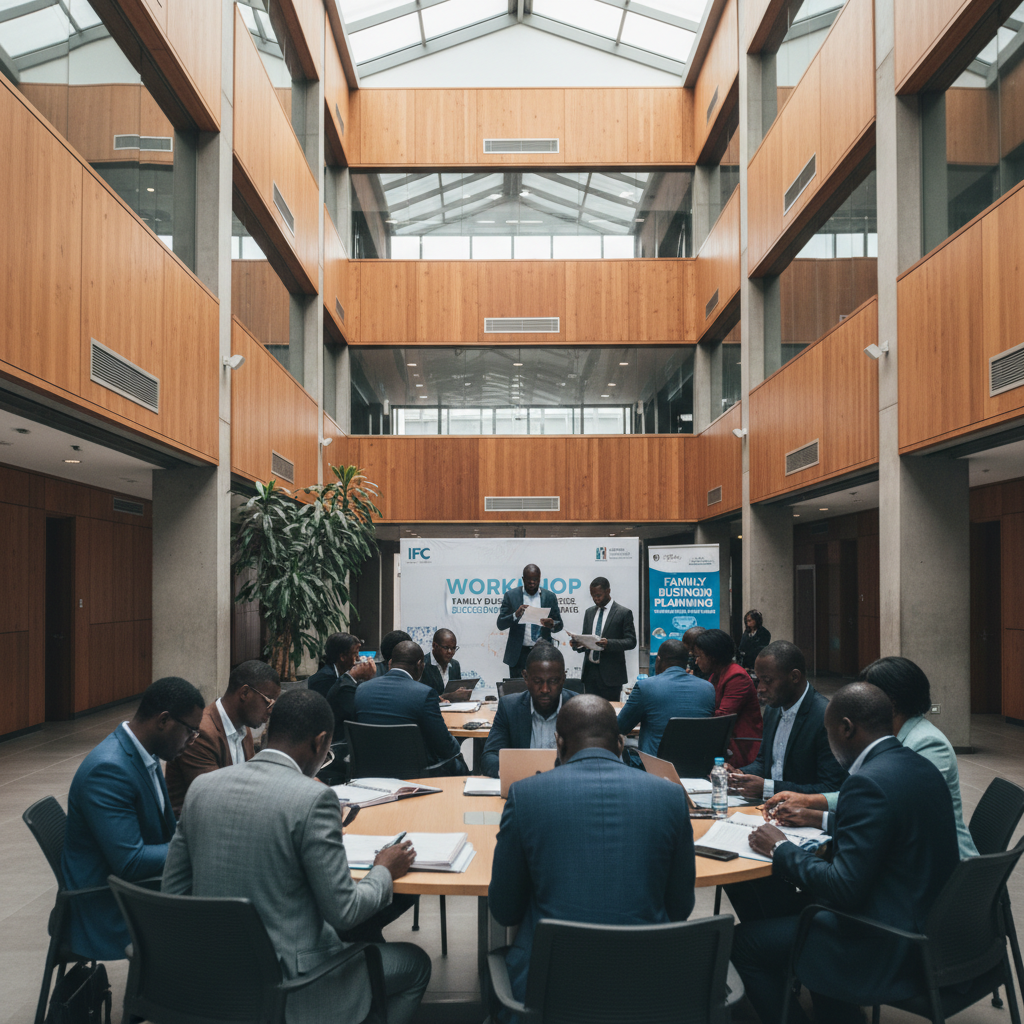
The International Finance Corporation (IFC) hosted its fourth Family Governance Workshop in Accra, aiming to strengthen succession planning and ensure business continuity for family-owned enterprises. This initiative directly addresses the critical need for robust governance frameworks within these businesses, which are vital for Ghana's economic stability.
The workshop gathered family business leaders and governance experts to explore practical strategies for leadership transition, ownership succession, and managing wealth. These discussions are paramount because many family businesses in Africa struggle with shifting leadership and preparing future generations to sustain their operations. The workshop equipped participants with tools to maintain long-term business continuity, ensuring their valuable contribution to the economy persists.
Family businesses are foundational to Ghana's private-sector development and job creation. They often face significant hurdles in transitioning leadership and preparing the next generation to manage enterprises built over decades. This workshop fits into a broader trend of efforts to professionalize and enhance the resilience of Ghana's private sector. Strengthening these businesses directly supports economic growth and stability across the nation.
Moez Miaoui, the IFC ESG Advisory Lead for Africa, stated that succession remains a significant challenge for family businesses worldwide. He noted, “In any family business setting, succession is the most critical challenge that the family would face and the business would face.” Mr. Miaoui highlighted that long tenures of founders, limited successor preparation, and founders' difficulty in relinquishing control often complicate these transitions and threaten business continuity.
The workshop emphasized the importance of establishing clear governance mechanisms within both the family and the business. This includes creating family constitutions, forming family councils, and setting up structured communication platforms. These structures help separate family issues like education and philanthropy from daily business operations. Kyle Kelhofer, IFC Senior Country Manager for Ghana and Liberia, reaffirmed the IFC's commitment to supporting private sector development. He stated that effective governance and well-planned succession processes help businesses survive beyond their founders.
Implementing sound corporate governance principles across family, ownership, and business structures can strengthen business resilience. These frameworks also support successful transitions across generations. Yewande Giwa, IFC Senior Country Officer, underscored the vital role family businesses play in fostering economic growth and creating employment opportunities. She noted, “When you are a family business, you are not just thinking about your bottom line. You are thinking about how do I influence my community, how do I make a difference, how do I create more jobs?”
The IFC's Family Governance Workshop is part of a larger effort to boost governance and long-term sustainability for family-owned businesses and small to medium-sized enterprises (SMEs) in Ghana. This program receives backing from the Swiss State Secretariat for Economic Affairs (SECO). SECO has partnered with the IFC in Ghana for over ten years to promote private sector development and enhance the business environment. This ongoing support aims to build a more resilient and dynamic private sector for Ghana's future.