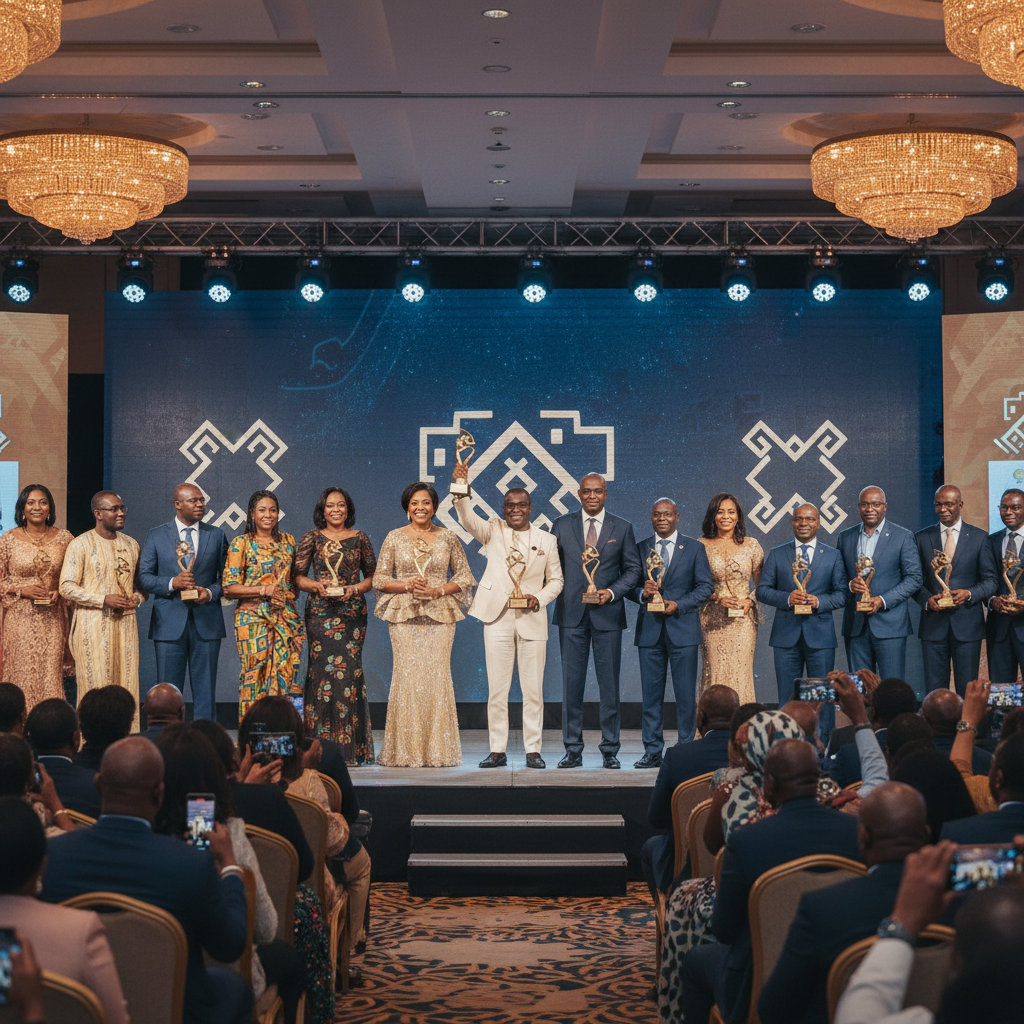
Ghana Leadership Awards International (GLAI) awarded key figures at its 18th ceremony on June 5, 2026, in Accra. The event recognized Ghanaians whose leadership and achievements inspire future generations and advance national development. Distinguished honourees included His Royal Majesty Nii Tackie Teiko Tsuru II, the Ga Mantse, and Professor Elsie Effah Kaufmann, known for the National Science and Maths Quiz.
Dr. Akwasi Agyeman, Editor of Adom Brands at Multimedia Group Limited, also received recognition. Celebrated musician and entrepreneur Akosua Agyapong was among the honored individuals. The awards highlight significant contributions across various sectors, impacting Ghana's social and intellectual landscape.
These awards underscore a broader national effort to celebrate and leverage local talent. Such recognition fosters a culture of excellence and inspires youth to pursue impactful careers. This initiative aligns with Ghana's long-term vision of human capital development, crucial for sustained economic growth beyond resource extraction. Prior awards and national recognition schemes have similarly aimed to motivate public service and innovation, reinforcing a commitment to building a competitive workforce.
Rev. Prof. Emmanuel Yao Nash, Founder and CEO of Ghana Leadership Awards International, addressed the participants. He stated that GLAI is proud to celebrate visionary leaders shaping society and contributing to development. Rev. Prof. Nash also noted GLAI's significant international recognition, reaching over 286 million people globally through its platforms.
The awards and associated leadership summit will continue to create opportunities for diplomacy, investment, and strategic partnerships. This exposure can attract foreign direct investment and improve Ghana's standing on the global stage. Decision-makers and businesses will watch for potential collaborations stemming from these high-profile connections, potentially boosting economic activity.
Dr. Akwasi Agyeman earned recognition for his distinguished journalism career spanning over two decades. His recent Doctor of Philosophy (PhD) in African Studies (History and Politics) from the University of Ghana also played a role. The organisers highlighted his academic achievement as an inspiration for many journalists seeking higher education. This pursuit helps raise professional standards within Ghana's media industry.
As part of the event, Dr. Agyeman delivered a presentation titled 'The Role of the Media in Climate Change: The Ghanaian Media Experience'. He emphasized that climate change is a present-day reality affecting livelihoods and economies. Floods, droughts, and coastal erosion are increasingly evident in Ghana, highlighting an urgent need for public discourse. The media bridges scientific knowledge and the public, informing and educating citizens on environmental issues.
Dr. Agyeman explained that journalists translate complex scientific information into understandable content. News reports, documentaries, and digital platforms achieve this, as supported by media scholar Denis McQuail's theories. Public awareness creation is a key media contribution, with many Ghanaians learning about climate change through traditional and online platforms. Media coverage of issues like illegal mining and deforestation has drawn national attention to environmental concerns.
He further highlighted the media's educational role through expert interviews and environmental programs. These efforts help citizens understand climate change causes and consequences, encouraging environmentally responsible behaviour. The media's watchdog function, through investigative journalism, exposes environmental degradation. This promotes accountability and encourages enforcement of environmental regulations.
Dr. Agyeman observed that radio remains an effective tool for climate communication in Ghana due to its extensive reach. Community radio stations play a vital role, delivering climate-related information in local languages. Digital and social media platforms have further expanded opportunities for climate communication and public mobilization. This broad media engagement is crucial for national adaptation and mitigation strategies against climate change.