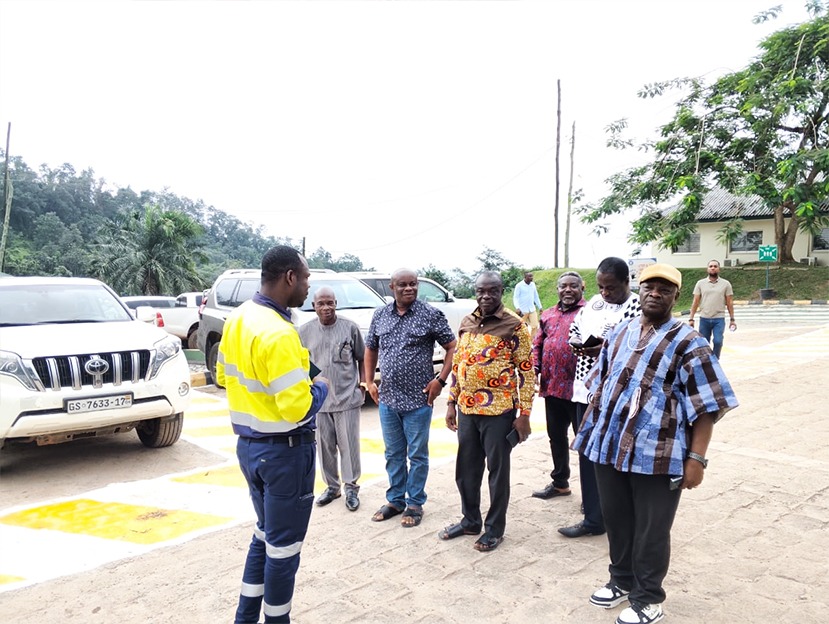
Ten titled chiefs from the Apinto Divisional Stool, the traditional owners of the land where Gold Fields Ghana operates, inspected the mining company's operational sites on Wednesday. This visit precedes a crucial decision on whether to support the renewal of Gold Fields' mining lease, which is set to expire in April 2027.
The inspection, while part of ongoing engagements between the company and traditional authorities, has gained heightened importance due to current discussions surrounding the renewal of Gold Fields' mineral rights. The chiefs will deliberate on their observations and announce their position at a press conference on Friday. Their verdict is expected to significantly influence the government's consideration of the company's application for a lease extension.
This development is central to Ghana's economic narrative, particularly concerning the mining sector's contribution to national revenue and local development. Gold mining remains a cornerstone of Ghana's economy, attracting substantial foreign direct investment and providing numerous employment opportunities. The Apinto Divisional Stool's decision highlights the critical role traditional authorities play in resource governance and local stakeholder engagement, a trend increasingly observed across Ghana's extractive industries.
Nana Adarkwa Bediako, Gyasehene of the Apinto Divisional Stool, stated that the traditional leaders sought to assess the operations firsthand before making a decision. "There's been a lot of discussion about whether the mining lease should be extended or not. Before we can make any decision, we need to see things for ourselves," he explained. He noted that the chiefs gained a better appreciation of the concession's scale, which covers about 20,000 hectares, with approximately 4,000 hectares already exhausted.
Michael Akafia, Executive Vice President of Gold Fields Ghana and immediate past President of the Ghana Chamber of Mines, described the visit as an important stakeholder engagement. He acknowledged that the timing naturally drew public attention due to the ongoing debate over the company's mineral rights. Mr. Akafia emphasized that these engagements are continuous, as traditional authorities are key stakeholders and custodians of surface rights.
The inspection allowed Gold Fields to account for its stewardship in community development, environmental management, and local investment. Mr. Akafia highlighted the company's pioneering role in establishing a community foundation for dedicated capital investment in host communities. He affirmed Gold Fields' commitment to unlocking greater value for stakeholders as part of its environmental, social, and governance (ESG) commitments.
Mr. Akafia disclosed that Gold Fields consistently engages traditional authorities and other stakeholders through the Tarkwa Community Consultative Committee, which meets quarterly. He expressed confidence in a positive outcome, stating, "If we assess this based on the impact we have made in our host communities, we have no doubt that the verdict will support the extension of our lease." He believes the extension will enable the company to unlock even greater benefits for communities and all stakeholders.
The Apinto Divisional Stool's position carries considerable weight in discussions regarding Gold Fields Ghana's future operations. As customary owners of the land, their decision will be closely watched by the government, the company, host communities, and the broader mining industry. A positive recommendation could pave the way for continued investment and economic activity in the region, while a negative one could trigger significant re-evaluation of the company's future in Ghana.