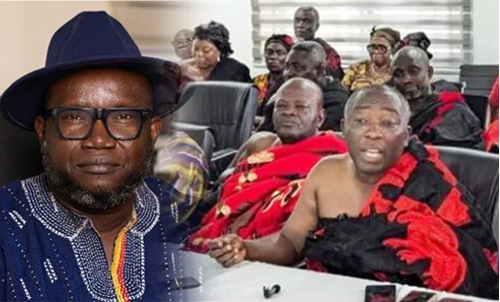
The Apinto Traditional Council is demanding a fundamental change to the ownership structure of gold mining in the Tarkwa-Apinto area. They propose a government-owned mining operation that grants host communities a direct equity stake. This move sets the stage for a significant dispute with the Ghana Chamber of Mines and Gold Fields Ghana Limited over the Tarkwa Mine lease renewal.
The Council's disagreement extends beyond increased corporate social responsibility projects. It centers on ownership, control, and the distribution of mineral wealth. They accuse multinational mining companies of failing to deliver development commensurate with decades of mineral extraction. This includes claims of over 4,000 hectares of degraded land impacting livelihoods.
This dispute highlights broader national discussions about resource nationalism and equitable wealth distribution in Ghana's mining sector. Ghana is a major gold producer, recently becoming the world's sixth-largest. However, host communities often feel marginalized despite the vast mineral wealth extracted from their lands. This situation reflects a recurring tension between investor interests and community demands for greater benefits.
Dr. Nana Adarkwa Bediako III, Gyasehene of the Apinto Divisional Council, stated their proposal is founded on “history, justice, equity and sustainable development.” He emphasized that communities whose ancestral lands sustain mining deserve to be genuine partners. The Council plans to submit its proposal to the Government, Parliament, and the Minerals Commission.
The Chamber of Mines CEO, Ing. Dr. Kenneth Ashigbey, urged the chiefs to pursue dialogue and negotiate stronger benefits. He acknowledged the legitimacy of community concerns about receiving an adequate share of mining wealth. Dr. Ashigbey stressed the importance of protecting the existing economic ecosystem built over decades of mining operations. He called for constructive engagement rather than confrontation.
The Apinto Shared Prosperity Proposal advocates for a model that includes the Government, investors, and host communities as partners. This aims to maximize the value of Ghana’s mineral resources for the country. It also seeks to address long-standing concerns about limited benefits accruing to mining communities. Dr. Bediako stated, “Our proposal to the Government of Ghana seeks not charity, but fairness.”
Dr. Ashigbey, speaking at a Gold Fields event, highlighted the company's contributions to Tarkwa's development. He cited investments in education, healthcare, and infrastructure through the Gold Fields Ghana Foundation. He urged traditional authorities to clearly articulate their expectations and hold companies accountable for their commitments. The Chamber represents companies involved in mineral exploration, production, and processing in Ghana.
The outcome of this dispute will significantly influence future mining lease renewals and community engagement models across Ghana. It could reshape how mining benefits are shared between investors, government, and local populations. Decision-makers will need to balance investor confidence with community demands for greater equity and environmental protection. This situation will be closely watched by other mining communities and industry stakeholders.