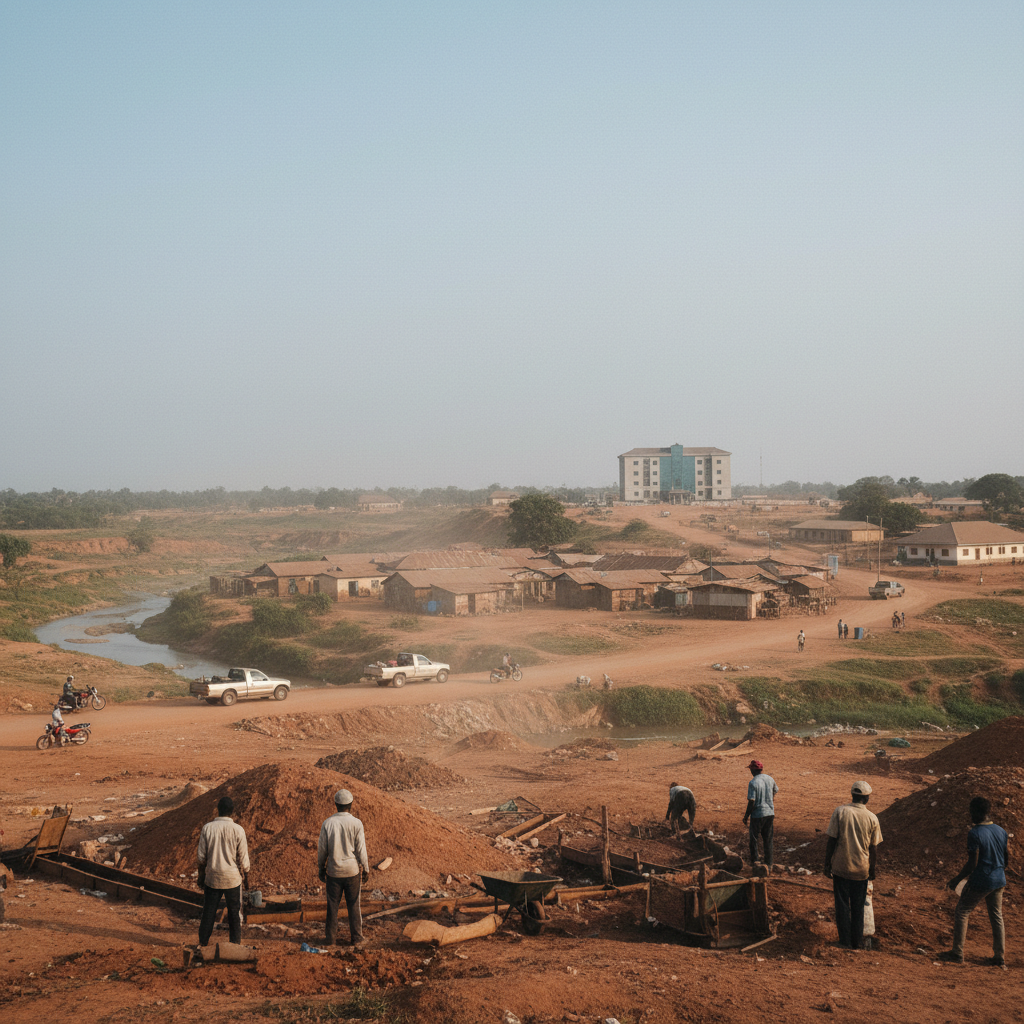
Ghana’s small-scale mining sector requires stronger deal structures, greater transparency, and enhanced governance practices to significantly improve its access to finance. Stanbic Bank’s Benjamin Nana Kwesi Mensah stated this during a panel discussion at the West African Mining and Power Exhibition (WAMPEX) 2026 in Accra.
Mr. Mensah, an Associate in Mining & Metals, Corporate and Investment Banking at Stanbic Bank, emphasized that the issue is not a lack of interest from financial institutions. Instead, the challenge lies in structuring transactions that allow financiers to properly assess risks and build confidence. The small-scale mining industry is vital for Ghana, contributing increasingly to national gold production, creating jobs, supporting local economies, and strengthening foreign exchange earnings. Despite its growing economic importance, many operators struggle to attract the investment needed for expansion and modernization.
This financing gap hinders a sector that is a major contributor to Ghana’s overall gold output, which forms a significant part of the nation's exports. Previous data indicates that small-scale mining accounts for a substantial portion of Ghana's gold production, often exceeding 30% of the total. Enhancing finance for this sector could further boost Ghana's foreign exchange reserves and economic stability. Poorly structured deals have historically prevented operators from accessing formal credit, pushing some towards informal, less regulated financing sources.
Mr. Mensah explained that financial institutions need clear evidence of legal compliance, transparent revenue streams, and enforceable commercial arrangements. He said financiers require visibility into where revenues originate and how production is tracked. Demonstrated legal ownership of mining concessions, reliable production records, and traceability of revenues significantly improve a miner’s chances of securing funding. “The real issue is whether the transaction has been structured in a way that allows financiers to properly assess risk and establish confidence in the business,” Mr. Mensah pointed out.
Strong leadership and management structures also play a crucial role. Investors significantly value the quality and credibility of management teams. Businesses with capable management, effective risk management, and accountability are more likely to attract capital. The growing importance of environmental, social, and governance (ESG) standards in financing decisions is also noteworthy. Lenders and investors increasingly prioritize responsible mining practices. Businesses integrating ESG considerations are better positioned to attract long-term funding, demonstrating commitment to sustainability and regulatory compliance.
The emphasis on improved deal structures and governance will likely spur efforts within the small-scale mining sector to formalize operations. Policy makers might consider initiatives to train small-scale miners in financial management and corporate governance. This could lead to a more regulated and financially resilient small-scale mining industry, attracting more formal investment. The financial market could respond with new products tailored to these enhanced structures, potentially increasing the flow of GHS into the sector.