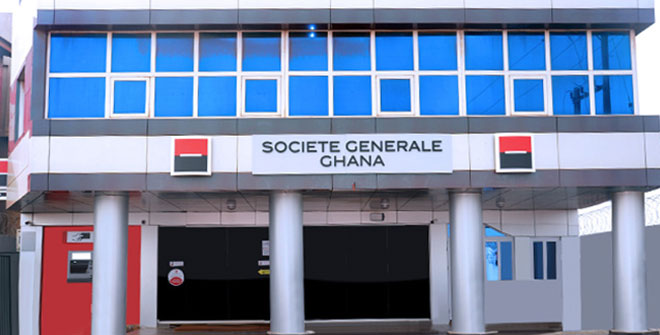
Societe Generale Ghana Plc recorded a substantial 47.69% decrease in its profit after tax for the first half of 2026, reaching GHS 128.21 million. This figure is down from GHS 245.08 million reported in the same period of 2025. The decline stems from weaker interest earnings and higher operating costs, overshadowing an expansion in customer loans and deposits.
The bank's profit before tax also saw a similar reduction, falling 47.50% to GHS 198.37 million from GHS 377.86 million. This indicates that while the bank's balance sheet grew, the benefits did not translate into stronger earnings. A significant contraction in interest income, combined with increased operational expenditures, offset the positive impact of loan and deposit growth.
This performance reflects broader challenges within Ghana's banking sector, where fluctuating interest rates and economic conditions can significantly impact profitability. Banks often navigate a delicate balance between expanding their loan portfolios and managing the costs associated with funding and operations. The current trend suggests a period where revenue generation is becoming more difficult for some financial institutions.
Interest income, a primary revenue source for commercial banks, decreased by 27.82% to GHS 526.22 million from GHS 729.07 million. While interest expenses also fell by 17.89% to GHS 93.36 million, this reduction was insufficient to compensate for the larger drop in income from loans and investments. Net interest income consequently declined by 29.66% to GHS 432.87 million.
The contraction in net interest income may be due to lower yields on government securities and a general reduction in market interest rates. This suggests a shift in asset allocation, moving away from fixed-income securities. Fee and commission income, however, rose by 10.13% to GHS 88.48 million, providing a partial cushion against the decline in core banking revenue. This improvement points to stronger earnings from transactional banking and other fee-generating activities.
Operating expenses increased by 8.98% to GHS 356.05 million from GHS 326.70 million. Personnel expenses rose by 7.90% to GHS 158.30 million, and depreciation and amortisation increased by 23.71% to GHS 75.18 million. This combination of lower operating income and higher costs significantly weakened the bank's operating efficiency.
Societe Generale Ghana's cost-to-income ratio, a key measure of efficiency, increased to approximately 65.33% from 49.17% a year earlier. This means the bank spent over GHS 0.65 to generate every GHS 1.00 of operating income, compared to GHS 0.49 previously. This higher ratio indicates that cost growth is outpacing revenue, demanding close attention from management.
Despite the profit decline, the bank expanded its balance sheet. Total assets grew by 12.57% to GHS 10.97 billion from GHS 9.75 billion. Loans and advances to customers increased by 21.80% to GHS 4.65 billion, indicating increased credit extension. Customer deposits also rose by 20.17% to GHS 6.84 billion, providing additional funding. This suggests a strategic shift towards customer lending and liquidity holdings over fixed-income securities.
Investors and market analysts will closely monitor Societe Generale Ghana's strategies to improve profitability and operating efficiency in the coming quarters. The bank's ability to manage its cost base and enhance interest income generation will be crucial for its future financial performance. The broader economic environment, including interest rate movements and credit demand, will also play a significant role.