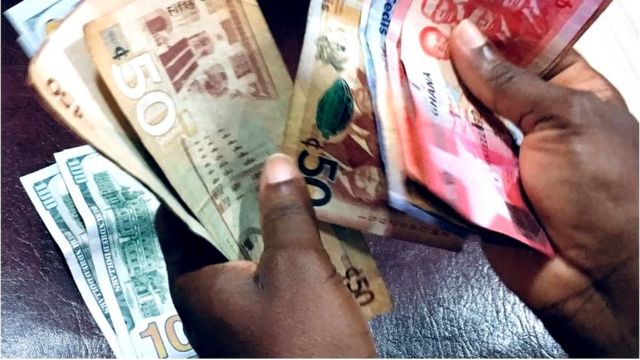
PwC Ghana expects the Ghana cedi to remain stable in the medium term, trading within its current range. This positive outlook follows the Bank of Ghana's injection of US$2.01 billion into the foreign exchange market in June 2026. The central bank's intervention aimed to meet increased dollar demand and support currency stability.
Vish Ashiagbor, PwC Ghana Country Senior Partner, confirmed this projection during the launch of the PwC Ghana 2026 Banking Survey in Accra. He stated that the Bank of Ghana's dollar support has helped stabilise the market. The firm does not foresee any major appreciation or depreciation of the cedi in the near future. This improved outlook is also linked to better dollar supply and strengthening economic conditions in Ghana.
Ghana's economy has faced challenges with sharp cedi depreciation in recent years, making currency stability a major concern for businesses and consumers. A stable cedi allows businesses to plan better, importers to estimate costs, and exporters to manage earnings more effectively. For households, it can ease pressure on prices of imported goods, fuel, and other exchange-rate-sensitive items. This stability aligns with broader efforts to improve Ghana's macroeconomic indicators like lower inflation and increased investor confidence.
Mr. Ashiagbor affirmed PwC's view, stating, “On the cedi, we have seen some pressure recently, but we have also seen the Bank of Ghana inject some dollars into the market to stabilise the currency.” He added that PwC believes the cedi will operate within its current band, with no major appreciation or depreciation expected. The Bank of Ghana's June intervention included US$1.20 billion through its Forex Intermediation Programme and US$811.00 million from its FX Intervention Programme.
The central bank's action and PwC's forecast suggest improved market confidence. PwC projects the cedi to gradually depreciate to between GHS 11.50 and GHS 13.00 to the US dollar by the end of the year. This indicates a controlled movement rather than sudden fluctuations. The Bank of Ghana is likely to maintain its current monetary policy stance at the next Monetary Policy Committee meeting, holding the policy rate steady. This cautious approach allows the central bank to monitor inflation, exchange rate stability, and overall economic conditions.
A stable currency helps banks manage foreign currency loans, trade finance, and customer demand for dollars, reducing exchange-rate-related risks. However, PwC has also cautioned banks to prepare for a changing operating environment as interest rates decline. This involves shifting from reliance on high interest rates to focusing on digital services, payments, and other fee-based businesses. Continued stability depends on effective management of dollar liquidity, sustained low inflation, improved exports, and robust investor confidence. Any sharp rise in dollar demand or worsening global conditions could, however, put renewed pressure on the cedi.