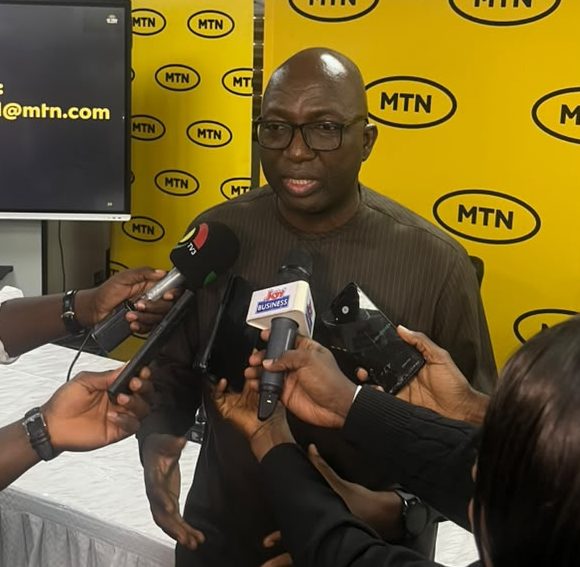
MobileMoney Fintech Limited is significantly increasing its push into digital lending and broader financial services. This expansion comes as Ghana's mobile money ecosystem moves beyond basic payment transactions. Chief Executive Officer Shaibu Haruna states that the sustainability of this growth depends on responsible borrowing, fraud prevention, and customer trust.
Mr. Haruna made these remarks at MTN Ghana’s “Facts Behind the Figures” event with the Ghana Stock Exchange in Accra on August 10. He highlighted product innovation as crucial for increasing the platform's usefulness for individuals and businesses. The company has introduced several loan services and launched campaigns to encourage timely loan repayments.
This strategy illustrates a key change in Ghana’s mobile money market. Mobile wallets initially focused on person-to-person transfers, deposits, withdrawals, and airtime purchases. Now, the underlying transaction infrastructure supports credit and other financial products. For MobileMoney, digital lending deepens customer engagement and diversifies revenue streams.
For consumers and small businesses, especially those outside traditional banking, digital credit provides faster access to short-term financing. It bypasses collateral, paperwork, and branch requirements often associated with conventional loans. This is particularly important for micro and small businesses whose cash flows are visible through digital transactions. They may lack the formal financial records typically required by banks. Transaction histories can offer lenders additional information to assess repayment behavior and creditworthiness.
However, easier access to credit also brings new risks. The speed of obtaining digital loans can encourage repeated borrowing. This increases the chance that customers use short-term credit for persistent expenses rather than temporary liquidity needs. Responsible borrowing is therefore a commercial issue as much as a consumer-protection concern. Rapid loan growth is unsustainable if repayment performance declines.
The long-term economics of digital lending rely on extending credit to customers who can service it. MobileMoney is linking loan access to repayment discipline. Better repayment behavior reduces credit losses. It also allows customers with strong records to access a wider range of financial services over time. This approach aims to build a sustainable lending model.
As the digital ecosystem becomes more complex, cybersecurity is becoming fundamental to protecting trust. Mr. Haruna emphasized that trust forms the very foundation of their service offering. Customers expect every transaction to be successful and secure. MobileMoney invests in ensuring this happens.
Trust has direct economic value for a fintech operator. While customers might tolerate inconvenience in other services, financial transactions demand accuracy, security, and predictability. A serious fraud incident or persistent security weakness can incur costs beyond immediate monetary losses. It can discourage transactions, weaken confidence in digital wallets, and make customers hesitant to adopt new services like lending or savings. MobileMoney is maintaining investment in its technology and security infrastructure. Mr. Haruna stated they ensure best-in-class technology and cybersecurity elements are built into their platform. They continuously invest in this area. The economics of cybersecurity are evolving. As more financial activity moves to digital platforms, security spending becomes a core investment. It is essential for preserving transaction volumes, customer confidence, and the integrity of the entire digital financial system.