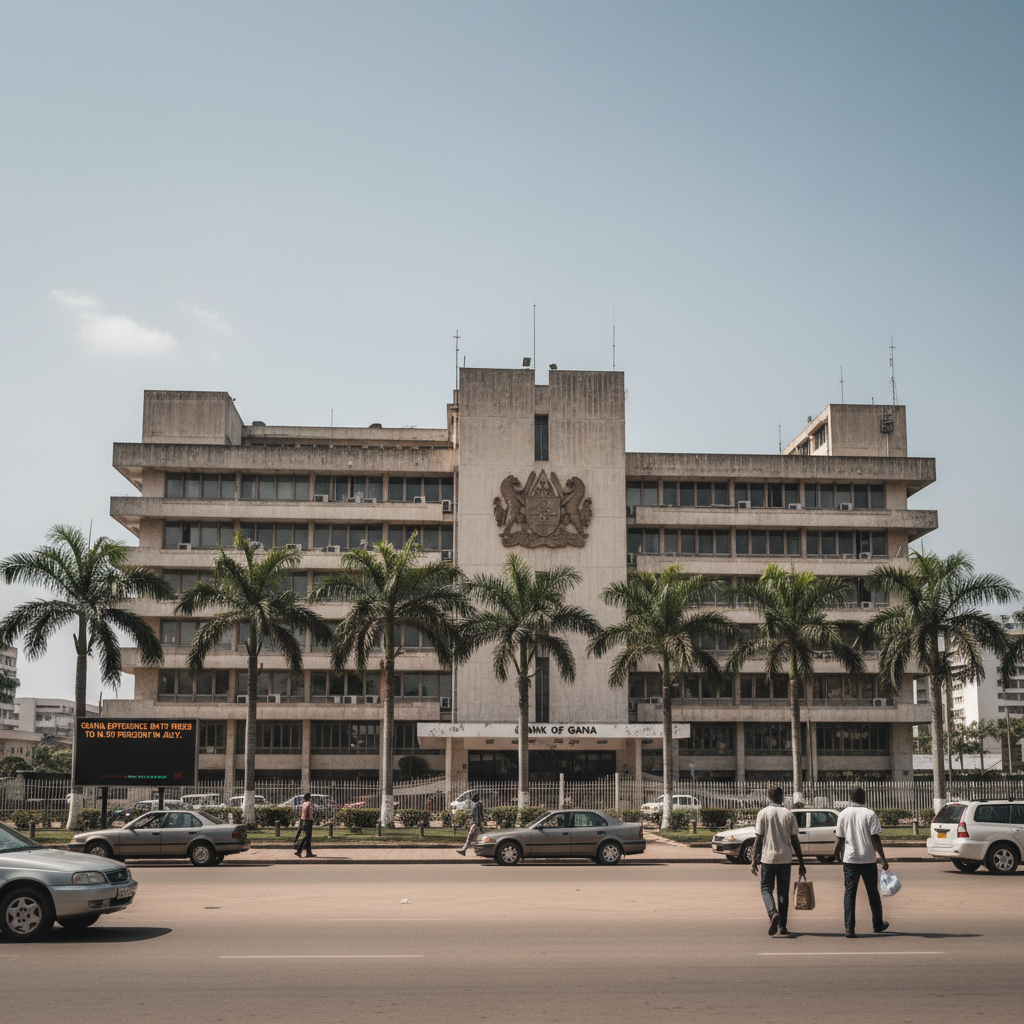
Ghana's Reference Rate increased to 10.59 percent in July. This rise signals a possible increase in lending rates across the country's financial sector.
The Bank of Ghana sets the Reference Rate monthly. It serves as a benchmark for commercial banks when determining interest rates on loans. An upward adjustment means that borrowing money will likely become more expensive for individuals and businesses.
This increase aligns with broader efforts to manage inflation and stabilize the economy. Higher lending rates can help curb excessive borrowing, potentially slowing down price increases. Ghana has faced persistent inflationary pressures, and the central bank often uses monetary policy tools to address these challenges. The average interbank lending rate, which banks charge each other for short-term loans, also plays a role in influencing the Reference Rate.
The Bank of Ghana report highlighted this increase in its latest update. Experts monitor these figures closely as they reflect the overall health and direction of the Ghanaian financial market. The continued focus on monetary tightening aims to bring inflation within the central bank's target range.
Businesses should prepare for potentially higher costs of capital for expansion or operational needs. Consumers may see increased repayments on variable-rate loans, like mortgages and personal loans. The market will carefully watch the Bank of Ghana's next steps and the resulting reactions from commercial banks regarding their lending policies. This development could slow aggregate demand, affecting various sectors of the economy.
Further adjustments to the Reference Rate will depend on economic indicators such as inflation, exchange rate stability, and global financial conditions. The government's fiscal policies and debt management strategies also influence the monetary climate. Sustained rate increases could impact investment decisions and overall economic growth projections for Ghana. All stakeholders will monitor these developments closely in the coming months.