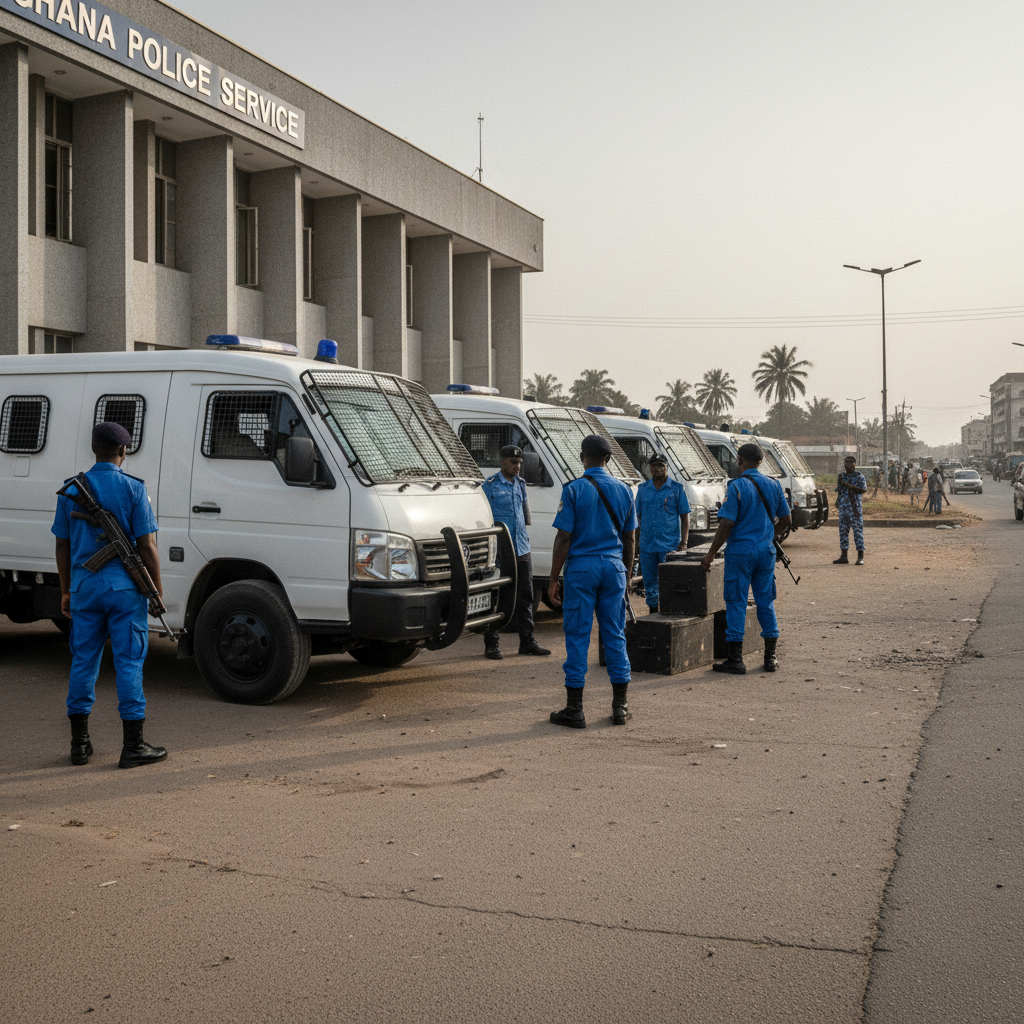
Ghana's Inspector-General of Police (IGP), Christian Tetteh Yohuno, confirmed the full implementation of new safety standards for armoured bullion vehicles (ABVs). This decisive action follows a series of five armed attacks on cash-in-transit (CIT) vehicles between 2021 and 2023, which tragically resulted in the deaths of three police officers. The IGP stated that all soft-skinned CIT vehicles have been removed from operations nationwide, significantly enhancing security for valuable cargo.
Mr. Yohuno made this crucial announcement at a sensitisation workshop in Accra, organised by the Ministry for the Interior. The event brought together key stakeholders, including private security organisations, CIT operators, and vehicle retrofitting companies. The workshop aimed to deepen understanding of the regulatory requirements governing ABVs, ensuring compliance across the industry. The IGP emphasised that cooperation from motorists is essential for the safe and efficient movement of these specialised vehicles, urging patience when encountering them on roads.
This enforcement marks a significant shift in Ghana's financial security landscape, directly impacting how billions of Ghana cedis are transported daily. The directive from the Minister for the Interior mandated financial institutions and entities involved in CIT businesses to cease using soft-skinned vehicles. This policy change reflects a broader national effort to safeguard financial assets and protect personnel involved in their transport. The increased demand for ABVs necessitates adherence to stringent standards for construction, security, and operational effectiveness.
The Ghana Police Service has established regional and district enforcement teams to ensure strict adherence to these new guidelines. These teams are tasked with enhanced inspection and monitoring of ABVs across the country. Mr. Yohuno highlighted that the guidelines cover various aspects, including vehicle importation and certification, operational safety protocols, crew training, and advanced vehicle tracking and surveillance systems. The Police also developed a standard operating procedure based on the ABV guidelines, complementing the Bank of Ghana’s existing framework.
The implications of these measures are far-reaching for Ghana's financial sector and public safety. Financial institutions must now ensure their CIT operations fully comply with the new standards, potentially incurring additional costs for upgrading or acquiring new armoured vehicles. The enhanced security is expected to deter criminal elements, reducing the risk of future attacks and protecting the substantial sums of money in transit. This move also reinforces public confidence in the safety of financial transactions and the security forces' ability to protect vital economic infrastructure.
Mr. Yohuno urged regional, divisional, and district commanders to actively support enforcement teams. Their role includes checking the legitimacy and certification of ABVs and reporting non-compliant stakeholders to the Police Headquarters or the Ministry of the Interior. Furthermore, retrofitting companies and importers must strictly adhere to prescribed technical and safety requirements. The quality and integrity of their work directly impact the safety of police officers, crew members, and the general public. The IGP reiterated that the safe and secure transportation of cash and other valuables is a shared responsibility, calling for collective cooperation among all stakeholders to maintain financial stability and security.