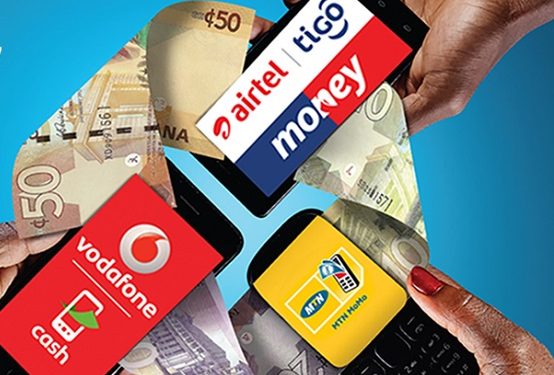
Ghana’s mobile money transaction value reached GHS 493.20 billion in April 2026, involving 967.00 million transactions. This massive scale signals a critical juncture for the country’s financial stability framework, according to a new analysis.
The significant growth in mobile money, which now includes 83.00 million registered accounts and 26.00 million active accounts, has transformed it into a core component of Ghana’s consumer economy. This expansion, while boosting financial inclusion, has created complex regulatory, technological, and economic risks that current supervisory approaches may not adequately address.
This development fits into Ghana’s broader economic narrative of rapid digital transformation and the challenge of adapting regulatory frameworks to keep pace with innovation. Mobile money’s evolution from a simple payment tool to a near-banking service highlights a growing gap between its operational reality and its regulatory classification. The Bank of Ghana’s data consistently show an upward trend in mobile money usage, underscoring its systemic importance to the national economy.
Banking and finance expert Dr. Richmond Atuahene argues that Ghana’s regulatory architecture has not kept pace with the power and complexity of the mobile money ecosystem. He highlights regulatory arbitrage as a central concern. Traditional banks face stringent prudential regulations, including capital adequacy and liquidity requirements, while mobile money operators are often regulated as payment service providers with lighter oversight. This disparity creates vulnerabilities.
The implications are substantial for Ghana’s financial sector and its users. The current model, where mobile network operators partner with licensed banks, creates blurred accountability. When issues arise, determining responsibility among the bank, the mobile operator, the agent, and the regulator becomes challenging. This governance problem can erode trust, especially as mobile money users may not fully understand the legal distinctions between various financial services.
Fraud data already reflect these vulnerabilities. The Bank of Ghana’s 2025 Fraud Report indicated a 48.00% increase in reported fraud cases across financial institutions, reaching 24,778 cases in 2025. The total value at risk rose from GHS 99.00 million to GHS 101.00 million, with payment service providers and digital platforms driving much of this increase. Cybersecurity data further reveal over 2,000 cybercrime incidents between January and September 2025, many linked to mobile money fraud, resulting in losses exceeding GHS 19.00 million.
Regulators face a difficult policy dilemma: balancing financial inclusion with security, fraud prevention, and consumer protection. The low-friction access that made mobile money successful also makes it attractive to fraudsters. Implementing stricter Know Your Customer (KYC) rules, while crucial for preventing financial crime, could inadvertently exclude vulnerable populations, particularly in rural areas. Therefore, a careful re-evaluation of the regulatory framework is essential to ensure both innovation and stability in Ghana’s rapidly expanding mobile money sector.