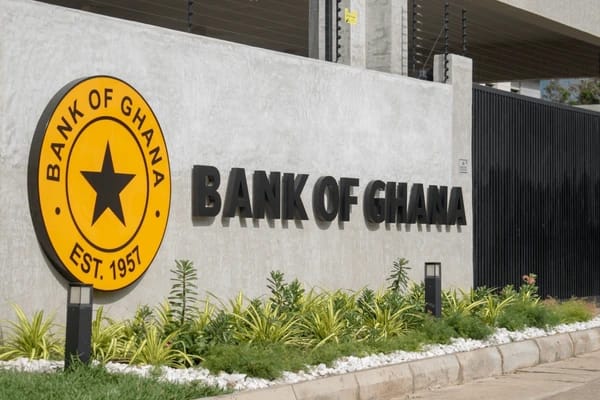
Ghana's average bank lending rates declined sharply from 27.0% in June 2025 to 15.6% in June 2026. The World Bank reported this significant reduction in its 10th Ghana Economic Update. This drop indicates improving macroeconomic conditions and effective monetary policy easing.
The decline in lending rates follows a sustained easing of monetary conditions by the Bank of Ghana. The central bank reduced its Monetary Policy Rate from 28% in April 2025 to 14% by March 2026. This cumulative reduction of 1,400 basis points created room for lower borrowing costs across the economy.
This development fits into Ghana's broader economic recovery narrative, marked by efforts to stabilize prices and reduce inflation. The Bank of Ghana's actions have aimed to consolidate price stability while allowing earlier policy easing to work through the financial system. The Ghana Reference Rate also fell from 23.8% to 10.0% over the same period, further supporting lower borrowing costs. These trends are crucial for stimulating investment and consumption, key drivers of economic growth.
The World Bank stated that these monetary policy changes are increasingly reaching businesses and households. Its report highlighted that "Monetary easing is increasingly transmitted to the real economy." This suggests that the central bank's efforts are having a tangible impact beyond just policy adjustments, directly affecting the cost of credit for everyday economic activities.
The continued transmission of lower lending rates to the real economy will be a key factor to watch. Businesses may find it easier to access credit for expansion, potentially boosting job creation and productivity. Households could also benefit from more affordable loans, supporting consumption and investment in areas like housing. Policymakers will monitor inflation trends to ensure that this monetary easing does not reignite price pressures, maintaining a delicate balance between growth and stability. The World Bank also increased Ghana's growth rate forecast for 2026 to 4.8%, signaling confidence in the country's economic trajectory.
The sustained monetary easing cycle, as described by the World Bank, reflects a deliberate strategy by the Bank of Ghana. Governor Dr. Johnson Pandit Asiama oversaw these policy adjustments, responding to a sharp decline in inflation. The central bank maintained the Monetary Policy Rate at 14% after March 2026 to consolidate price stability. This strategic pause allowed the earlier rate cuts to fully impact the economy. The reduction in the Ghana Reference Rate, a benchmark for commercial bank lending, from 23.8% to 10.0% further underscores the depth of this financial shift. This lower reference rate directly influences the interest rates commercial banks offer to their customers. The overall effect is a more favorable borrowing environment for both individuals and companies. This environment is essential for fostering economic activity and encouraging investment across various sectors. The World Bank's assessment confirms that these policy decisions are effectively filtering through the financial system. This positive trend is expected to support Ghana's economic expansion in the coming years. The focus now shifts to how businesses and consumers will leverage these improved credit conditions. Their response will ultimately determine the full impact on national economic growth and development.