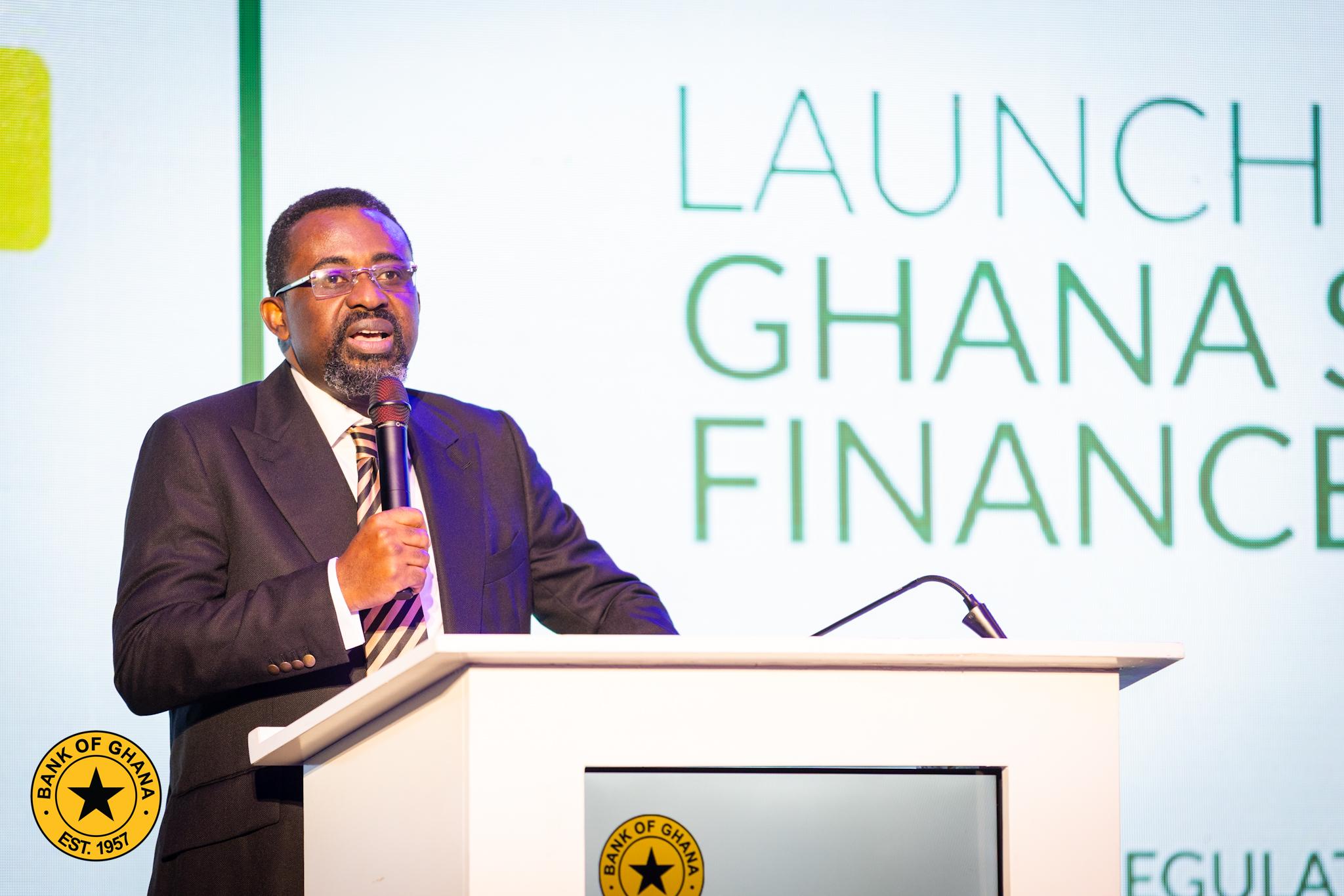
Ghana has launched a Sustainable Finance Roadmap to embed sustainability in its financial sector. The initiative aims to align the sector with global capital flows and address climate-related risks. Bank of Ghana (BoG) Governor, Dr. Johnson Pandit Asiama, announced this development at the launch event in Accra on June 30, 2026.
Dr. Asiama stressed that sustainable finance is essential for financial stability, long-term investment, and economic resilience. He noted that the changing global financial environment requires regulators to re-evaluate how risks are supervised, priced, and managed. This roadmap positions sustainable finance as a core component of building a resilient economy, rather than a mere policy concept.
This move is part of Ghana's broader strategy to adapt its economy to global trends and challenges. Climate change and other sustainability issues are increasingly impacting economies, businesses, and financial systems worldwide. Ghana has experienced this firsthand with recent flooding, demonstrating how climate risks can affect asset values, insurance claims, and lending security. The nation seeks to attract new international capital and finance critical infrastructure through sustainable practices.
Dr. Asiama explained that past financial instruments were not designed for these new systemic risks. He stated, "Sustainable finance is increasingly central to financial stability, to long-term investment, and to economic resilience." He added that this reshaping of global capital flows means investors now have new expectations for financial systems. The Governor highlighted the importance of foresight, innovation, and collaboration among financial regulators.
The Sustainable Finance Roadmap provides a common framework for regulators across the banking, insurance, securities, and pensions sectors. It coordinates their approach to sustainable finance. The Governor reiterated that climate and sustainability risks do not respect institutional boundaries, therefore coordinated action is vital. He emphasized that ignoring these risks would leave Ghana's financial system vulnerable.
The Roadmap is built on three key pillars: Environmental, Social, and Governance (ESG) integration; climate-related risk management; and financing sustainability. These pillars aim to integrate sustainability into financial-sector operations and decision-making processes. For the Bank of Ghana, this launch builds on nearly a decade of work on sustainability. This work includes forming the Sustainable Banking Principles Steering Committee in 2015.
The Committee’s efforts led to the 2019 launch of the Sustainable Banking Principles and Sector Guidance Notes. All 23 chief executives of commercial banks in Ghana voluntarily endorsed these principles. With support from the International Finance Corporation and the Swiss Secretariat for Economic Affairs, the BoG developed a standardized compliance framework. Industry compliance with these principles reached an average of 73.00% by September 2025.
In 2024, the Bank of Ghana also published a four-year Strategic Plan on Sustainability and Climate-Related Risks for 2024 to 2028. It issued a Climate-Related Financial Risk Directive to strengthen regulated financial institutions' capacity to identify, assess, and manage these risks. Dr. Asiama views sustainable finance not just as a risk management tool but also as an opportunity. It can help Ghana access new global capital, support the energy transition, deepen financial markets, and boost long-term growth. This framework aims to position Ghana as a top destination for sustainable finance in the region.