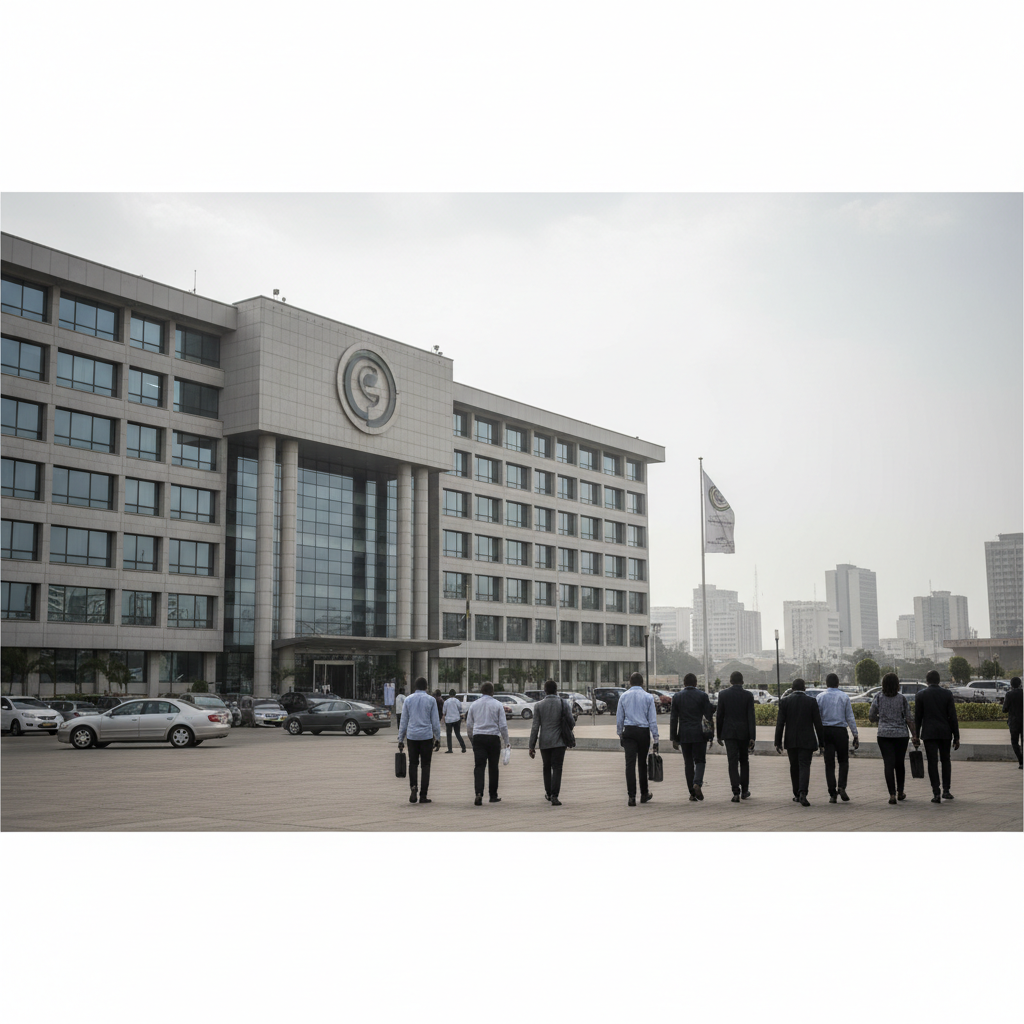
Ghana Exim Bank officially joined the United Nations Global Compact (UNGC), linking itself to the world's largest corporate sustainability scheme. This decision solidifies the bank's dedication to responsible banking, sustainable finance, and ethical corporate management. The bank formalized its commitment during a signing ceremony in Accra on Thursday, July 2.
This membership means Ghana Exim Bank will follow the UN Global Compact's Ten Principles. These rules cover human rights, labour standards, environmental care, and fighting corruption. The bank now joins over 20,000 businesses worldwide working to improve sustainable business and support the UN's Sustainable Development Goals (SDGs).
This step fits into Ghana's larger economic goals of promoting sustainable growth and attracting responsible investment. Ghanaian financial institutions are increasingly aware of global Environmental, Social, and Governance (ESG) standards. Adopting these global standards can improve a bank's reputation and access to international capital markets. Recent trends show a growing demand for financial products that align with sustainable development.
Mr. Sylvester Adinam Mensah, CEO of Ghana Exim Bank, called this a key moment for the bank. He stated, "We are honoured to officially join the United Nations Global Compact, aligning our operations with its Ten Principles across human rights, labour, environment, anti-corruption and other critical areas." He explained that this move is part of a bigger change to put ESG principles into all parts of the bank's work.
The bank is also measuring the development impact of its financing activities. It will assess effects on businesses, communities, and the broader Ghanaian economy. Joining the UN Global Compact will improve these efforts through partnerships and knowledge sharing. This commitment boosts the bank's role in Ghana's economic transformation. It also enhances Ghana's image as a responsible player in the global financial system.
Ghana Exim Bank began preparing for this change in January 2025. It started a full ESG and Sustainability Policy. It also created the Sustainability and Strategic Impact Department (SSID) to lead these new sustainability actions. This department aims to make sustainable finance a central part of the bank's work. The bank seeks to move beyond just policy words to real actions, making sustainability a core part of its operations.
This move is expected to attract more international partners and investors who prioritize sustainable practices. It will likely strengthen Ghana Exim Bank's financial standing and its ability to fund critical export-oriented projects. Decision-makers and markets will watch for how quickly the bank integrates these principles. They will also observe the actual impact on its lending portfolios and overall operations. This commitment sets a higher standard for accountability within Ghana's banking sector.