Ghana's advanced digital payment infrastructure has not yet translated into improved access to credit for businesses. The country faces an estimated US$4.8 billion annual financing gap for small and medium-sized enterprises (SMEs).
This significant shortfall highlights a critical disconnect. While digital payments thrive, businesses struggle to convert their extensive transaction histories into affordable loans. The Bank of Ghana is now advocating for a fundamental shift towards data-driven lending, open banking, and cash-flow-based credit assessments. This new approach aims to leverage the vast amount of information generated by mobile money and other electronic transactions.
This situation reveals a core challenge within Ghana's broader economic narrative. The nation has successfully built robust digital payment rails, facilitating rapid money movement across the economy. However, this technological progress has not yet transformed access to business financing. Many viable SMEs, despite generating consistent digital transaction records, remain excluded from formal credit markets due to traditional collateral requirements. This limits their growth and overall economic contribution, hindering job creation and innovation.
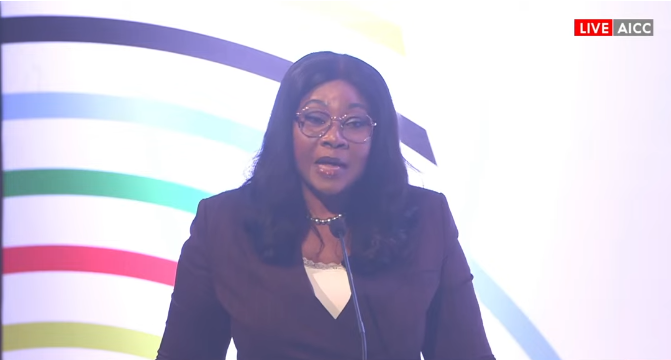
Matilda Asante-Asiedu, Second Deputy Governor of the Bank of Ghana, articulated this challenge clearly. She stated, "We have built extraordinary payment rails, but we have not yet built equally extraordinary credit rails." Speaking at the National ICT Week celebration, Ms. Asante-Asiedu emphasized that the disconnect between transaction data and credit access represents the single largest unrealized opportunity in Ghana's financial sector. Her remarks underscore the urgency for financial institutions to innovate their lending practices.
The implications of this challenge are far-reaching for Ghana's economic development. A shift to data-driven lending would allow banks to assess risk based on a business's actual earnings and cash flow, rather than solely on physical assets. This change could unlock significant capital for SMEs, fostering economic growth. Decision-makers in the financial sector must now develop new models and regulatory frameworks to support this transition, ensuring that Ghana's digital revolution benefits all segments of its economy.
Mobile money and banking records offer rich insights into a business's health. They can reveal sales volumes, transaction frequency, cash-flow stability, and seasonal patterns. Ms. Asante-Asiedu noted, "This is not just background information. It is a credit record. We have simply not built the habit of reading it as such." This data can help lenders understand a company's true financial standing, even without substantial fixed assets.
The scale of Ghana's digital payments ecosystem underscores the immense potential. Mobile money platforms processed 954 million transactions worth approximately GHS 493 billion in June 2026 alone. The country also boasts 84.6 million registered mobile money accounts, with 26.4 million active users. These figures demonstrate that consumers and businesses are already generating vast quantities of digital financial information. The challenge now lies in converting this data into financial identities capable of supporting robust lending decisions.
For banks, adopting automated analysis of cash flows could significantly change the economics of SME lending. Small loans are traditionally expensive to originate due to documentation, verification, and monitoring costs. Automated systems could reduce these assessment costs and shorten the time required for lending decisions. This efficiency gain would make lending to SMEs more attractive and profitable for financial institutions.
Ms. Asante-Asiedu also challenged the financial sector to broaden its understanding of assets. Modern businesses derive value from contracts, receivables, purchase orders, and customer relationships, not just physical property. Lending models built around these cash flows and enforceable commercial claims could be particularly valuable for businesses in technology, services, and trade. These sectors often have substantial enterprise value but limited tangible assets, making traditional lending difficult.
Confirmed purchase orders, export contracts, and multi-year service agreements could become crucial in credit assessment. This would require appropriate legal and risk-management frameworks to support such innovative lending practices. The Bank of Ghana's push aims to ensure that Ghana's impressive digital payment infrastructure fully supports the nation's economic potential by fostering a more inclusive and dynamic credit market.