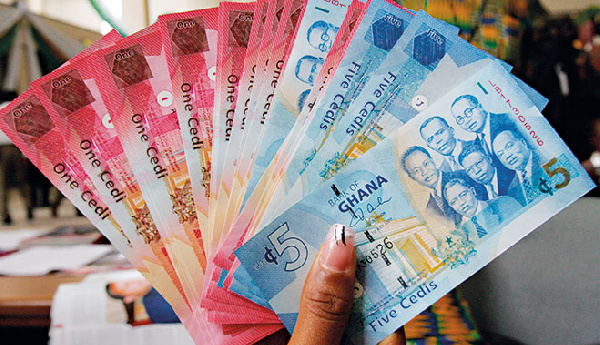
The Ghanaian cedi ranked as Africa’s fourth-strongest currency by nominal value against the United States dollar in July 2026. It maintained this position behind the Tunisian dinar, Libyan dinar, and Moroccan dirham, despite renewed depreciation pressures. The cedi traded at approximately GHS 11.60 to US$1.00 towards the end of July, according to exchange-rate data referenced by Business Insider Africa.
This ranking measures the number of local currency units required to purchase US$1.00. Currencies needing fewer units per dollar are considered stronger. The Tunisian dinar held the top spot at TND 2.93 to US$1.00. The Libyan dinar followed at LYD 6.38, and the Moroccan dirham at MAD 9.34. The cedi’s fourth-place position put it ahead of the Seychellois rupee, Botswana pula, and Eritrean nakfa.
Ghana’s ranking reflects the cedi’s relatively high face value, not necessarily its stability or economic power. This is largely due to the cedi’s redenomination in 2007, when four zeros were removed. This accounting change increased the value of each currency unit without fundamentally changing Ghana’s economic situation. Therefore, this nominal ranking differs from assessments based on annual appreciation, purchasing power, or volatility.
Even with these qualifications, Ghana’s top-five position highlights the cedi’s significant recovery. The currency experienced severe depreciation and high inflation during the country’s debt crisis. Improved gold and cocoa export receipts, fiscal consolidation, and external debt restructuring helped restore confidence. Stronger foreign-exchange reserves also increased dollar availability during the recovery period.
The cedi, however, faced renewed pressure during the second quarter of 2026. This was driven by increasing global oil prices and a stronger demand for foreign currency. Business Insider Africa reported that foreign-exchange market participants expected the cedi, Nigerian naira, and Ugandan shilling to weaken. Kenya’s shilling and Zambia’s kwacha were projected to remain comparatively stable.
For Ghanaian businesses, the crucial factor is not the cedi’s continental ranking. It is whether its exchange rate becomes predictable enough for pricing, investment, and import planning. Currency stability reduces the cedi cost of imported machinery, medicines, and petroleum products. It can also ease inflationary pressure and limit foreign-exchange losses for companies with dollar-denominated liabilities. A weakening currency, conversely, raises import costs and may force businesses to increase consumer prices or accept lower profit margins.
The ranking also reveals the diverse structures supporting Africa’s leading currencies. Tunisia maintains extensive capital and foreign-exchange controls. Libya’s official exchange rate is heavily influenced by oil revenue and central bank management. Morocco operates a managed currency system linked to a basket of currencies, primarily the euro and dollar. Eritrea’s nakfa is fixed through a tightly controlled official regime. Botswana’s pula is managed through a crawling exchange-rate arrangement and supported by diamond exports. The Seychellois rupee benefits significantly from tourism-related foreign-currency earnings. Currencies like the Namibian dollar, Eswatini lilangeni, and Lesotho loti are tied to the South African rand through the Common Monetary Area, limiting independent exchange-rate movements.