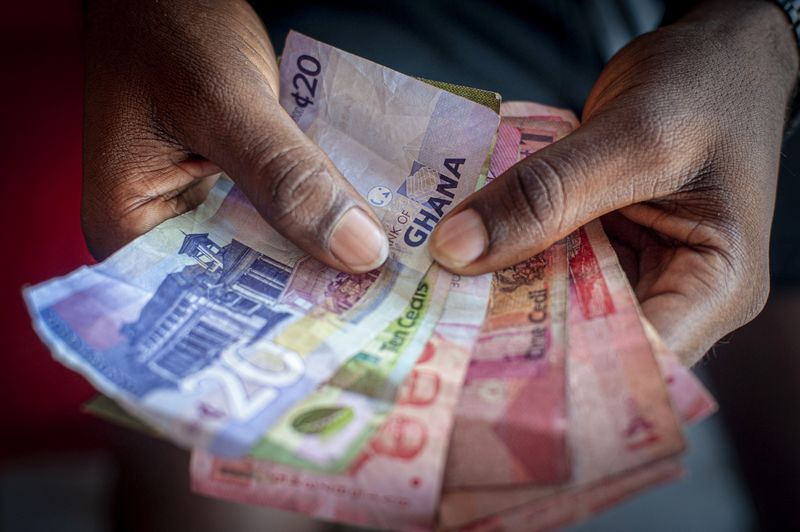
Ghana's banking sector recorded a substantial 25% increase in customer deposits, reaching GHS 334.3 billion in 2025. This significant growth, up from GHS 266.5 billion in 2024, was highlighted in the PwC Ghana Banking Survey 2026.
The surge in deposits is largely attributed to improved macroeconomic stability and stronger customer confidence. Banks expanded their branch and agency networks, alongside continued adoption of digital banking services. This growth provides banks with a larger pool of funds to support lending, investment, and other banking activities.
This positive trend signals a strengthening funding base for Ghana's financial system after a period of economic challenges. The increase reflects a broader return of confidence in the formal banking system. It also aligns with ongoing efforts to stabilize the economy and encourage financial inclusion across the country. The shift towards time deposits suggests customers are increasingly willing to commit funds for fixed periods, responding to attractive investment returns.
The PwC Ghana Banking Survey 2026 explicitly stated that the growth was recorded across all major deposit categories. This indicates stronger mobilization efforts by banks and changing customer preferences for savings and investment products. The survey provides a comprehensive overview of the sector's performance.
Looking ahead, this increased liquidity could stimulate economic activity through expanded credit availability for businesses and individuals. Decision-makers will monitor how banks utilize these funds to support key sectors of the economy. The market will also watch for continued innovation in digital banking to sustain this growth trajectory.
Current account deposits rose by 15.8% to GHS 184.9 billion in 2025. This increase reflects heightened transaction banking activity within the economy. Time deposits showed the strongest growth among major categories, surging by 56.8% to GHS 49.2 billion. Call deposits also saw a significant rise, increasing by 37.5% to GHS 16.7 billion. These sharp increases in time and call deposits indicate customers' response to attractive fixed-term investment products offered by banks.
Despite the overall growth, deposits remained concentrated among the leading banks. Approximately 30.7% of total industry deposits were held by GCB Bank, Ecobank Ghana, and Stanbic Bank Ghana in 2025. GCB Bank led the industry with 12.37% market share, followed by Ecobank Ghana with 10.52%, and Stanbic Bank Ghana with 7.80%. Their combined share underscores the continued dominance of large banks with extensive networks and established customer bases.
The survey also highlighted significant movements among individual banks. OmniBSIC Bank (OBL) recorded one of the most notable improvements in deposit market share. OBL moved from 13th position in 2024 to fifth in 2025, securing a 6.0% share. This improvement is attributed to focused customer acquisition strategies and growth in retail and small and medium-sized enterprise (SME) deposits. Zenith Bank Ghana also strengthened its position, increasing its deposit market share from 5.9% to 6.3%. First Atlantic Bank increased its share to 4.9%, driven by sustained customer retention and enhanced business banking offerings.
The banking sector's funding base is strengthening after a period of significant macroeconomic and financial-sector pressures. The market remains competitive but concentrated, with the largest institutions commanding a substantial share. The challenge for banks outside the top tier will be to sustain customer acquisition and retention. They must also expand digital services, agency networks, and products to attract both retail and business customers. This competitive landscape will drive further innovation and service improvements across the industry.