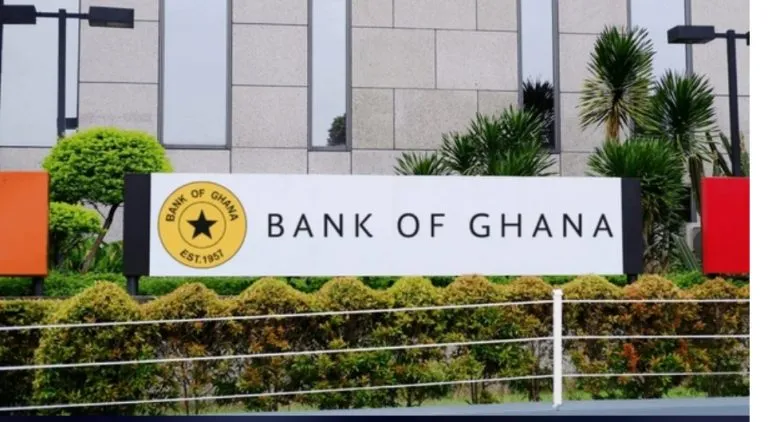
Ghana's banking sector registered an average Annual Percentage Rate (APR) of 17.64% for all loan categories in May 2026. This figure comes from the latest data collected by the Bank of Ghana. Borrowing costs for households, small businesses, and large companies vary widely across different banks.
Some banks offered rates as low as 5.03%, while others charged as much as 39.27%. This range highlights significant inconsistencies in how much borrowers pay for credit. The Bank of Ghana's report gathered information from banks on one-year, three-year, and five-year loans. These loans target households, Small and Medium-sized Enterprises (SMEs), and corporate clients.
This wide range in APRs complicates how Ghana's economy responds to central bank actions. The Ghana Reference Rate (GRR), which stood at 10.03% in May, acts as a benchmark. However, the final APR includes this reference rate, plus bank-specific risk premiums and other charges. This means that even with a stable GRR, the cost for an average Ghanaian borrower can be much higher. Such differences raise questions about competition and how quickly lower key interest rates translate to cheaper loans for customers.
According to the Bank of Ghana, the APR reflects the true cost of a loan. This includes the Ghana Reference Rate, bank-specific premiums for risk, and additional bank charges. OmniBSIC Bank Ghana Limited offered the lowest reported APR at 5.03% for five-year household credit. Universal Merchant Bank Limited, however, charged the highest reported APR of 39.27% for three-year household credit.
The data from the central bank suggests that policy rate adjustments do not automatically lead to cheaper credit for everyone. The actual cost of a loan depends on many factors. These include the borrower's risk profile, the quality of collateral, the loan duration, and the bank's own pricing strategy. These factors can prevent lower benchmark rates from fully benefiting average consumers and businesses.
Households face the highest borrowing costs for three-year credit, with Universal Merchant Bank reporting 39.27%. In contrast, Stanbic Bank Ghana Limited offered the lowest rate in this category at 11.59%. For one-year household loans, Agricultural Development Bank had the highest APR at 28.13%, while Stanbic Bank provided the lowest at 11.62%. The spread for five-year household credit was even greater. United Bank for Africa Ghana reported 32.97%, and OmniBSIC Bank Ghana offered 5.03%. This large gap shows the importance of comparing loan offers for long-term borrowing.
SMEs also face high borrowing costs, which are critical because these businesses create many jobs. Guaranty Trust Bank Ghana reported the highest one-year APR for SMEs at 33.58%. Standard Chartered Bank Ghana offered the lowest at 11.03%. High borrowing costs can limit funds for daily operations and expansion. This discourages SMEs from using formal credit, especially when they already have high operating expenses. Corporate borrowers generally had lower costs, reflecting their stronger financial health and lower risk.
The Bank of Ghana releases these APRs to provide transparency. This allows households, SMEs, and companies to compare potential borrowing costs before starting loan negotiations. This helps them make informed decisions. It also reveals that fees and other charges are a significant part of the overall borrowing cost. Borrowers who only look at the interest rate might not fully understand the true price of their credit.