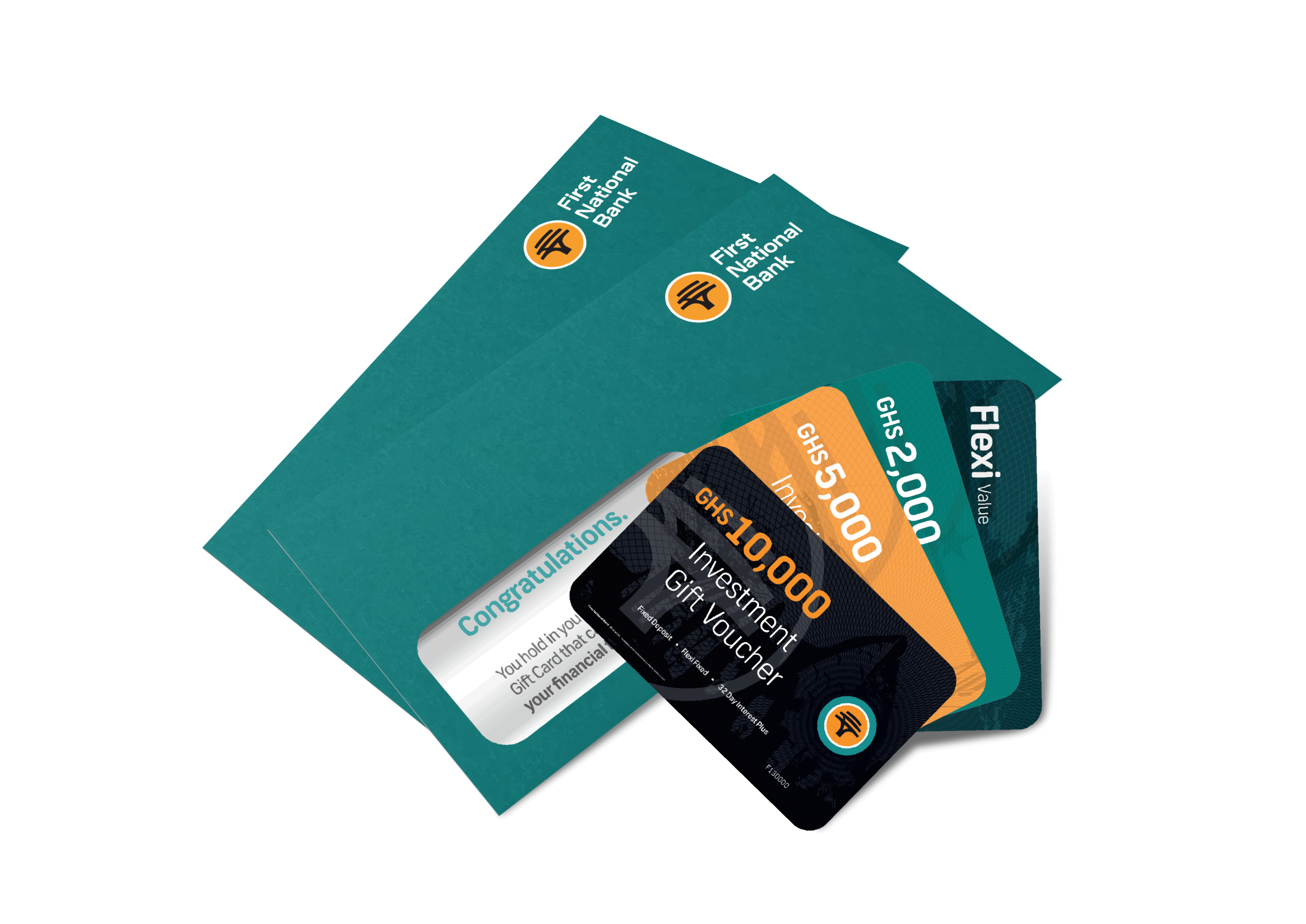
First National Bank Ghana has launched new Investment Gift Cards, offering denominations of GHS 2,000, GHS 5,000, and GHS 10,000. This initiative aims to transform traditional gift-giving into a pathway for long-term saving and wealth creation. The bank also provides flexible values for these cards, allowing customers to tailor their investment gifts.
The product seeks to help recipients begin a journey towards wealth creation and develop stronger money-management habits. It is designed to expose individuals to the principles of saving and investing from an early age. This approach pushes financial inclusion beyond just basic banking services, extending it into household investing, particularly for younger demographics.
This development fits into Ghana's broader economic narrative of increasing financial literacy and access to investment products. Data shows that household participation in formal investment products often ties closely to income levels and financial awareness. Initiatives like this can help bridge that gap, making investing more relatable to a wider consumer base. The Bank of Ghana and other financial institutions have consistently emphasized the importance of deepening financial markets.
Akweley Laryea, Head of Retail Banking at First National Bank Ghana, stated the product reflects the bank's effort to help Ghanaians build generational wealth. She emphasized that while traditional gifts offer short-term satisfaction, an investment grows over time. This growth can become a meaningful financial asset for the recipient.
The introduction of these gift cards has several implications for Ghana's financial landscape. It could normalize investing among younger consumers and families who might not traditionally consider investment products as gifts. This strategy encourages early engagement with financial planning, potentially allowing returns to accumulate over a longer period due to compound growth. Decision-makers in the financial sector will observe how this model impacts broader financial inclusion metrics.
One persistent challenge in personal finance is that many people delay investing until they have substantial disposable income. The Investment Gift Cards address this by providing an accessible entry point into the investment market. By framing investment as a gift, FNB Ghana makes long-term investing more approachable for consumers. This could lead to a significant shift in how Ghanaians perceive and engage with financial markets.
The bank positions these cards as a tool to encourage greater financial responsibility. Recipients will face decisions about spending returns, reinvesting them, or building the underlying asset. This process can help develop accountability, patience, and a deeper understanding of personal finance. Such skills are crucial for long-term financial resilience.
Investment assets can be retained and passed on, linking everyday gifting with concepts like asset ownership and intergenerational transfer. This aspect makes the product particularly relevant for parents and guardians. Early exposure to investing can build knowledge, confidence, and habits that shape future financial decision-making for children.
The broader implication is that financial inclusion is evolving beyond mere access to bank accounts. It now encompasses access to tools that enable saving, investing, and asset accumulation. This distinction is vital because access without asset-building can leave households within the formal financial system but with limited progress toward long-term financial security. First National Bank's Investment Gift Cards aim to bridge this gap by leveraging a familiar social practice—gifting—as a route into investment ownership. This innovative approach could significantly impact Ghana's financial literacy and wealth creation efforts.