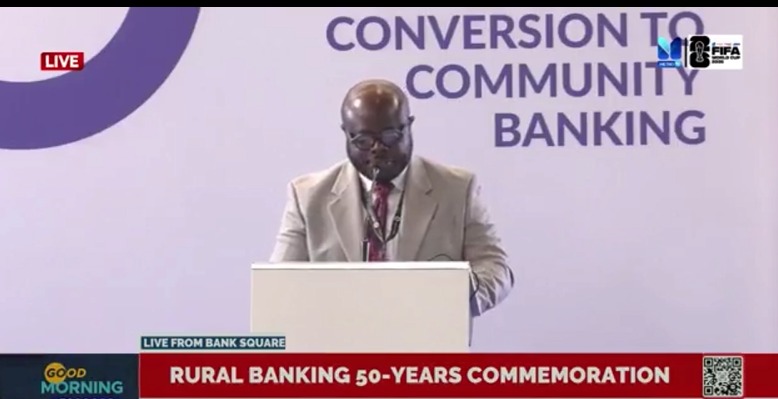
Ghana's rural banking sector has officially transitioned to 'community banks,' a strategic rebranding announced by Dr. Frank Boateng, Vice President of the Association of Community Banks. This change, which became legally effective on March 31, 2026, under the Bank of Ghana’s revised Microfinance Sector Framework, signifies a major evolution for these financial institutions. The new name aims to better reflect their expanded operations and the wider range of communities they now serve across Ghana.
Dr. Boateng made the announcement at the 50th anniversary celebration of rural banking and the official conversion ceremony held at Bank Square in Accra on Thursday, July 16. He emphasized that the term 'community' accurately describes the institutions' current scope, which extends beyond traditional rural heartlands to include townships, market centers, and growing urban areas. The previous name, 'rural banks,' no longer captured the reality of their operations, as many had already expanded their services significantly.
This rebranding is a crucial part of Ghana's broader economic narrative, particularly following extensive banking sector reforms. The reforms aimed to strengthen the financial system and ensure greater stability and inclusion. The transition to community banks aligns with the Bank of Ghana's efforts to formalize and regulate the microfinance sector, ensuring that financial services reach all segments of the population. This move is expected to enhance public trust and engagement with these institutions.
Dr. Frank Boateng stated, “Community tells the whole truth about who we are… Serving townships, market centers and growing urban communities alongside our traditional rural heartlands.” He further explained that the previous name “Rural told only half of our story. It spoke of geography, not of purpose.” This transition is not merely a cosmetic change but a fundamental alignment with the banks’ mission to serve a diverse clientele.
The implications of this rebranding are significant for Ghana's financial landscape. The change is expected to foster greater financial inclusion, particularly for customers who may have felt excluded from the formal financial system. By embracing the 'community' identity, these 147 banks are signaling their commitment to being accessible and relevant to all Ghanaians. Decision-makers and market participants will closely watch how this new identity influences customer perception, deposit mobilization, and lending activities in the coming years.
The move also reflects a maturation of Ghana's financial infrastructure, where local institutions are adapting to changing demographics and economic needs. This strategic shift is anticipated to bolster the capacity of these banks to support local economies and small businesses. The Bank of Ghana's framework provides the regulatory backbone for this evolution, ensuring stability and consumer protection. This development underscores the ongoing efforts to build a robust and inclusive financial sector in Ghana.