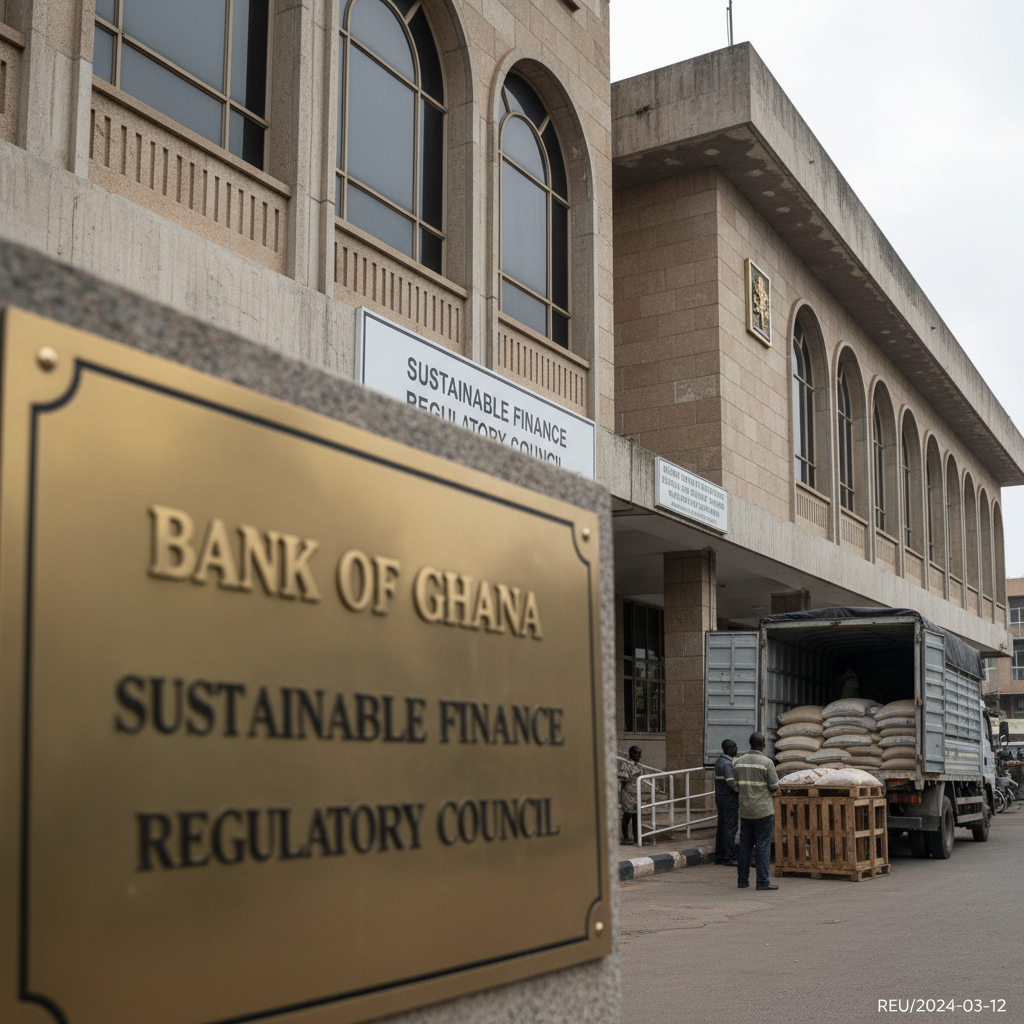
Governor Dr. Johnson Asiama of the Bank of Ghana (BoG) has called for strengthened collaboration among Ghana's financial regulators. He stated that climate and sustainability risks are systemic challenges too large for any single institution to manage alone. This declaration came during the launch of the Ghana Sustainable Finance Roadmap in Accra on June 30, 2026.
Dr. Asiama stressed that regulators in banking, insurance, pensions, and capital markets must align their strategies. This alignment will build a resilient and sustainable financial system. Such a system is crucial for supporting long-term economic growth. Sustainable finance has become a key pillar for financial stability and investment, not just a voluntary initiative.
This initiative fits into Ghana's broader economic narrative of building resilience against external shocks. It reflects a global trend where environmental, social, and governance (ESG) standards increasingly influence investment decisions. Ghana's commitment will attract new capital flows while safeguarding its financial system from vulnerabilities posed by climate change, such as recent floods.
Dr. Asiama explicitly stated, "In Ghana, financial stability is regulated across four sectors—banking, insurance, securities and pensions." He added, "Together, these pillars form an interconnected system whose strength depends on coordination, collaboration and a shared sense of responsibility." He emphasized that risks do not respect traditional regulatory boundaries, necessitating a unified approach.
This unified approach is expected to lead to a common framework for financial institutions and regulators. They will integrate sustainability into governance, risk management, and investment decisions. This action strengthens Ghana's wider development and climate objectives. The financial sector's response to climate change will be a key indicator for investors and international partners.
The BoG has been preparing for this for a decade. It established the Sustainable Banking Principles Steering Committee in 2015. This led to the introduction of Sustainable Banking Principles in 2019. All 23 commercial banks in Ghana voluntarily adopted these principles.
With support from the International Finance Corporation (IFC) and Switzerland’s State Secretariat for Economic Affairs (SECO), the BoG introduced a compliance assessment framework. Industry-wide implementation reached an average of 73 percent by September 2025. The Bank of Ghana has also introduced its 2024–2028 Sustainability and Climate-related Risk Strategic Plan. A Climate-related Financial Risk Directive helps institutions identify and manage climate risks.
This roadmap launch signals Ghana's commitment to embedding sustainability across its financial sector. Coordinated regulatory action will attract global investors who prioritize ESG standards. The growing impact of climate change, exemplified by recent floods, directly affects financial stability. These risks travel into the financial sector through asset values, claim costs, and lending security. Ghana's proactive steps protect its economy from environmental shocks and maintain investor confidence.