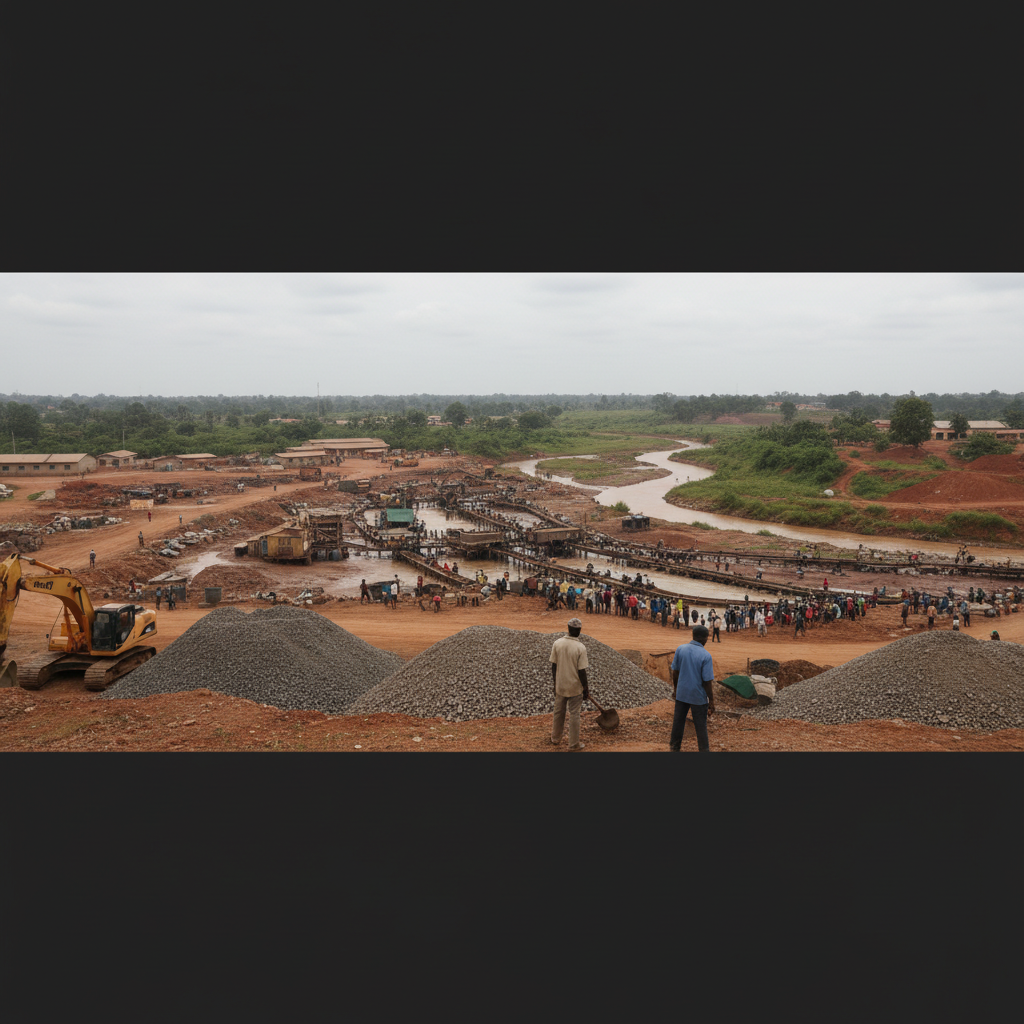
Stanbic Bank states that Ghana's small-scale mining sector can significantly improve its access to finance. This improvement relies on stronger deal structures, greater transparency, and enhanced governance practices. Benjamin Nana Kwesi Mensah, Associate, Mining & Metals, Corporate and Investment Banking at Stanbic Bank, shared these insights on July 1, 2026.
Mr. Mensah delivered his remarks during a panel discussion at the West African Mining and Power Exhibition (WAMPEX) 2026. He highlighted the growing importance of small-scale mining to Ghana's gold production. Despite this importance, many operators face difficulties attracting formal financing for expansion. The industry contributes significantly to national gold output, generates employment, and boosts foreign exchange earnings.
This situation fits into Ghana's broader economic story concerning resource exploitation and economic diversification. The small-scale mining sector has grown to become a crucial part of the national gold industry. It helps individual livelihoods and strengthens the country's overall economic health. Data shows its increasing contribution to jobs and local economies across Ghana. Addressing its financing gaps is key to sustainable development and economic growth. This sector often plays a role in Ghana's balance of payments through gold exports.
Mr. Mensah explained that banks often do not lack interest in financing small-scale mining. He said the real issue is the absence of structures that provide lenders with enough comfort and visibility. He stated, “The conversation around financing small-scale mining is sometimes framed as though there is limited appetite from banks and investors. In many cases, that is not the challenge. The real issue is whether the transaction has been structured in a way that allows financiers to properly assess risk and establish confidence in the business.”
Going forward, decision-makers in the small-scale mining sector and financial institutions need to collaborate closely. Operators must focus on improving legal compliance, tracing revenue streams, and enforcing commercial arrangements. Banks will continue to prioritize businesses demonstrating strong leadership and management structures. Adopting Environmental, Social, and Governance (ESG) standards will also increasingly influence funding decisions. These collective efforts will determine the sector's ability to attract the GHS 4.2 billion needed for growth and modernization. Investors and markets will closely watch for these improvements, which could unlock significant capital.
Ghana's government and regulators may also consider policies that encourage these improved structures. Standardizing reporting and compliance requirements could streamline the process for both miners and financiers. This would create a more predictable investment environment for all stakeholders. The success of these reforms could serve as a model for other emerging economies with similar mining sectors. Increased investment in small-scale mining could further bolster Ghana's position in the global gold market. This could also enhance local economic development in mining communities. The sector's long-term sustainability hinges on these foundational changes.