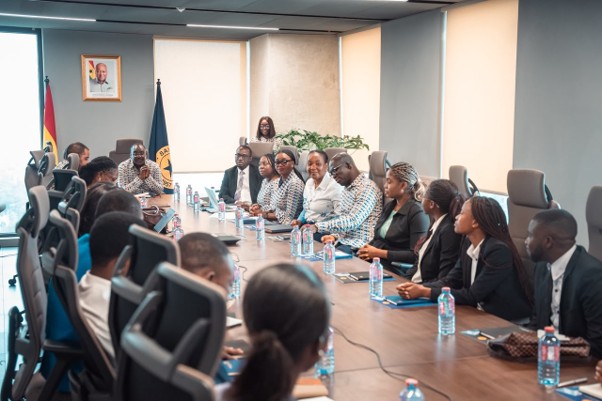
Bank of Ghana opens policy talks to university students

    University of Ghana students observed the Monetary Policy Committee's interest rate deliberations, enhancing transparency and practical understanding.

    2 min read3 min listen
    Bank of Ghana opens policy talks to university students
    The Bank of Ghana (BoG) has opened its Monetary Policy Committee (MPC) deliberations to students from the University of Ghana. This initiative allowed students to observe firsthand how the country's benchmark interest rate is determined. The move aims to demystify the monetary policy process and provide practical exposure to future economists. Students participated in the 131st MPC meeting, gaining insights into Ghana’s monetary policy framework. They learned about the Committee's role and attended technical presentations supporting its decisions. This direct engagement moves students beyond theoretical understanding, preparing them for real-world economic challenges. This initiative fits into Ghana's broader economic narrative of enhancing institutional transparency and public engagement. The central bank seeks to build trust and support for its policies, which are crucial for economic stability. Greater public understanding can lead to more effective policy implementation and better economic outcomes for the nation. Dr. Johnson Pandit Asiama, Governor of the Bank of Ghana, explained the program's purpose. He stated that monetary policy is most effective when the public understands, trusts, and supports it. Dr. Asiama emphasized that this in-person experience offers practical exposure to the extensive analytical work preceding rate announcements. This program, the inaugural Monetary Policy Committee Educational Observership Programme, aims to deepen public understanding of monetary policy. It also seeks to strengthen the central bank's transparency. Students heard detailed assessments of macroeconomic conditions, inflation trends, and global developments that inform MPC decisions. Participants reported that the experience clarified misconceptions, such as the belief that the Governor alone sets policy rates. One student noted that the decision results from thorough analysis and contributions from many experts. This practical exposure helps students connect academic learning with real-world policy practice. Faculty members, including Dr. Jabir Ibrahim Mohammed from the University of Ghana Business School, praised the initiative. They described it as an important bridge between academic learning and public policy. Opening these processes to students strengthens transparency and inspires the next generation of economists. These future leaders will better understand the institution responsible for price stability and economic development. This program is a significant step towards fostering a more informed public and a stronger economic future for Ghana. It will likely encourage other public institutions to adopt similar transparency measures. The long-term implications include a more engaged citizenry and a better-prepared workforce in economic policy. The Bank of Ghana continues to play a vital role in shaping the nation's economic trajectory.

    Comments

    More from StatsGH