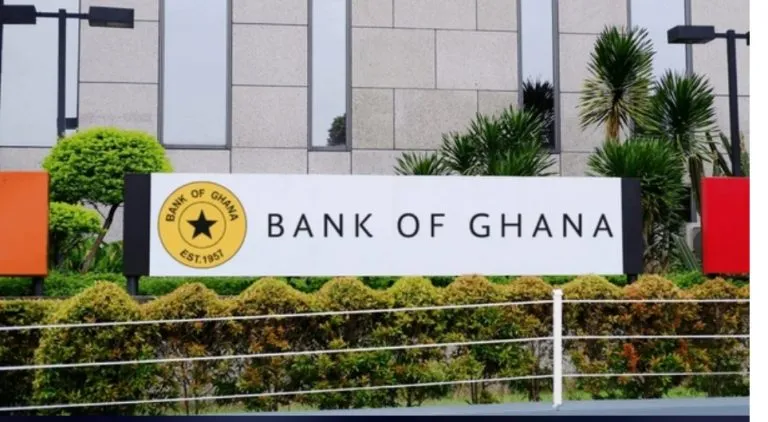
The Bank of Ghana sold GHS 12.998 billion in 14-day bills at its latest securities auction, maintaining an average interest rate close to 10.50%. This significant operation on August 10, 2026, demonstrates the central bank's ongoing efforts to manage liquidity within the financial system.
This auction, Tender 874, forms a crucial part of the Bank of Ghana’s short-term liquidity-management operations. It differs from conventional Treasury bills, which the government issues to finance its budget. Instead, these central bank bills are monetary policy instruments designed to influence the amount of money circulating in the banking system.
The sale of nearly GHS 13 billion highlights the central bank's commitment to absorbing excess cash from banks and other market participants. This action temporarily withdraws money from circulation, helping to control inflation and align short-term interest rates with the Bank of Ghana's monetary policy objectives. Such large-scale operations are essential for maintaining economic stability in Ghana.
The bills attracted discount-rate bids ranging from 10.4000% to 10.4578% per annum, with all bids allotted in full. The weighted average discount rate settled at 10.4555%, resulting in a corresponding weighted average interest rate of 10.4978% for the August 10-11 period. This narrow spread across successful bids indicates concentrated pricing around the central bank's desired absorption level.
While the GHS 12.998 billion figure is substantial, it does not necessarily mean an equivalent amount of new liquidity was permanently removed. Some of this issuance likely replaces previously maturing central bank bills. The net liquidity effect depends on the difference between new sales and maturing securities.
The short 14-day maturity period provides the Bank of Ghana with considerable flexibility. It allows the central bank to reassess liquidity conditions every two weeks and adjust the amount of cash to be sterilized. This adaptability is particularly important when monetary conditions are changing rapidly in the Ghanaian economy.
Banking system liquidity can fluctuate due to government spending, foreign exchange transactions, and maturing securities. The central bank must constantly balance the available money against its inflation and interest rate targets. The 10.4978% weighted average interest rate represents the financial cost of this sterilization operation.
Central bank liquidity management is not without expense; the interest paid on these bills impacts the monetary authority’s own financial operations. This creates a policy trade-off: absorbing excess liquidity is necessary for stability, but persistent large-scale issuance can generate substantial interest expenses if excess liquidity remains structurally high. Therefore, the strength of the operation is not solely judged by the amount sold.
More important questions include whether the liquidity absorption aligns with the Bank of Ghana’s monetary policy stance. It also considers if short-term market rates remain appropriately aligned and if sterilization costs are sustainable over time. Tender 874 confirms the 14-day bill's importance in the Bank of Ghana’s monetary toolkit. The central bank continues to deploy significant short-term operations to manage liquidity conditions in Ghana’s banking system.