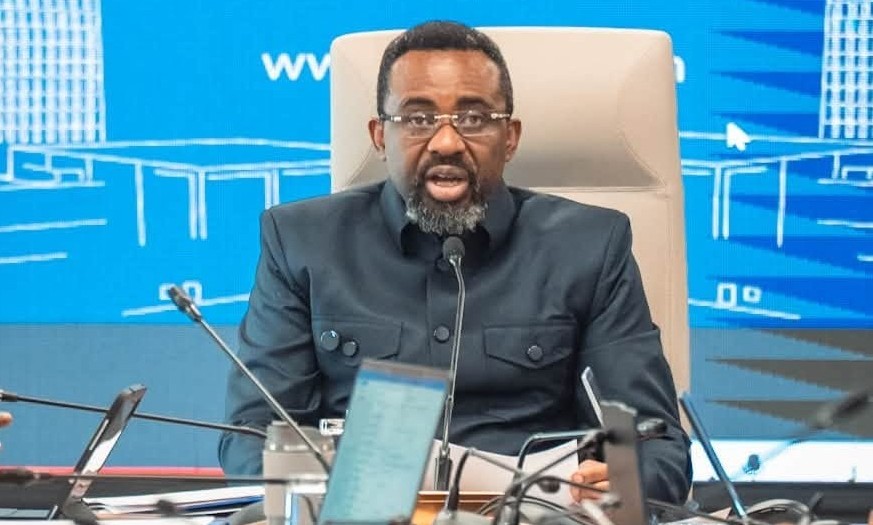
The Bank of Ghana (BoG) has maintained its monetary policy rate at 14% for the second consecutive meeting this year. This decision by the Monetary Policy Committee (MPC) was announced on July 23, 2026, following its 131st regular meeting. The central bank aims to guide inflation into its medium-term target band.
Dr. Johnson Asiama, Governor of the BoG, stated that the Committee unanimously voted to retain the benchmark rate. This decision reflects heightened global uncertainty, despite continued improvements in Ghana’s macroeconomic indicators. Geopolitical developments, particularly renewed conflict in the Middle East, are a significant concern.
This sustained policy stance aligns with Ghana's broader economic strategy to manage inflation and ensure stability. The country has been navigating a complex global economic landscape, balancing domestic growth ambitions with external shocks. Maintaining the rate signals a cautious approach to monetary policy.
Governor Asiama explained that the Committee judges the current policy stance as appropriate. It allows time to assess evolving geopolitical developments and their potential impact on the domestic economy. This careful consideration is crucial for maintaining economic equilibrium.
The decision followed a comprehensive assessment of recent economic developments and risks to inflation and growth. Renewed conflict in the Middle East has disrupted trade routes and increased volatility in global energy markets. This has heightened uncertainty over global economic growth.
Inflationary pressures from the conflict have prompted several central banks to pause interest rate reductions. Any further escalation could tighten global financial conditions. This would affect emerging economies like Ghana through trade and financial channels.
Domestically, the Committee observed robust first-quarter Gross Domestic Product (GDP) growth. It also noted stronger economic activity across various sectors. The Bank's Composite Index of Economic Activity points to sustained economic momentum.
Improved business and consumer confidence supports this positive trend. An easing credit environment has also contributed to this momentum. Private sector credit growth has surged sharply compared with the same period last year. The MPC expects this trend to further boost economic activity.
The Committee also noted improvements in Ghana's trade balance. Adequate international reserve buffers are in place. These reserves will help the economy withstand external shocks effectively.
Regarding inflation, recent data showed headline inflation moving closer to the lower limit of the Bank's medium-term target band. This was largely due to base effects. The Bank’s July forecast round left its outlook broadly unchanged from the previous quarter.
Headline inflation is still expected to rise gradually back toward the target band over coming months. Possible increases in utility tariffs and higher crude oil prices are key upside risks to the inflation outlook. These risks stem from tensions in the Middle East.
Continued fiscal consolidation and an appropriately calibrated monetary policy stance are expected to help contain these risks. These measures will be crucial over the medium term. The central bank remains vigilant in monitoring both domestic and international economic indicators.