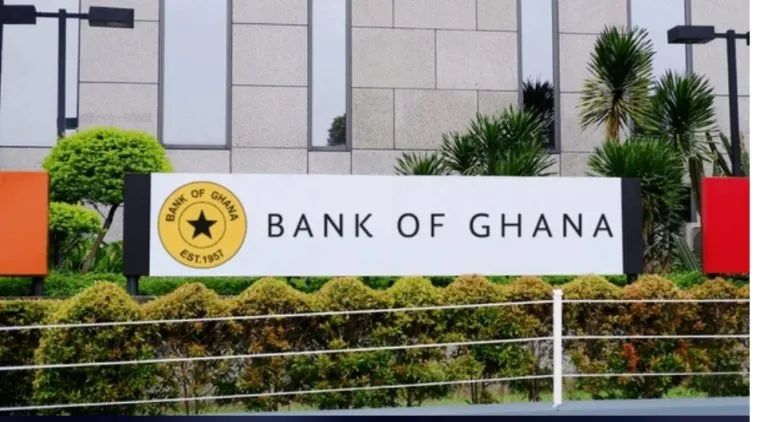
Bank of Ghana Absorbs GHS 9.98 Billion in Short Term Liquidity

    Central bank uses 14-day bills to manage banking system cash, signaling ongoing monetary policy efforts.

    2 min read3 min listen
    Bank of Ghana Absorbs GHS 9.98 Billion in Short Term Liquidity
    The Bank of Ghana has absorbed GHS 9.98 billion in short-term liquidity from the banking system. This action occurred on Wednesday, August 12, 2026, through the sale of 14-day central bank bills. This substantial operation underscores the central bank's ongoing strategy to manage cash levels within the financial sector. This absorption of funds aims to influence short-term money market conditions. It helps the Bank of Ghana maintain its monetary policy stance. The 14-day bills, identified by ISIN GHCBAGH01314, attracted bid discount rates between 10.40% and 10.46%. All bids within this range were fully allotted, resulting in a weighted average interest rate of 10.50% per annum. This operation fits into Ghana's broader economic narrative of managing inflation and stabilizing the currency. The central bank uses these bills as monetary policy instruments, distinct from Treasury bills that finance government spending. This distinction is crucial for understanding the transaction's purpose. The GHS 9.98 billion does not represent new government borrowing but rather a temporary withdrawal of funds from banks. Unlike Treasury bills, Bank of Ghana bills are specifically designed to absorb liquidity from financial institutions. "They are used principally to absorb liquidity from banks and other eligible financial institutions rather than to finance government expenditure," the source states. This mechanism allows the central bank to fine-tune the amount of money circulating in the economy. The implications of this action are significant for the financial markets. The withdrawal of GHS 9.98 billion over two weeks can immediately affect the cash available in the banking system. This can influence overnight market rates and the broader transmission of monetary policy. For commercial banks, these instruments offer a short-duration placement for temporary excess funds, allowing them to earn a return without long-term commitments. The central bank benefits from the flexibility of these short-dated securities. If liquidity conditions change rapidly, the Bank of Ghana can sterilize excess funds and then reassess the situation when the bills mature. This is particularly useful when large government payments or foreign exchange transactions inject substantial liquidity into the banking system. The scale of this transaction indicates the central bank's active role in maintaining financial stability. The weighted interest rate of 10.50% also provides insight into the cost of absorbing short-term liquidity. This rate is substantially below the Bank of Ghana’s Monetary Policy Rate. This suggests that market interest rates are easing, aligning with lower inflation and improving macroeconomic conditions. The narrow spread between the lowest and highest accepted rates, less than six basis points, indicates relatively tight pricing for this instrument. While the auction results do not detail participating institutions or the level of oversubscription, they confirm that all bids within the specified discount rate range were accepted. This highlights the central bank's effectiveness in its liquidity management operations. The continued sizeable issuance of these bills serves as a key indicator of the liquidity environment for Ghana's banks. Large liquidity balances can support credit creation, but if they exceed monetary objectives, they can pressure short-term rates, asset prices, and inflation.

    Comments

    More from StatsGH