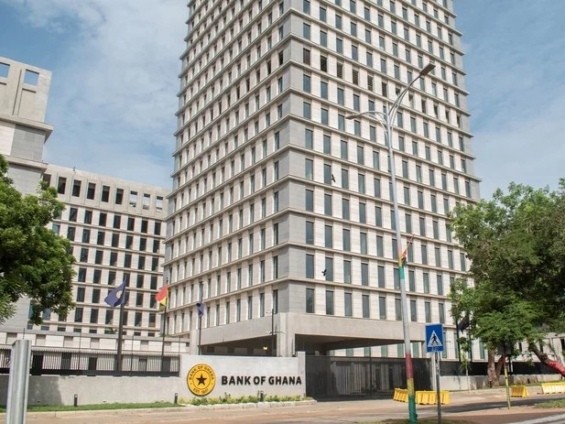
The Bank of Ghana (BoG) has absorbed GHS 21.41 billion from the financial system in the past week. This significant operation aims to manage liquidity ahead of its upcoming Monetary Policy Committee (MPC) meeting.
The central bank withdrew these funds from commercial banks and other financial institutions. It used 14-day Bank of Ghana Bills for this purpose. The first tender on Monday saw the BoG accept GHS 13.71 billion at an interest rate of 10.5%. A second tender on Wednesday absorbed an additional GHS 7.7 billion, also at 10.5%.
This liquidity absorption is a standard tool the BoG uses to influence monetary conditions. By removing excess cash from circulation, the central bank can control inflation and stabilize the cedi. This action comes as Ghana continues to navigate economic challenges, including high inflation and currency depreciation. The country's economic stability relies heavily on the central bank's effective management of money supply.
While the source does not provide a direct quote, this action aligns with the BoG's mandate to maintain price stability. Central banks worldwide use such operations to fine-tune money market conditions. This proactive measure signals the BoG's commitment to its inflation-targeting framework.
The absorption of funds will likely impact money market rates and bank liquidity. Financial institutions must adjust their positions, potentially affecting their lending rates. All eyes will now turn to the 132nd MPC meeting, scheduled from September 22 to 24. The central bank's decision on the policy rate, expected on Thursday, September 24, will be crucial. This decision will reflect the BoG's assessment of current economic conditions and its future outlook.
The use of 14-day bills means the funds are temporarily out of circulation. This short-term measure allows the central bank flexibility in its liquidity management strategy. It provides a quick way to mop up excess cash without committing to longer-term instruments. Such operations are vital for maintaining a balanced financial system. They help prevent speculative activities and ensure orderly market functioning.
Ghana's economy has faced considerable headwinds, making the BoG's role even more critical. High government borrowing and external shocks have put pressure on the cedi. The central bank's interventions are designed to mitigate these pressures. Effective liquidity management supports the broader economic recovery efforts. It also helps build confidence among investors and businesses.
The MPC's upcoming decision will be closely watched by analysts, investors, and the public. Any change in the policy rate will have ripple effects across the economy. It will influence borrowing costs for businesses and consumers. It will also impact the attractiveness of cedi-denominated assets. The BoG's consistent efforts to manage liquidity are a key part of its overall monetary policy strategy. This latest absorption of GHS 21.41 billion underscores its commitment to financial stability.