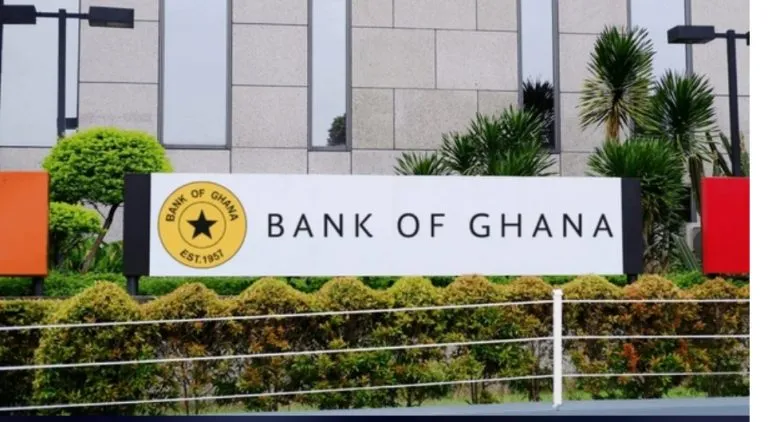
The Bank of Ghana has absorbed GHS 9.25 billion from the money market through the sale of 14-day central bank bills. This significant action, conducted on Wednesday, July 22, 2026, is part of the central bank's ongoing short-term liquidity management operations.
This absorption aims to address persistent inflation, exchange-rate pressures, and broader money-market conditions. The Bank of Ghana uses these bills as a monetary policy tool to remove excess liquidity from the banking system, thereby influencing short-term interest rates.
The central bank's continued use of these instruments underscores its cautious approach to monetary policy. This occurs even as Ghana experiences a sharp decline in inflation and a reduction in the policy rate. The strategy seeks to prevent surplus money-market liquidity from fueling renewed inflationary pressures or speculative demand for foreign exchange.
According to the Bank of Ghana’s Notice to Banks and Public No. 871, the auction attracted bid rates ranging from 10.4000% to 10.4578%. The weighted average discount rate settled at 10.4547%, with the weighted average interest rate closing at 10.4969% for the period from July 22 to July 24, 2026. The total amount sold was GHS 9,252.74 million, which rounds to GHS 9.25 billion.
Unlike ordinary Treasury bills, which the government issues for budget financing, Bank of Ghana bills are monetary policy instruments. They specifically absorb surplus liquidity and manage short-term interest rate conditions. This distinction is crucial for understanding the central bank's objectives.
The size of this sale is notable. It indicates that liquidity sterilisation remains a key component of the central bank's toolkit. The Bank of Ghana is actively working to prevent excess money from re-igniting inflation or increasing demand for foreign currency. The weighted average interest rate of 10.4969% provides a clear signal about short-term money-market pricing. It remains below the Monetary Policy Rate but is attractive enough to draw funds from participating banks.
For banks, these 14-day bills offer a short-term option for placing their excess liquidity. For the central bank, they provide a flexible mechanism to control liquidity without necessarily altering the main policy rate. This flexibility is vital in an economic environment where inflation, foreign exchange liquidity, and fiscal operations can change rapidly.
However, the frequent and heavy use of such instruments raises important policy questions for the broader economy. Ghana must balance liquidity control with the need to encourage credit flow to the private sector. If too much banking-sector liquidity is consistently parked in central bank instruments, the financial system may remain liquid but less supportive of productive lending to businesses.
Conversely, if liquidity is left unmanaged, it could undermine recent gains in inflation control and put pressure on the Ghana cedi. This represents a delicate trade-off for the Bank of Ghana. The central bank must maintain monetary conditions that are disciplined enough to protect price stability. However, these conditions must not be so tight that banks prefer lending to the state and the central bank over private businesses.
The latest auction therefore provides insight into Ghana's post-stabilisation policy environment. Lower inflation has created some room for policy easing. Despite this, the central bank appears unwilling to allow liquidity conditions to loosen too quickly. The GHS 9.25 billion mop-up demonstrates that monetary policy is still being conducted with significant caution. The 14-day tenor of the instrument also offers the Bank of Ghana crucial flexibility. It can withdraw liquidity quickly, reassess market conditions, and adjust future auctions without committing the market to long-duration sterilisation. This adaptability is essential in the current economic climate.
Frequent short-term sterilisation, however, comes with costs. The central bank must pay interest on these securities. This means that liquidity management can create quasi-fiscal costs if used heavily and persistently. The policy benefit is stronger monetary control, but the fiscal and balance-sheet concern is the cost of maintaining that control. The auction also signals to the market that the central bank remains proactive in managing liquidity, even after recent improvements in macroeconomic stability. Investors, banks, and businesses will interpret the size and pricing of these Bank of Ghana bills as part of the broader policy signal regarding the pace of monetary easing. For now, the message is one of continued caution. The Bank of Ghana is not solely relying on lower headline inflation figures to declare success. It is still absorbing liquidity at scale, keeping short-term rates anchored, and ensuring that excess funds do not destabilize the economy.