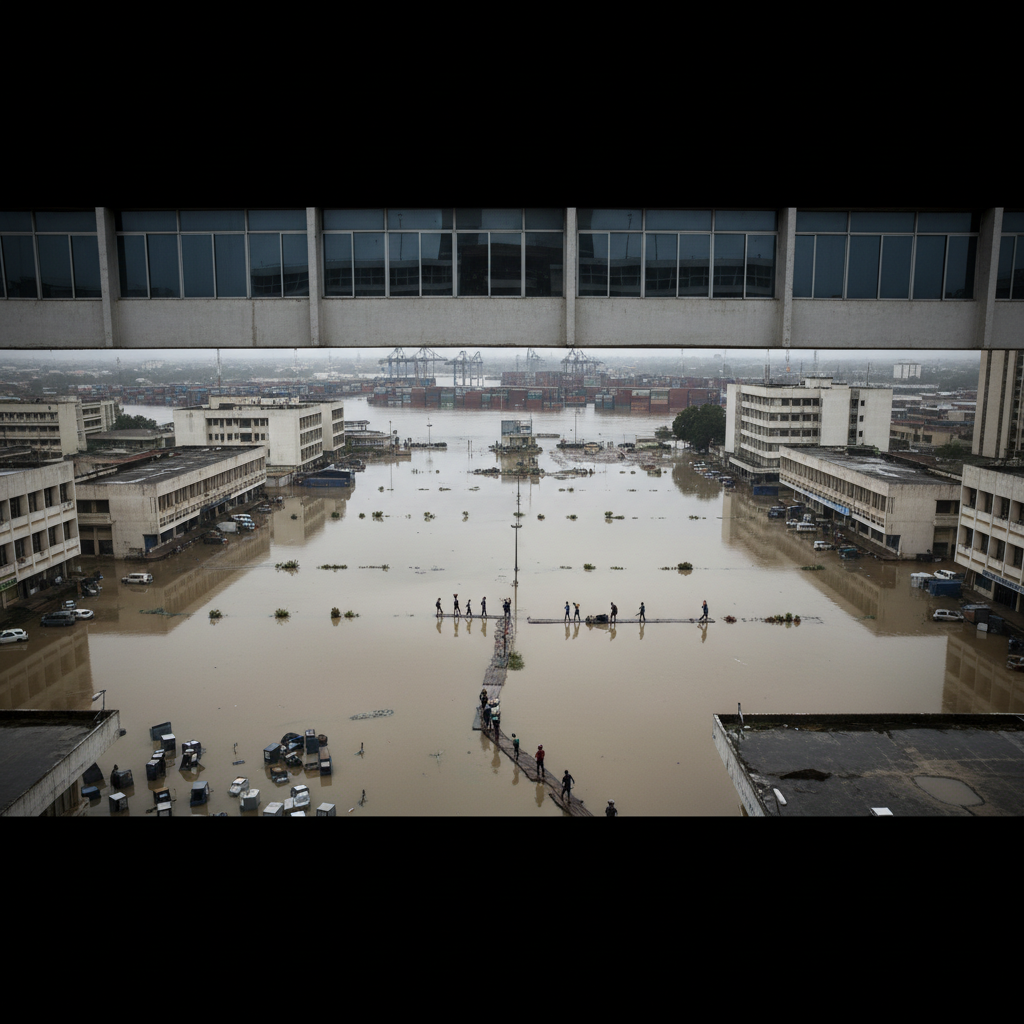
Accra is experiencing significant flooding again, submerging central areas and highlighting the severe economic toll of extreme weather events. The World Bank estimates that GHS 39 billion ($3.2 billion) of assets in Greater Accra are currently in flood-prone areas, a figure projected to quadruple by 2050.
This recurring crisis poses a direct threat to household finances and the broader financial system. Flooding destroys personal assets, disrupts income streams, and increases the risk of loan defaults. This financial instability extends from individuals to lenders, ultimately driving up the cost of borrowing across the entire economy. Vulnerable communities, especially those with limited insurance coverage, bear the brunt of these uninsured losses.
The persistent flooding underscores Ghana's susceptibility to climate change, with climate damage potentially reducing the nation's annual output by 1.7% by mid-century. This economic impact, termed 'green swans' by the Bank for International Settlements (BIS), represents rare but severe risks often overlooked by traditional financial models. Ghana's national climate plan, which focuses heavily on adaptation rather than mitigation, faces a significant funding gap.
Rachael A. O. Antwi, Group Head of Sustainability at MyJoyOnline News, emphasized that the financial impact of floods extends beyond immediate damage. She stated, "Every submerged car and breached home is collateral against a loan. A flood strips that security, cuts off the borrower’s income, and pushes a sound loan toward default." This highlights the systemic risk floods pose to a nation's financial health.
The Bank of Ghana's (BoG) Climate-Related Financial Risk Directive, which became binding this rainy season, requires banks to assess and report on climate risks in their lending practices. This new regulation aims to build financial resilience against climate-related disasters. However, the effectiveness of this directive will depend on the availability of capital to support necessary adaptation measures. The government's climate plan requires GHS 268.4 billion ($22 billion) by 2030, but only GHS 9.7 billion ($800 million) is currently flowing annually.
Addressing this challenge requires a coordinated national effort. The government must enforce urban planning and clear waterways to improve drainage. The central bank and financial institutions have a role in pricing and financing resilience, not just identifying risks. International development organizations and insurers must also step in to cover risks that a developing nation like Ghana cannot fully bear alone. These measures are critical to avoid repeated economic setbacks and protect vulnerable populations from the devastating effects of future floods.