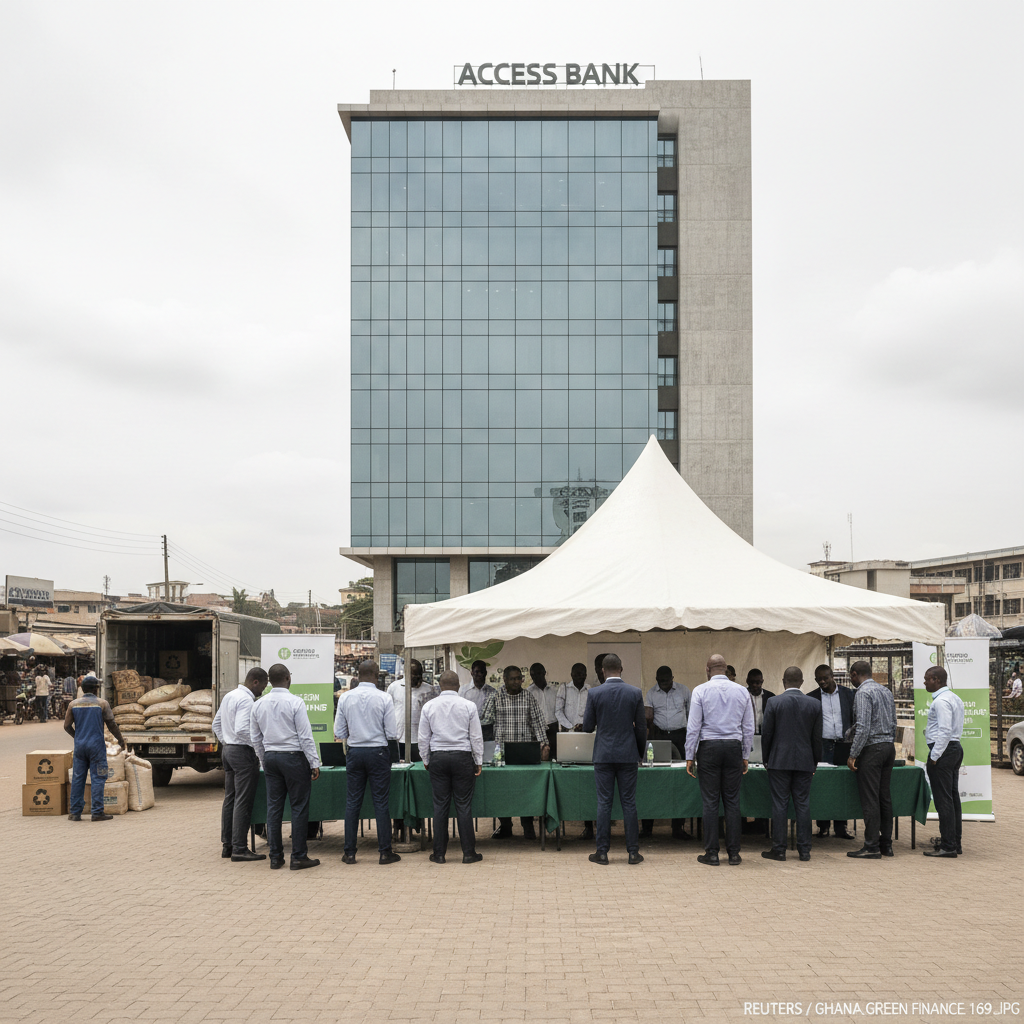
Access Bank Ghana and Birmingham City University trained small and medium-sized enterprises (SMEs) on green financing during a two-day workshop in Accra. The programme equipped SMEs with knowledge and tools for environmentally responsible business practices and access to green financing opportunities. This initiative marks the second phase of a partnership between the two institutions, established in 2024.
The workshop, held on June 18, brought together SME owners, prospective clients, and bank staff. It aimed to embed Environmental, Social, and Governance (ESG) principles into Access Bank Ghana's lending operations and capacity-building programmes. The initiative helps businesses integrate sustainability into their operations. This positions them to benefit from emerging global financing opportunities linked to environmental and social governance standards.
This partnership fits into Ghana's broader economic narrative of promoting sustainable development and attracting foreign investment aligned with global ESG criteria. The government and financial sector increasingly recognise the importance of green initiatives to build a resilient economy. Data indicates rising energy costs and supply chain disruptions affect Ghanaian businesses. This makes sustainability an urgent priority for continued growth.
Eugene Ocansey, Executive Director for Retail and SME Banking at Access Bank (Ghana) PLC, stated that climate change effects are already impacting businesses. He emphasised that sustainability is crucial for business growth and profitability. Ocansey added that the bank will incorporate sustainability assessments into its credit evaluation processes. Businesses with strong environmental practices will receive preferential financing terms.
The workshop implies a shift in banking practices towards incentivising sustainable operations in Ghana’s SME sector. Future market dynamics may see increased competition among financial institutions to offer green financing products. Policymakers may also introduce further incentives to promote environmentally friendly business models. This could influence investment decisions and employment across various sectors. Increased access to green financing will help Ghanaian SMEs remain competitive in global markets.
Professor Amin Karimu and Professor Javed Ghulam Hussain facilitated the workshop sessions. They covered sustainable business models, green financing structures, and practical ESG integration for SMEs. The facilitators encouraged participants to view sustainability as a key driver for growth, not just a regulatory requirement. They noted that businesses adopting responsible environmental and social practices often show stronger profitability and resilience. This also increases their appeal to investors.
This workshop aligns with Access Bank Ghana's strategic goal to become a leading sustainable bank in West Africa. The bank is aligning its operations with evolving global financing standards and environmental governance expectations. This supports SMEs in building resilient and competitive businesses. This approach ensures long-term economic stability and addresses critical environmental challenges facing Ghana.