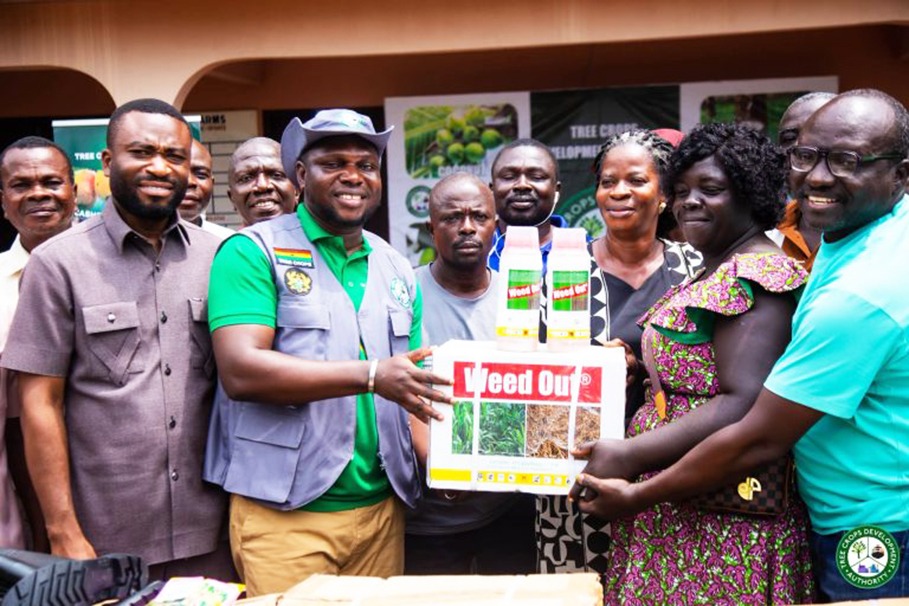
The Tree Crops Development Authority (TCDA) has distributed 60,000 elite rubber seedlings to 135 beneficiary farmers in the Western Region. This significant initiative forms part of the TCDA Free Elite Seedlings Distribution Programme, targeting the 2026 planting season.
Beyond the seedlings, beneficiaries also received crucial farm inputs. These included termiticides, herbicides, and Wellington boots, all designed to support the successful establishment and long-term maintenance of their new rubber plantations. This comprehensive support package aims to ensure high survival rates and optimal growth for the distributed seedlings.
This distribution aligns with Ghana's broader economic strategy to diversify its agricultural exports and reduce reliance on traditional crops like cocoa. The government, through the TCDA, is actively promoting tree crops such as rubber, cashew, and oil palm to create new revenue streams and employment opportunities. This move is critical for rural development and enhancing Ghana's position in global commodity markets.
Dr. Andy Osei Okrah, the Chief Executive Officer of the TCDA, led this initiative. He indicated that the program extends beyond merely increasing production. The Authority envisions creating an enabling environment for private investment in rubber processing and manufacturing. This includes developing products like car tyres, medical gloves, and other rubber-based items within Ghana.
The initiative reaffirms TCDA’s commitment to increasing production across Ghana’s tree crops sector. Rubber has been identified as one of the Authority’s key strategic priority crops due to its significant economic potential. This focus on value addition could transform Ghana from a raw material exporter to a producer of finished goods, capturing more value within the country.
Beneficiary farmers have commended the government and the TCDA leadership for this vital support. They noted that the intervention will directly help increase production, improve their livelihoods, and accelerate the growth of Ghana’s rubber sector. Such farmer feedback is crucial for evaluating the program's effectiveness and guiding future agricultural policies.
Looking ahead, the success of this program will depend on consistent monitoring and further investment in the rubber value chain. The TCDA will need to ensure that farmers receive ongoing technical assistance and that market linkages for their produce are robust. The development of local processing facilities will be a key indicator of the program's long-term impact on Ghana's industrialization efforts.
The push for value addition in the rubber sector could attract foreign direct investment into manufacturing. This would create skilled jobs and transfer technology, further boosting Ghana's economic complexity. The TCDA's strategy represents a forward-thinking approach to agricultural development, aiming for sustainable growth and economic resilience.