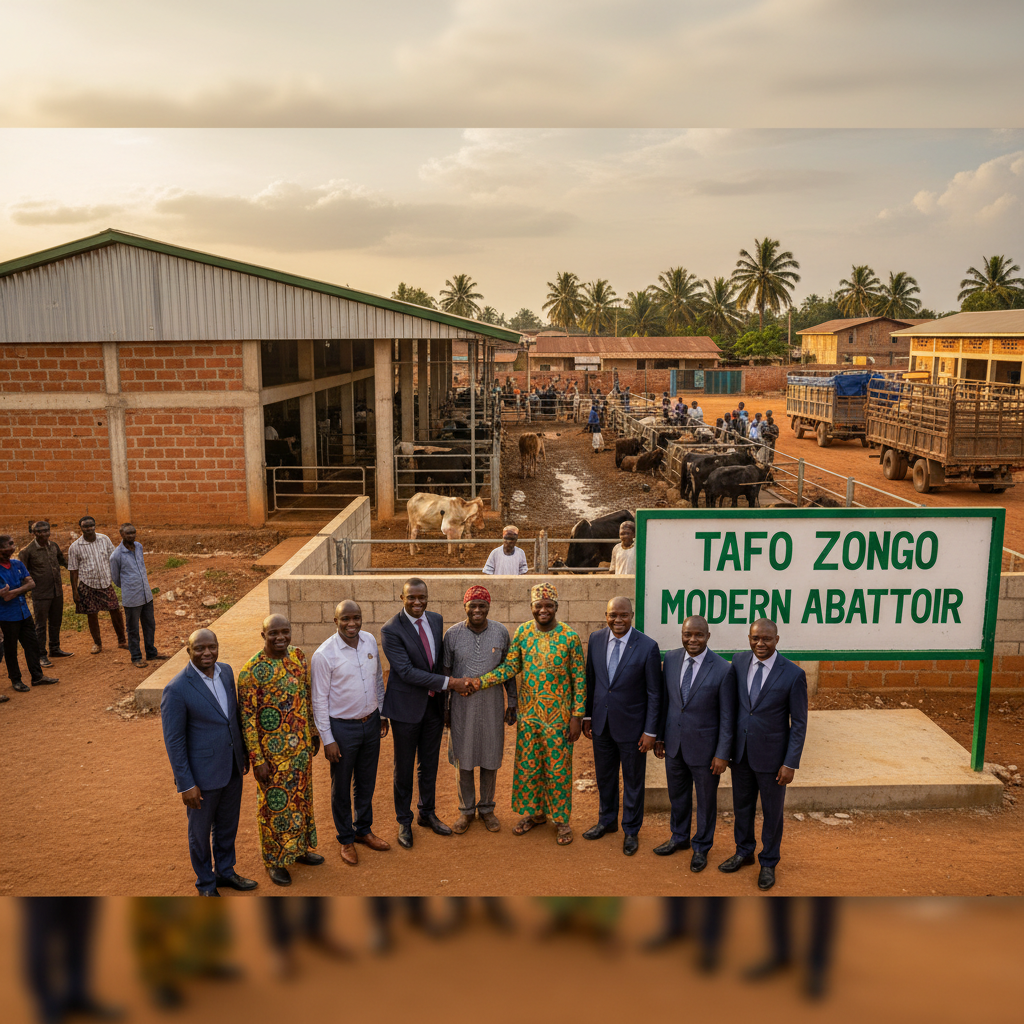
Tafo Zongo, in Ghana's Ashanti Region, will soon benefit from a new abattoir and poultry processing centre. Local businessman Abdul Hamid Kabore is investing an estimated GHS 1 million into the facility. This private investment aims to modernize meat processing and create substantial employment opportunities.
The project responds to long-standing issues of unhygienic slaughter at makeshift sites within Tafo Zongo. Residents currently rely on unregulated spots for processing animals for social and religious events. The new facility will house dedicated sections for cattle, sheep, goats, and poultry. It will serve Tafo Zongo and surrounding communities like Mamponteng, Pankrono, and Aboaso.
This development is crucial for Ghana’s agricultural sector and public health standards. Modern meat processing facilities reduce the risk of foodborne illnesses. They also support formal livestock trade, which is a key component of the Ghanaian economy. This investment aligns with broader efforts to formalize informal economic activities across the country.
Abdul Hamid Kabore, the investor, stated his commitment to the community. He noted, “There is no job. That is one of the reasons we decided to start this project.” He hopes the facility will create nearly 200 jobs upon completion. The abattoir section will mainly employ men, while the poultry centre will create opportunities for women.
The project's initiation marks a significant step towards improved food safety and economic development. Its completion is expected within one year. However, a major drainage channel crossing the site presents an engineering challenge. This could add about GHS 800,000 to the construction costs. Decision-makers and local leaders are watching closely for progress and potential support to overcome this obstacle. The facility promises to boost the livelihoods of cattle rearers and food vendors in the area.
Beyond direct employment, the facility is expected to stimulate the local economy. It will provide a central hub for livestock trade and processing. This will benefit people involved in animal rearing, food sales, and related services. The project also addresses a critical gap in large-scale meat processing facilities in the region, outside Kumasi and Kaase.
During Eid festivals, thousands of animals are slaughtered in the Zongo community alone. A proper, hygienic facility will ensure safer handling and preparation of meat for consumption. Residents like Abdul-Basit Mohamed believe the project will strengthen the local economy. He highlighted the numerous people who will benefit from the improved infrastructure and job creation. Investment in such local infrastructure projects often leads to broader socio-economic benefits. These benefits include better community health and increased income for residents.