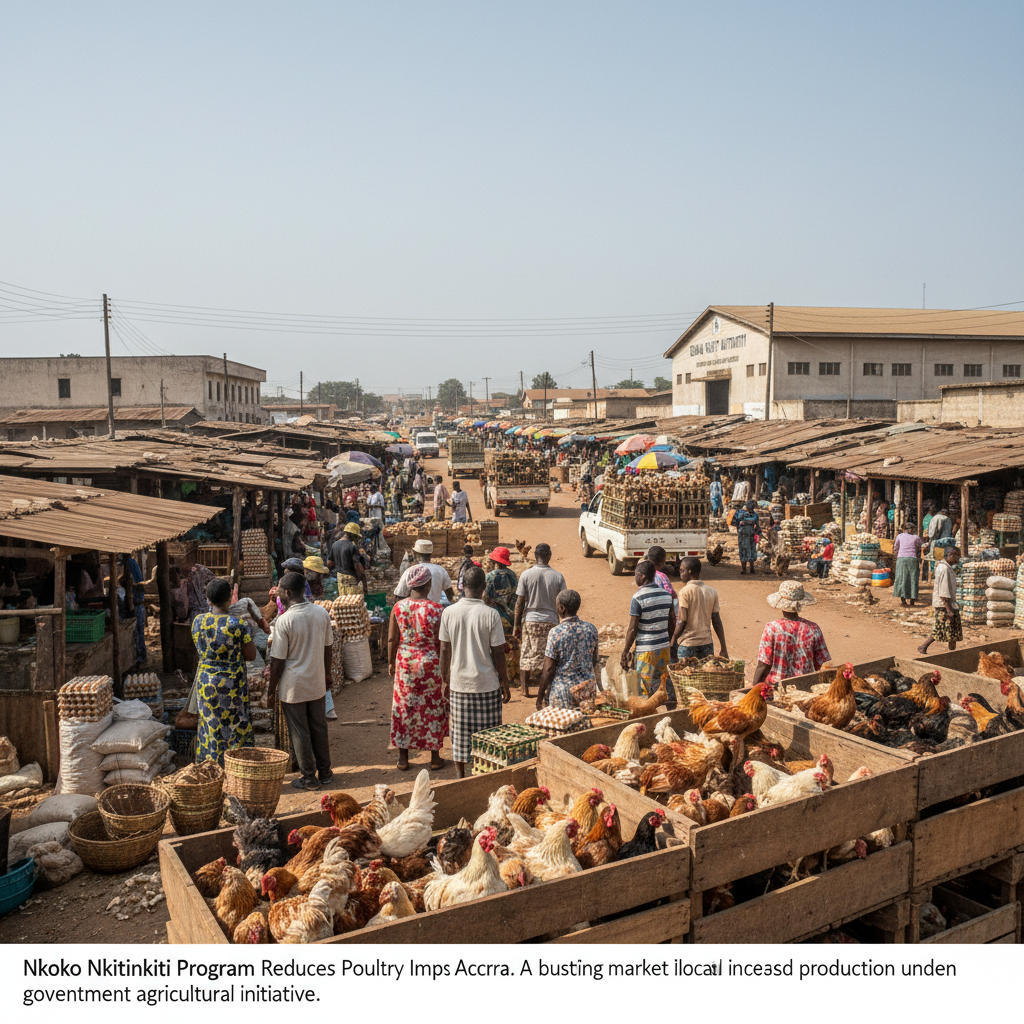
Ghana's government, through its Nkoko Nkitinkiti initiative, aims to reduce the nation's heavy reliance on imported poultry products. Akwatia MP Bernard Bediako Baidoo states this program is a vital step to boost local production and alter consumer preferences.
The current household poultry distribution component is only the initial stage of a larger strategy. This strategy seeks to strengthen Ghana's domestic poultry industry over time. The program has already reached 11 regions, with plans to expand to five more across the country.
Ghana consistently faces significant economic pressure from high poultry imports. This situation impacts local producers and the national economy. The Nkoko Nkitinkiti initiative directly addresses this long-standing challenge by promoting a culture of local poultry rearing. It stimulates domestic supply and encourages Ghanaians to consume locally produced chicken.
Bernard Bediako Baidoo, the Akwatia MP, spoke on JoyNews’ Newsfile programme on July 11. He emphasized that the program should be understood based on its stated policy objectives. He said, "It is not a bad project at all." The Akwatia MP believes stakeholders must evaluate the initiative within the context of these broad goals, not just its initial rollout.
Looking ahead, the program's success will depend on its subsequent phases, which will involve organised groups and various actors in the poultry value chain. These future stages are crucial for building a sustainable poultry ecosystem. Decision-makers will monitor the program's impact on import figures and the growth of local poultry businesses. The long-term change in consumer habits towards local produce will also be a key indicator. Market participants will watch for any shifts in supply dynamics and price stability.
The government's focus extends beyond mere distribution; it seeks a systemic change. The initiative envisions a robust domestic poultry industry that supports farmers and processors across the country. This shift could reduce the outflow of foreign exchange spent on imports. It would also create jobs and enhance food security within Ghana. The broader economic implications for Ghana's balance of trade are considerable.
The Nkoko Nkitinkiti project represents a strategic effort to reorient Ghana's poultry sector. It aims to reduce import dependence and foster national economic resilience. Subsequent phases will highlight the government's commitment to this long-term vision. The impact on local markets and the agricultural sector will be closely observed by analysts and the public alike.