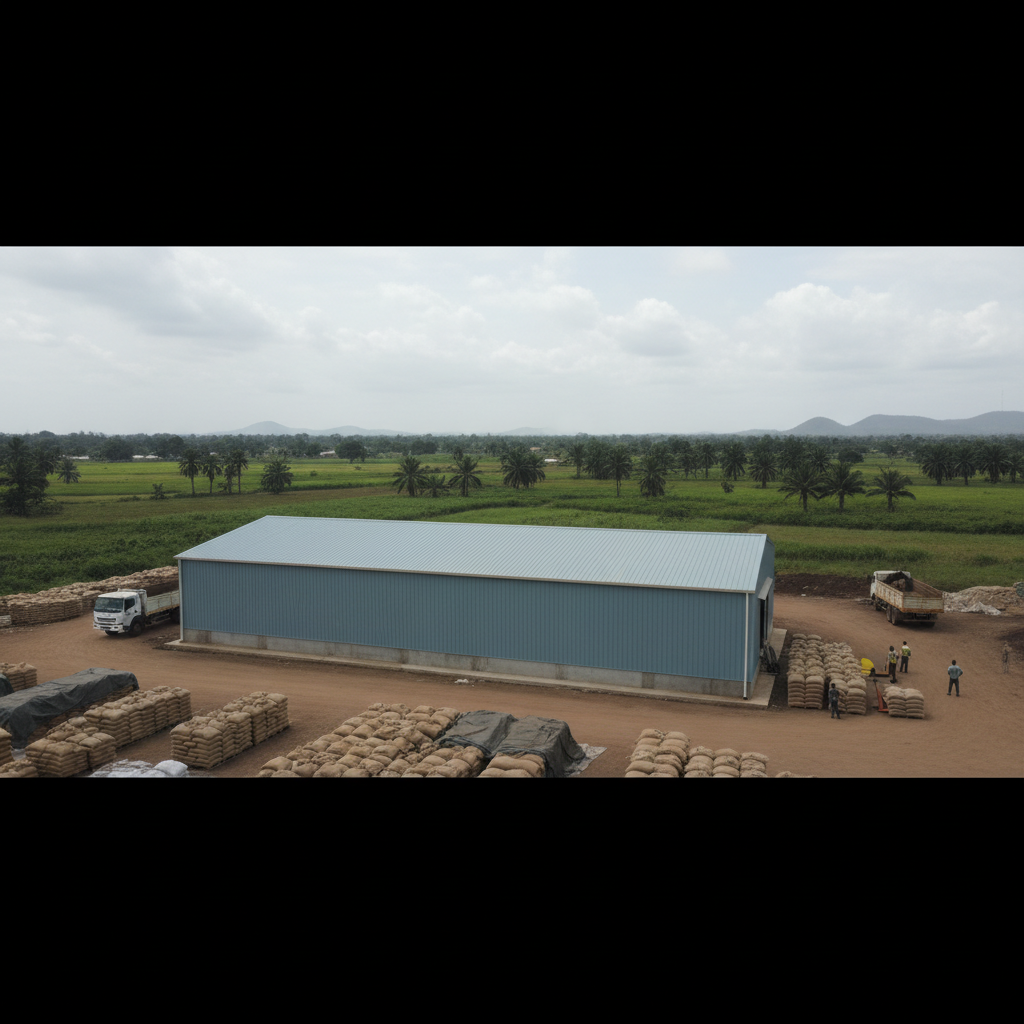
The German Development Cooperation, partnering with Saving Grains 301 GmbH, has formally handed over a new community warehouse. This facility will serve farming communities in Shebo, located in Ghana's Northern Region.
This warehouse represents a key achievement of the Fund for the Promotion of Innovation in Agriculture (i4Ag). It aims to combat significant post-harvest losses, which can account for up to 40% of harvested grain. The facility will provide safe storage, improve quality management, and create a marketplace for better trading.
Addressing post-harvest losses is crucial for Ghana's agricultural sector. These losses directly impact food security and farmer incomes. The i4Ag project aligns with national efforts to modernize agriculture and enhance rural livelihoods. Reliable storage infrastructure and market access are vital for economic stability in farming communities.
Mr. Issah Nadjo, representing GIZ Ghana, emphasized the importance of local collaboration. He stated that partnerships with entities like the Ministry of Food and Agriculture were essential. These collaborations helped validate innovative technologies under Ghanaian conditions. They also fostered local ownership for sustained use after the project concludes.
This initiative promises to improve market access and food security for smallholder farmers. The project supports 27 farmer groups, many led by women and youth. These groups will benefit from collective marketing, knowledge sharing, and financial services access. Decision-makers and markets will watch for sustained reductions in post-harvest losses and increased farmer incomes as a result.
Over the past two years, the i4Ag project introduced an integrated package of innovations. This included hermetic storage bags and digital quality monitoring systems. Improved storage infrastructure and biomass-based grain drying solutions were also part of the package. These innovations fostered new economic opportunities for village entrepreneurs and improved market access for smallholder farmers.
More than 16,000 smallholder farmers, including over 8,000 women, received training. This training focused on improved post-harvest management practices. Approximately 90% of trained farmers adopted at least one innovation promoted by the project. This led to 80% of farmers reporting reduced post-harvest losses.
The project also demonstrated the viability of market-based solutions for post-harvest management. Over 18,000 farmers registered on the Saving Grains platform. More than 1,000 metric tonnes of grain were traded in the last twelve months. Post-harvest losses within the Saving Grains business model decreased by 17.5%.
The official inauguration of the Shebo warehouse took place on June 30. More than 50 representatives attended, including officials from the Ministry of Food and Agriculture. The World Food Programme, district agriculture departments, local chiefs, and farming communities were also present. The closing week activities aimed to celebrate achievements and discuss sustainability.