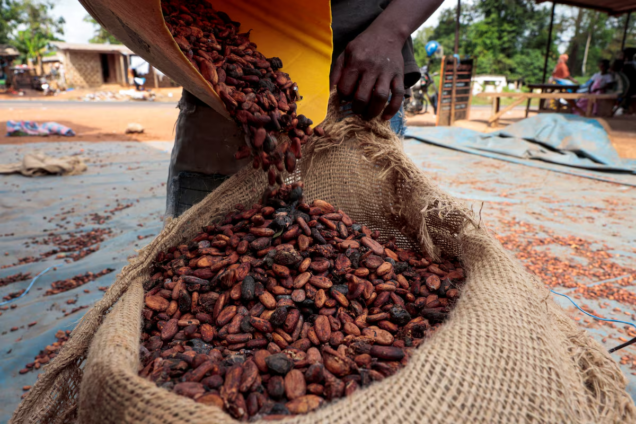
Ghana's cocoa farmers will receive a statutory guarantee of at least 70% of the Gross Free on Board (FOB) price under the proposed COCOBOD Bill, 2026. This significant reform aims to provide a legal floor for producer prices, directly linking farmer incomes to international cocoa prices. The bill seeks to replace outdated legislation, consolidating multiple laws into a single, modern framework for Ghana's more than 800,000 cocoa-farming households.
This guaranteed price is a crucial step to strengthen the financial stability of cocoa farmers, who have historically faced price volatility. The current system has largely relied on policy decisions, making farmer incomes less predictable. The new bill addresses this by embedding the 70% FOB price as a legal requirement, ensuring greater transparency and fairness in the pricing mechanism.
The proposed legislation is a direct response to a fragmented and outdated legal framework that has governed Ghana's cocoa sector for four decades. Existing laws, including the Ghana Cocoa Board Act, 1984 (PNDCL 81), have led to regulatory inconsistencies and administrative inefficiencies. These issues have contributed to declining cocoa production, increased smuggling, rising debt, and limited value addition, hindering Ghana's ability to meet evolving international sustainability standards.
The Ghana Report indicates that the bill also formally places COCOBOD under the oversight of the Ministry of Finance. This move follows a policy directive from 2025 and highlights COCOBOD's significant fiscal role. The cocoa regulator has historically relied heavily on borrowing and syndicated financing to support cocoa purchases and operations. Its previous oversight under the Ministry of Food and Agriculture, formalized in 2020, will now revert to the Finance Ministry.
A major financial reform in the bill is the establishment of a Cocoa Sector Debt Sinking Fund. This fund will settle verified historical liabilities accumulated within the cocoa sector. It will draw financing from parliamentary appropriations, asset recovery proceeds, surcharges, and negotiated settlements, operating within the Treasury Single Account. This initiative aims to clean up COCOBOD's balance sheet without affecting farmer payments or the authority's ability to finance cocoa purchases.
The bill also introduces stricter sanctions on COCOBOD's borrowing powers. Borrowing will now be restricted to activities directly related to cocoa production, marketing, price stabilization, and value addition. Officials who authorize borrowing outside these permitted purposes could face severe penalties. These include fines ranging from 15,000 to 30,000 penalty units, imprisonment of between five and ten years, and a potential 10-year ban from holding public office. This measure aims to curb excessive and unauthorized debt accumulation.
Beyond financial restructuring, the legislation emphasizes local value addition. It proposes a minimum threshold for 50% of Ghana’s cocoa production to be processed locally over a transitional period. To achieve this, COCOBOD must improve access to cocoa beans, provide financing support, introduce appropriate pricing mechanisms, and offer incentives to local processors. This target aims to boost Ghana's industrial capacity and create more jobs within the cocoa value chain.
Furthermore, the bill prohibits COCOBOD from engaging in speculative or highly leveraged financial transactions that expose public funds to excessive risk. Hedging activities will instead be governed by a formal Cocoa Price Risk and Hedging Policy. Directors and officers responsible for unauthorized transactions leading to financial losses could face personal liability through surcharge and recovery proceedings, ensuring greater accountability.
The Producer Price Review Committee, which advises on cocoa producer prices, will also receive statutory recognition. This will give the committee a formal legal mandate, strengthening transparency and accountability in the producer-pricing process. This change is expected to improve confidence among farmers and other stakeholders in the pricing mechanism. The new COCOBOD Bill, 2026, represents a comprehensive effort to modernize Ghana's cocoa sector, addressing long-standing issues and positioning it for future growth and sustainability.