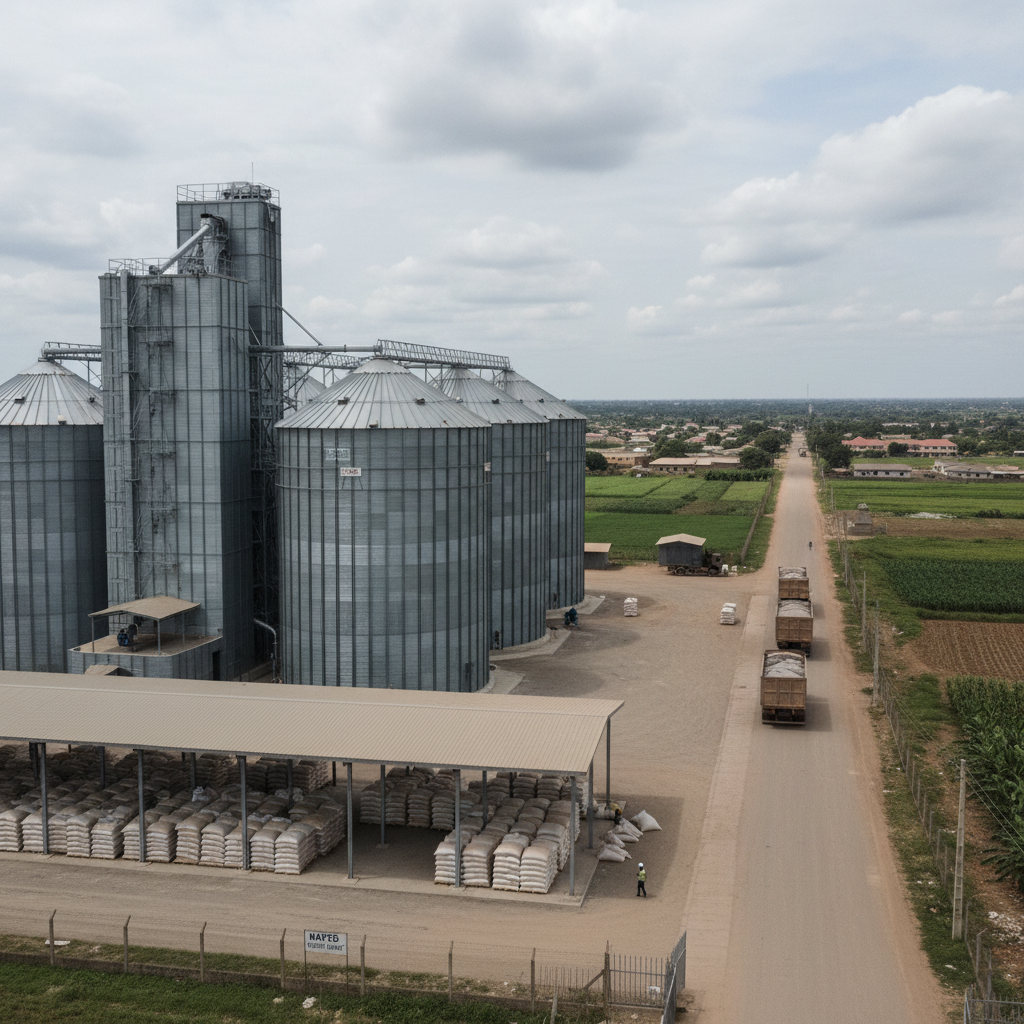
The National Food Buffer Stock Company (NAFCO) has intensified its efforts to secure additional food storage facilities nationwide. This strategic move aims to bolster the National Food Reserve Programme, a government initiative designed to purchase surplus grains for storage and future use, thereby reducing post-harvest losses and safeguarding local farmers' incomes.
This initiative follows challenges with the programme's initial rollout, which suffered from inadequate funding and a shortage of suitable storage facilities. These issues often left rice and maize farmers unable to sell their produce during bumper harvests, leading to significant financial losses. NAFCO's current drive directly addresses these critical infrastructure gaps.
This renewed focus on food storage infrastructure is crucial for Ghana's broader economic stability, particularly within the agricultural sector. Strengthening the National Food Reserve Programme helps manage commodity prices, assures food security, and protects a significant portion of the rural economy. Past difficulties highlight the need for robust logistics to support agricultural output and prevent food waste, aligning with national development goals.
NAFCO Chief Executive Officer, George Abradu-Otoo, has led a nationwide tour to engage with state institutions and expand the country's storage infrastructure. During a two-day visit, Mr. Abradu-Otoo inspected a dilapidated 15,000-metric-ton warehouse in Tema. This facility belongs to the Ministry of Food and Agriculture (MoFA). Discussions are underway between NAFCO and MoFA to rehabilitate this warehouse for rice aggregation within the Shai Hills–Asutuare enclave.
The CEO also visited Juapong, where he inspected a warehouse at the former Volta Star Textiles Limited site. Rehabilitation work has already begun there, following discussions with the Ministry of Trade, Industry and Agribusiness. In Hohoe, Mr. Abradu-Otoo assessed a 1,000-metric-ton warehouse built under the One District, One Warehouse initiative. He issued directives to clear weeds, undertake minor repairs, and improve access routes to make the facility operational immediately. The NAFCO team further visited a 1,000-metric-ton warehouse in Pai-Katanga, Oti Region. This facility also requires vegetation clearance and minor repairs before use.
The NAFCO delegation also visited several senior high schools, including OLA Girls SHS in Ho. School authorities consistently reported adequate food supplies but highlighted insufficient storage space as a major challenge in preserving food commodities. This indicates a widespread need for improved storage solutions beyond primary buffer stock sites. Regional Ministers for Volta, James Gunu, and Oti, John Gyapong, commended NAFCO’s proactive efforts. They acknowledged that strengthening food security also directly protects farmers' incomes.
This latest tour follows similar visits earlier this year to the Eastern, Ashanti, Northern, Upper East, Upper West, and Bono regions. These ongoing visits underscore NAFCO's commitment to a holistic, nationwide approach. The expanded storage capacity is expected to stabilise food supply chains, reduce market volatility, and provide a more reliable income for farmers. Decision-makers and agricultural markets will closely watch the progress of these rehabilitation projects and their impact on reducing post-harvest losses. Successful implementation will enhance Ghana's food resilience and support sustained agricultural growth.