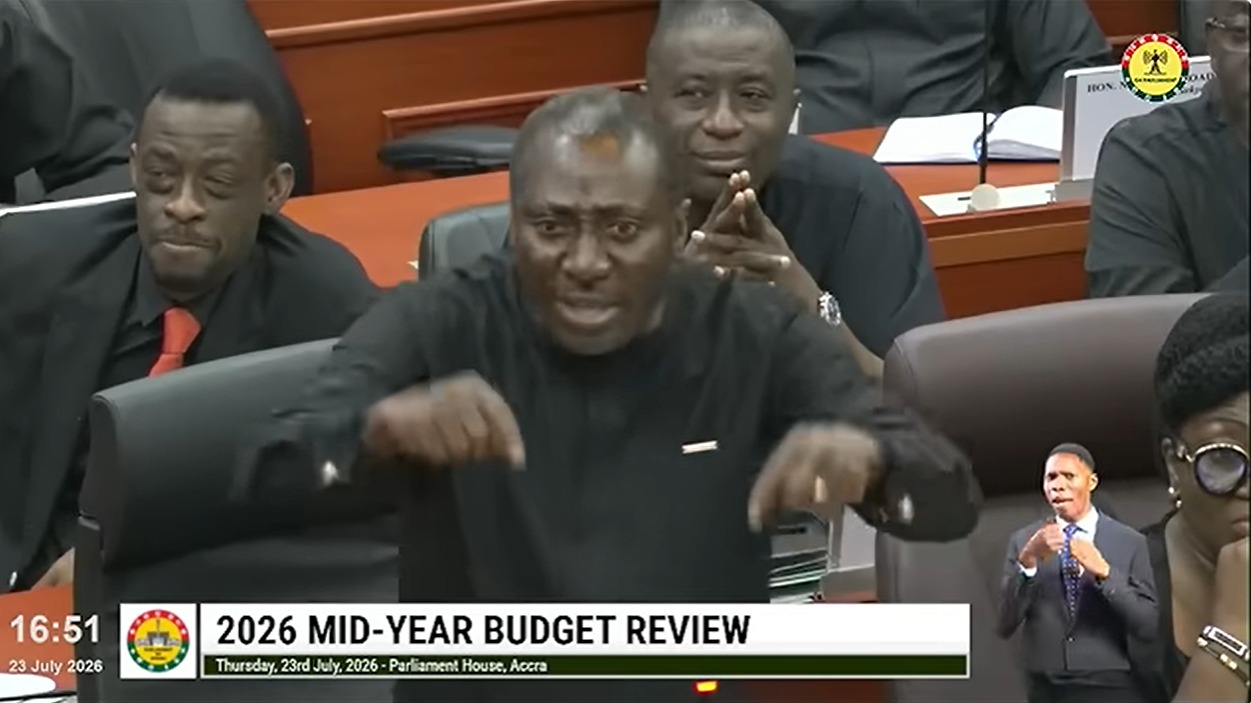
Ghana's Minority Leader, Alexander Afenyo-Markin, made a false claim regarding the 2026 mid-year budget review. He stated that the Finance Minister presented no policy announcements for the cocoa sector. Official checks, including parliamentary records and the Finance Ministry's published budget text, confirm this assertion is incorrect.
The Finance Minister, Cassiel Ato Forson, delivered the 2026 Mid-Year Fiscal Review on July 23, 2026. During his presentation, he outlined several significant policy changes for the cocoa industry. These announcements directly contradict Afenyo-Markin's statement made during his response to the budget review.
This misrepresentation is crucial given cocoa's central role in Ghana's economy. The sector employs approximately 4 million farmers and contributes significantly to the nation's export earnings. Accurate reporting and understanding of government policy are vital for stakeholders, including farmers, investors, and international partners, to make informed decisions and assess the economic outlook.
The Finance Minister explicitly announced plans to submit a new COCOBOD Bill to Parliament. This Bill aims to repeal and replace the existing Ghana Cocoa Board Act, 1984 (PNDCL 81). The proposed legislation will introduce a new producer pricing mechanism linked to the global market, ensuring greater transparency and responsiveness to international prices.
Furthermore, the budget detailed a new financing framework for cocoa purchases and related operations. A key objective is to ensure that at least 50 percent of Ghana’s cocoa beans are processed locally. This move aims to add value to the raw commodity and create more jobs within the country.
The government also committed to guaranteeing cocoa farmers not less than 70 percent of the gross Free-on-Board (FOB) price. This measure is intended to improve farmer incomes and provide greater stability in the face of fluctuating global prices. These specific policy points were clearly articulated in the budget presentation and are available in the official documentation.
The Minority Leader's claim, made on July 23, 2026, suggested a lack of attention to the suffering of cocoa farmers. However, the detailed policy announcements indicate a strategic focus on the sector's long-term sustainability and farmer welfare. The discrepancy between the claim and the verifiable facts underscores the importance of fact-checking in political discourse.
This incident highlights the need for public officials to base their statements on accurate information, especially concerning critical economic sectors. The government's commitment to local processing and a new pricing mechanism could significantly impact the livelihoods of millions of Ghanaians. Stakeholders will closely monitor the implementation of these announced policies.
The proposed COCOBOD Bill and the new financing framework represent substantial reforms. Their successful execution will be critical for modernizing Ghana's cocoa industry and enhancing its competitiveness. The market and farmers will be watching for the legislative process and the practical effects of these policy shifts.