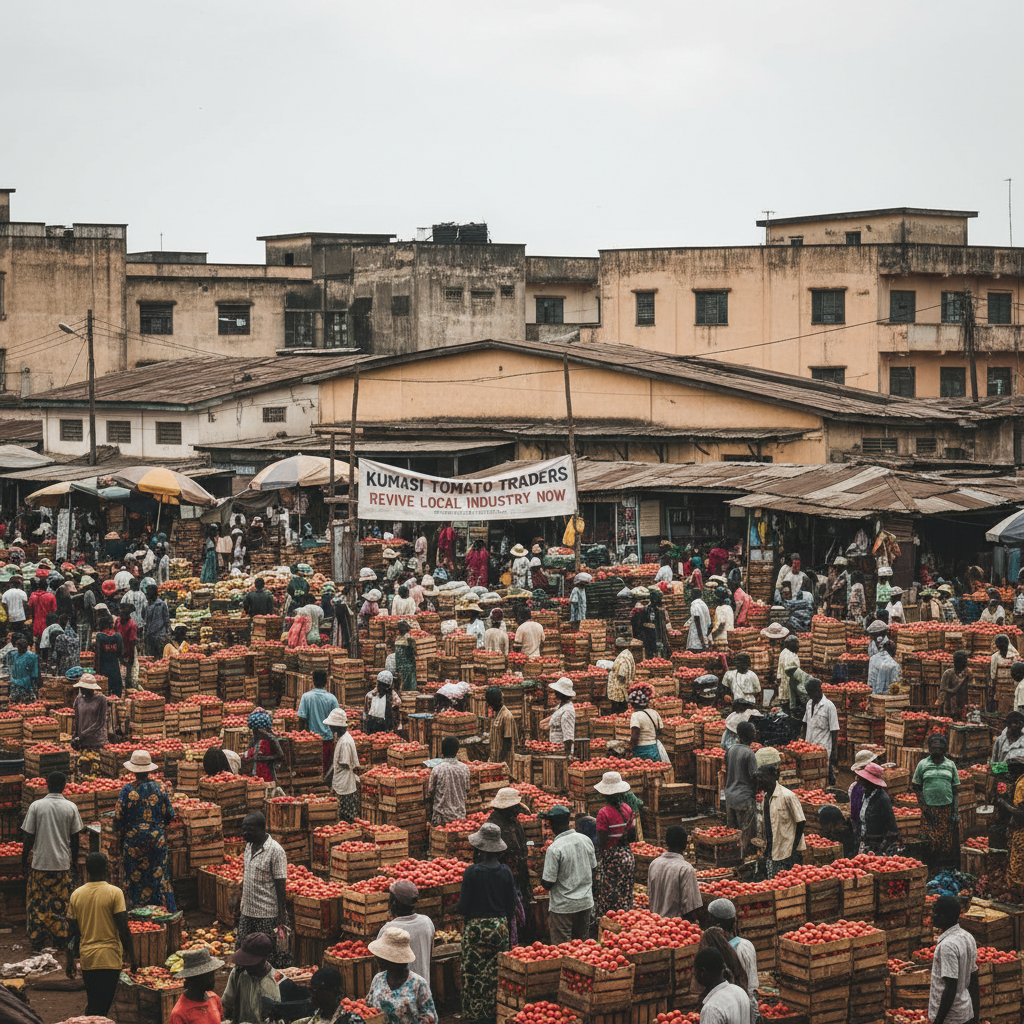
Tomato traders in Kumasi are urgently appealing to the Government of Ghana to implement measures to revive the country's local tomato industry. They seek consistent year-round production, stable prices for consumers, and a significant reduction in the nation's reliance on imported tomatoes. Dealers at central markets like Asafo and Roman Hill in Kumasi have observed a sharp decline in local output.
This decline has forced many traders to depend on supplies from neighbouring countries, especially during periods of scarcity. The current shortage has worsened due to heavy rains destroying farms in key producing areas. The heavy rains led to reduced supplies and a surge in market prices for tomatoes across the country. Additionally, traders can no longer source tomatoes from Burkina Faso, further exacerbating the supply crisis.
The issue of declining local tomato production fits into a broader narrative of challenges facing Ghana's agricultural sector and its impact on food security. Data from the Ghana Statistical Service shows that food inflation remains a significant concern, with tomato prices surging by nearly 39% in one month recently. This trend highlights the vulnerability of fresh produce supply chains and their sensitivity to climate impacts and import disruptions. Ghana's economy frequently experiences price volatility in essential food items.
Madam Ama Agyeiwaa, a tomato trader at the Asafo Market, highlighted the widespread impact of the shortage. She stated, “The shortage affects not only traders but also restaurants, chop bars, food vendors, and households depending on fresh tomatoes for daily meals.” Her remarks underline how crucial tomatoes are to Ghanaian cuisine and household budgets. She urged the government to expand irrigation infrastructure in major tomato-growing communities.
Expanding irrigation would support year-round cultivation and reduce dependence on rainfall. Madam Agyeiwaa also advocated for increased access to improved, disease-resistant tomato seeds and affordable fertilisers for farmers. These inputs would help farmers increase productivity and improve the quality of their produce. Madam Ataa Yaa, another trader, urged investment in technologies allowing tomato cultivation during the rainy season. She stressed that innovative farming methods are necessary to ensure continuous production throughout the year because tomatoes are an essential ingredient.
Traders also called for improvements in road infrastructure connecting farming communities to major markets. Better roads would reduce transportation costs and minimise post-harvest losses. They also recommended establishing modern cold storage facilities to preserve fresh tomatoes during periods of abundance. Such facilities would help reduce spoilage and ensure better supply management. Furthermore, they advocated for developing a vibrant tomato processing industry. This industry would provide a ready market for farmers and protect them against price fluctuations during bumper harvests.
Financial institutions should design affordable credit facilities for tomato farmers and market women, the traders said. This would enable them to expand their businesses and improve productivity across the entire value chain. They encouraged young people to enter commercial tomato farming. They stressed that government support through mechanisation, irrigation, and access to credit would make the sector more attractive and profitable for a new generation of farmers. The Ministry of Food and Agriculture should also strengthen extension services. This means intensifying farmer education on climate-smart agriculture, modern production techniques, and effective pest and disease management. Stronger collaboration among farmers, traders, processors, and transport operators is vital to improve efficiency and ensure consistent supply.