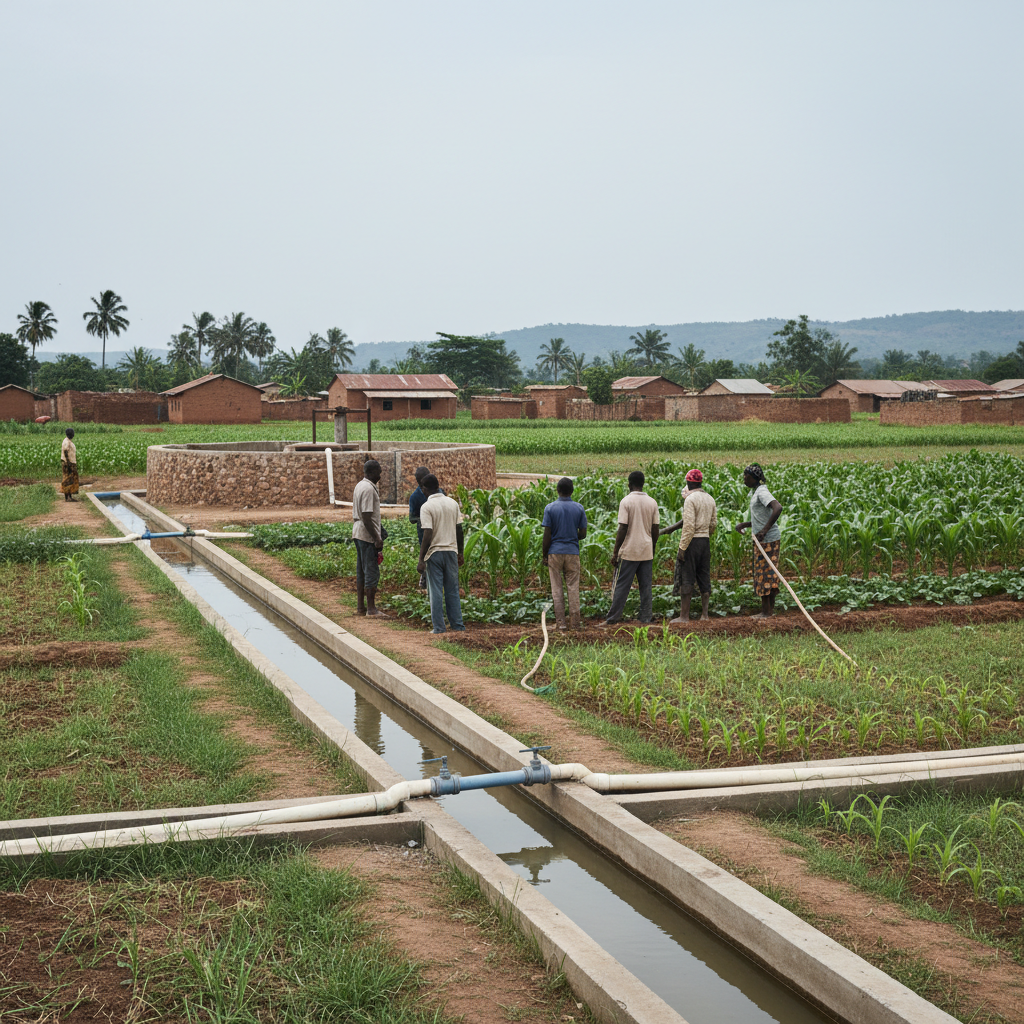
The Konjiehi community in the Wa Municipality has received a fenced community garden and a modern drip irrigation system. This new facility aims to promote year-round farming and provide sustainable livelihood opportunities. These efforts will reduce illegal mining, known as galamsey, and irregular migration, offering economic stability to residents.
The International Organization for Migration (IOM) and the German Development Cooperation (GIZ) funded this initiative. The FOSTERING Project, or Fostering Self-Sufficient Economic Stability for Reintegration of Returnees, delivered the system. Community Aid for Rural Development (CARD) Ghana implemented the project with the Wa Municipal Assembly. The intervention strengthens economic resilience in farming communities, boosting all-year agricultural production. It also improves food security and lessens economic pressures driving young people into illegal mining or risky migration.
Agriculture is the main source of income for Konjiehi residents. Many have lacked income after the rainy season ends, leading to economic hardship. This seasonal job scarcity forces young people into galamsey or migration. The new irrigation system allows continuous farming, providing consistent income. This move aligns with Ghana's broader push to diversify rural economies and combat environmental degradation from illegal mining. The government has prioritized climate-smart agriculture to ensure long-term food security and climate resilience.
Mahama Rufai, speaking for the beneficiaries, highlighted the impact of dry season joblessness. “When we finish with the rainy season, we don't have any other work to do other than going to galamsey sites,” he stated. He expressed confidence that the irrigation system would provide a steady income and reduce dependence on illegal mining. Mohamed Fuseina, another beneficiary, described the project as life-changing. She noted it would allow women to remain with their families during the dry season, avoiding travel to southern Ghana for work. This intervention addresses both economic and social challenges faced by the community.
The project will likely improve the local economy by creating consistent agricultural employment. This could lead to a reduction in harmful illegal mining activities and a more stable population. Decision-makers and markets will watch for increased agricultural output and a decline in migration statistics from the area. The success of this project could serve as a model for other rural communities facing similar challenges. The Wa Municipal Assembly described the system as a significant investment in climate-resilient agriculture. They noted that drip irrigation technology would reduce water wastage while enabling year-round crop cultivation. This technology supports government efforts to strengthen climate-smart agriculture practices.
Farm inputs, including seeds, fertilisers, Wellington boots, and cutlasses, were provided to beneficiaries. This support ensures farmers can maximize the new irrigation system's potential. IOM Chief of Mission, Fatou Diallo Ndiaye, emphasized creating sustainable economic opportunities in communities of origin. GIZ Technical Advisor, Ruth Mansah Mensah, urged the community to take ownership of the facility for its long-term viability. She also encouraged young people to use the Public Employment Centre in Wa for career guidance. CARD Ghana Executive Director, Al-Hassan Hudi, confirmed beneficiaries received extensive training in farm management and irrigation. This training ensures the facility remains productive and commercially viable, contributing to wider economic development. Assembly Member Osman Fatawu thanked the partners, assuring them of the community's commitment to protecting and maintaining the facility.