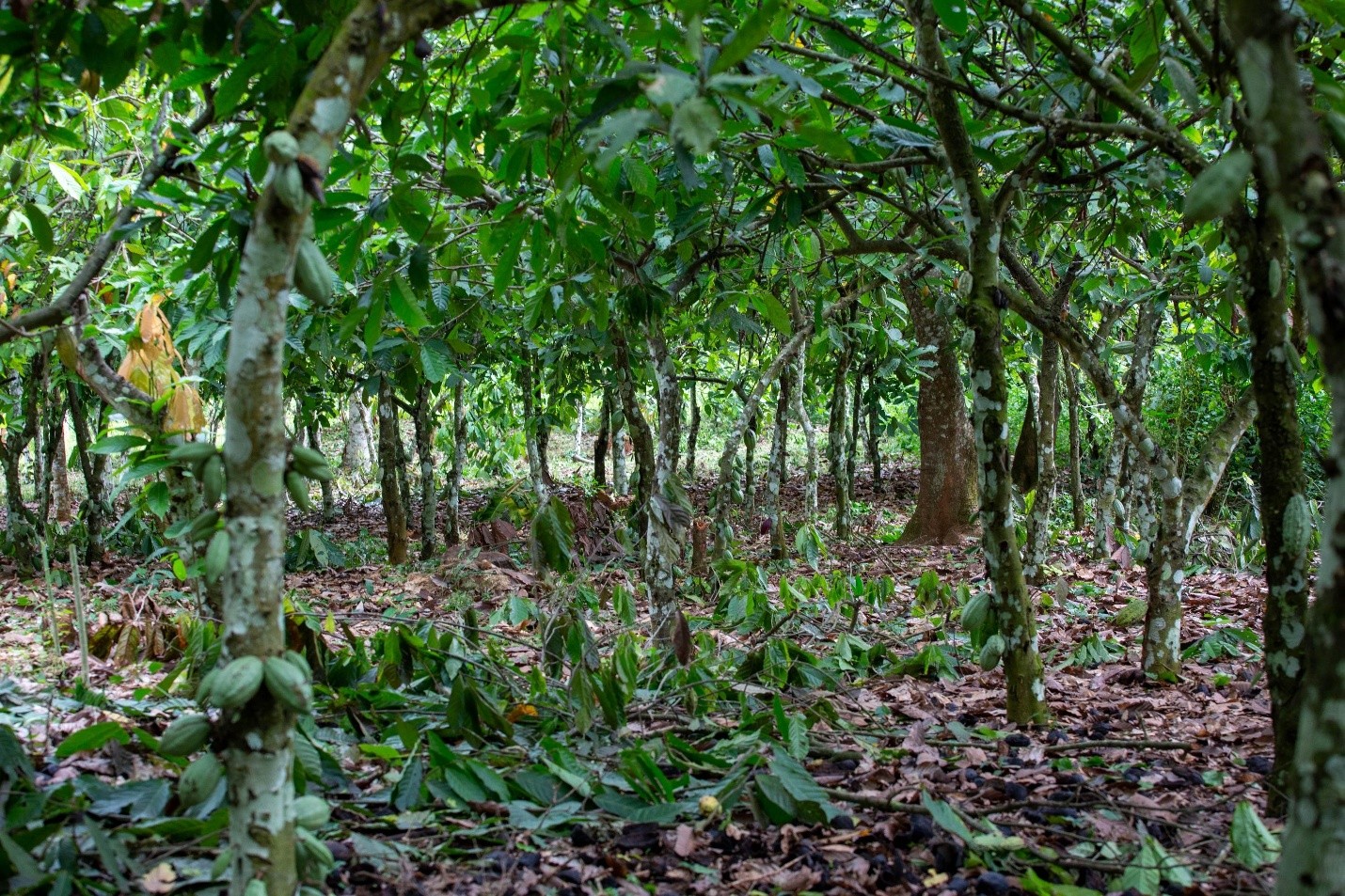
Illegal gold mining, known as galamsey, has destroyed 8,923.8 hectares of Ghana’s legally protected forest reserves. This significant environmental damage was confirmed by a Forestry Commission assessment as of December 31, 2024.
This destruction is equivalent to approximately 12,500 FIFA-standard football fields. The assessment, based on satellite imagery of 45 forest reserves and one national park, highlights the severe impact of illegal mining on Ghana’s natural resources.
The widespread destruction of forest reserves by galamsey operations poses a critical threat to Ghana’s environmental sustainability and its vital cocoa sector. This issue is exacerbated by low cocoa farmer incomes, which make the promise of quick money from illegal mining increasingly attractive. The Forestry Commission’s findings underscore a growing crisis at the intersection of economic hardship and environmental degradation.
Dr. Hugh Brown, CEO of the Forestry Commission, discussed these findings with journalists on March 4, 2026, following a presentation on February 24, 2026. This official confirmation brings urgent attention to the scale of the problem. The data reveals a consistent pattern of encroachment and destruction within protected areas, threatening biodiversity and ecological balance.
The lure of illegal mining is particularly strong for cocoa farmers facing discouraging conditions. Sammy Takyi, a cocoa farmer in Begoro, Eastern Region, considered cutting down his trees due to low returns. He explained that a bag of cocoa that once sold for GHS 3,625 now sells for GHS 2,587, according to Nana Boakye, a Municipal Chief Farmer in Prestea Huni-Valley. This significant drop in income makes it difficult for farmers to sustain their livelihoods.
Professor Peter Bilson Obour, a Senior Lecturer at the University of Ghana’s Department of Geography and Resource Development, points to additional frustrations for farmers. He notes that recommended practices, like integrating other trees for shade, can create more work and cost due to pests. Furthermore, bureaucratic hurdles to cut trees on their own land make farmers feel unfairly treated. These factors contribute to farmers viewing trees as liabilities rather than assets.
An Oxfam analysis from 2023 found that many Ghanaian cocoa farmers earn below a living income. This economic vulnerability makes the instant cash offers from illegal miners hard to resist. Some farmers have partnered with miners on their land, while others have sold their farms completely, often with short-lived financial benefits.
Dr. Kojo Ahiakpa, an agribusiness expert, describes the crisis as a result of weak policy coordination. He states that laws around cocoa, forests, and mining do not connect well, creating enforcement gaps that are exploited. This lack of cohesive policy allows illegal activities to thrive, undermining efforts to protect both the environment and farmer welfare.
In late July 2026, Ghana’s Parliament passed a new COCOBOD Bill. Lawmakers stated this bill consolidates fragmented cocoa laws and introduces new mechanisms. These include a Cocoa Farmers Pension Scheme, an Educational Trust Scheme, and a Cocoa Stabilisation and Diversification Fund. These initiatives aim to cushion farmers against price shocks and support long-term sustainability. However, the effectiveness of these measures in combating illegal mining and deforestation remains to be seen.
The ongoing destruction of forest reserves by galamsey operations will continue to be a major concern for environmental agencies and policymakers. The government must strengthen enforcement against illegal mining while ensuring cocoa farmers receive fair compensation for their produce. The success of the new COCOBOD Bill in improving farmer livelihoods and reducing the appeal of illegal mining will be closely watched. Protecting Ghana’s forests requires a multi-faceted approach that addresses both economic incentives and regulatory gaps.