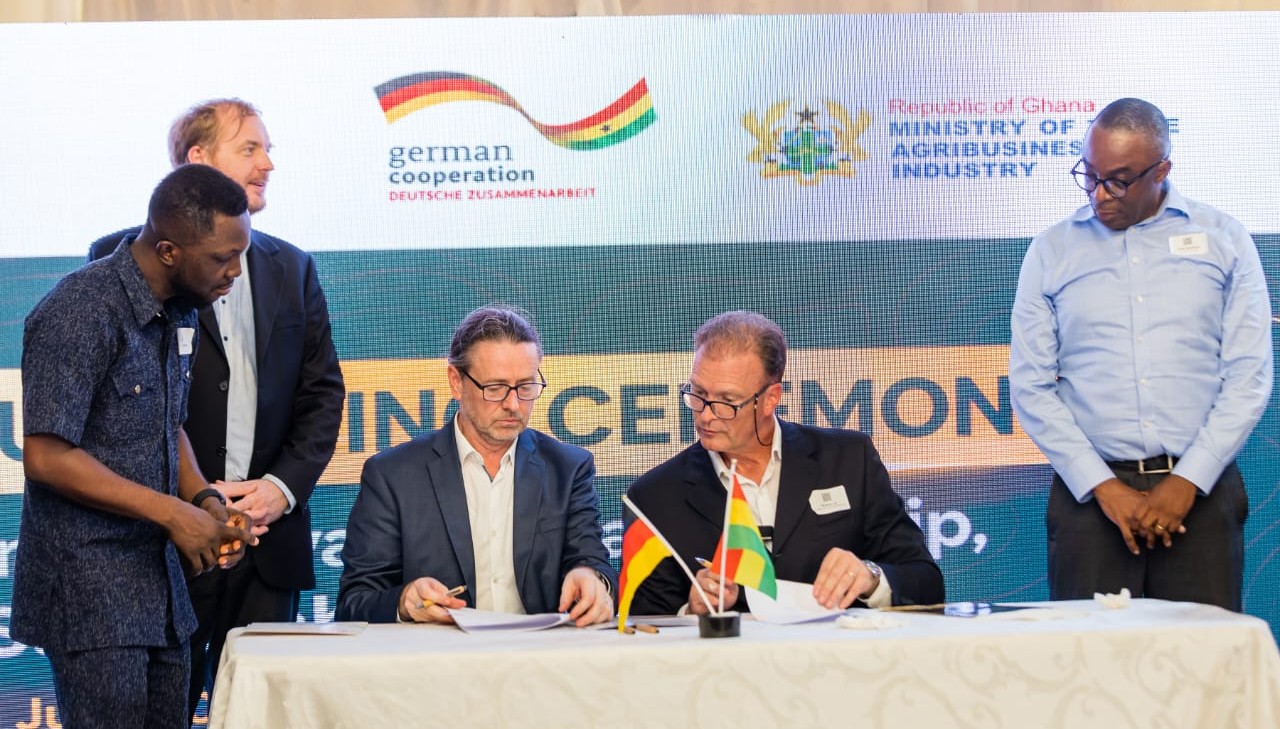
Guinness Ghana PLC and the Deutsche Gesellschaft für Internationale Zusammenarbeit (GIZ) have signed an agreement to invest GHS 31.6 million. This substantial investment will modernize Ghana's sorghum value chain in Northern Ghana.
This initiative aims to strengthen local sourcing for Guinness Ghana. It will also improve climate resilience for farmers and enhance the livelihoods of smallholder farmers. The project directly benefits about 30,000 smallholder sorghum farmers and 40 aggregators. These beneficiaries are located across the Northern, Savannah, Upper West, Upper East, and North-East Regions.
This investment represents one of the largest private-sector commitments in agricultural sourcing in Northern Ghana. It signals a move towards reducing imports and creating economic opportunities within the country. The partnership supports Ghana's broader economic strategy of fostering local production and self-sufficiency. It aligns with efforts to build more resilient agricultural supply chains, especially in climate-vulnerable regions. This type of investment can help stabilize rural economies and reduce reliance on foreign exchange for raw materials.
Mr. Frederic Feraille, Managing Director of Guinness Ghana PLC, stated that local sourcing remains central to the company's business strategy. He said this partnership with GIZ further commits to sustainable sorghum production. Mr. Wilhelm Hugo, Network for Inclusive Economic Development (NIED) Cluster Coordinator at GIZ, emphasised linking smallholder farmers to reliable markets. He also stressed equipping them with tools to compete. Their combined efforts aim to establish sustainable local supply chains.
This partnership will deliver certified, high-quality sorghum seeds to farmers. It introduces digital technologies, including weather stations and drones. Traceability systems will also be implemented. Farmers and aggregators will receive training in quality management and post-harvest reduction. Financial literacy, access to finance, regenerative agriculture, and dynamic agroforestry will also be taught. These measures are designed to improve productivity and climate resilience. The intervention will also support input suppliers, mechanisation service providers, and logistics operators. This will enhance sorghum production for a sustainable supply to Guinness Ghana for Malta Guinness production. This joint effort is a significant step towards improving agricultural practices and economic stability in Northern Ghana.
The investment forms part of Guinness Ghana's Local Raw Material (LRM) agenda, launched in 2012. This agenda seeks to increase the use of locally sourced raw materials. It also aims to create employment opportunities. The LRM agenda reduces imports and provides farmers with reliable markets for their produce. Local raw material usage directly contributes to Ghana's balance of trade. It also strengthens local industries against global supply chain disruptions. This project will be closely watched as a model for future collaborations between private companies and development agencies.