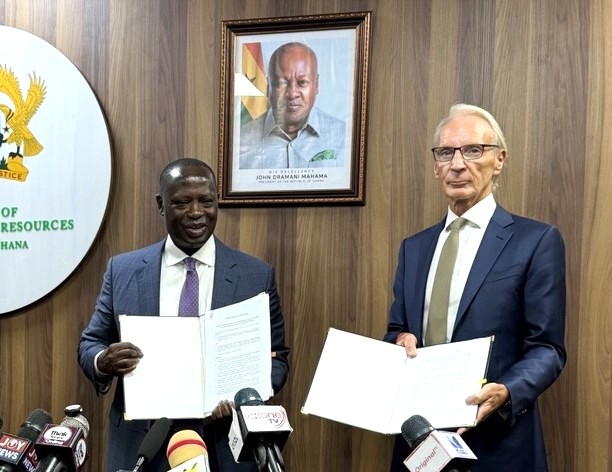
Ghana’s government and the World Gold Council (WGC) have signed a strategic Memorandum of Understanding (MoU). This agreement aims to strengthen cooperation on formalizing artisanal and small-scale gold mining (ASGM) across the country. The partnership will also enhance supply chain integrity and combat illicit finance and gold flows.
The MoU establishes a shared vision for a national network of accessible and trusted gold processing plants. These plants will operate under the highest standards of responsible sourcing. They will also provide artisanal miners with incentives to direct their gold into the formal supply chain. The WGC has committed an initial development grant of GHS 3.7 million (equivalent to $250,000) as a first step. This grant will support cooperative registration under Ghana’s flagship rCOMSDEP program.
This initiative is crucial for Ghana, a leading gold producer, as it seeks to maximize the economic benefits of its natural resources. The formalization of ASGM can significantly increase government revenue through taxes and royalties. It can also improve working conditions and environmental practices in a sector often associated with informal operations. This move aligns with Ghana's broader economic strategy to diversify its economy and enhance transparency in key sectors.
Emmanuel Armah Kofi Buah, the Minister for Lands and Natural Resources, commented on the partnership. He stated, “This partnership reflects Ghana’s clear commitment to transforming artisanal and small-scale gold mining into a responsible, well-regulated and economically empowering sector.” He added that working with the World Gold Council strengthens efforts to formalize ASGM, eliminate harmful practices, and ensure benefits reach communities and the nation.
David Tait, Chief Executive Officer of the World Gold Council, also highlighted the importance of the collaboration. He noted, “Ghana is a global leader in gold production and has demonstrated real ambition in tackling the challenges and opportunities of artisanal and small-scale mining.” Tait believes the MoU provides a strong platform for collaboration, bringing together government leadership, international standards, and industry expertise. This will help build a trusted, transparent, and responsible ASGM value chain for miners, communities, and markets.
The next steps will involve the implementation of policies and standards development. Capacity building and support for traceability technologies will also be key. Decision-makers and markets will closely watch the progress of this formalization effort. Success could attract further investment and improve Ghana's standing in global responsible sourcing initiatives. This partnership has the potential to significantly impact the livelihoods of thousands of artisanal miners and the national economy.
The collaboration also includes skills training and educational support for artisanal mining communities. This holistic approach aims to improve community well-being and environmental protection. It also seeks to enhance the integrity of the global gold market. The long-term success of this MoU will depend on effective enforcement and sustained commitment from both parties.