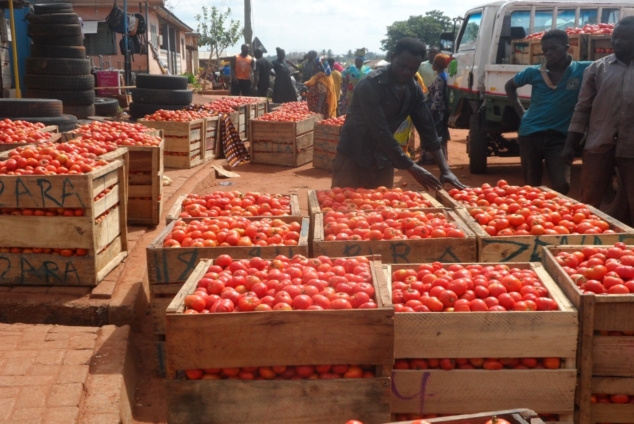
Ghana’s tomato supply deficit could reach 400,000 metric tonnes, according to the Chamber of Agribusiness Ghana. This substantial shortfall includes significant post-harvest losses, challenging the nation's push for tomato self-sufficiency.
The Chamber’s Chief Executive Officer, Anthony Morrison, stated that Ghana’s annual tomato demand is approximately 800,000 metric tonnes. Domestic production peaks at about 510,000 tonnes, leaving an initial gap of 290,000 tonnes. When post-harvest losses, estimated between 20% and 30%, are factored in, the total deficit approaches 400,000 tonnes.
This potential shortfall raises serious questions about the government’s Ghana Tomato Self-Sufficiency Initiative (GHATSI). GHATSI aims to produce an additional 100,000 tonnes of tomatoes. However, the Chamber suggests this target may be insufficient to bridge the existing supply gap. The initiative’s effectiveness is crucial for food security and the livelihoods of many Ghanaian farmers.
Mr. Morrison emphasized the need for clarity on GHATSI’s underlying assumptions. He questioned whether the additional 100,000 tonnes would come from new farmers or expanded output from existing ones. He also asked if the 10,000 acres identified for the initiative represent entirely new farmland or an increase in existing cultivation. The Chamber believes simply counting acreage without reliable yield data might not accurately measure the initiative’s contribution.
The Chamber of Agribusiness Ghana also expressed concerns about the quality of some tomato seeds distributed under government-supported programmes. Mr. Morrison noted that data compiled by the Chamber indicates challenges with seed performance in various regions. Farmers in parts of the northern regions and the Adan area have reportedly experienced poor results. Additionally, farmers in Kpetoe began late-season production after disappointing outcomes from earlier cultivation. These issues could severely impact the 100,000-tonne target, potentially leading to lower yields, replanting delays, or increased costs for farmers.
Furthermore, the Chamber questioned the decision to implement GHATSI through a single private-sector partner. Mr. Morrison argued that incorporating other large-scale tomato producers and industry players would broaden production capacity. This approach would also help reduce implementation risks associated with relying on one entity. An inclusive system involving key players is essential to effectively address Ghana’s tomato supply challenges.
The implications of a persistent tomato shortfall are significant for Ghana’s economy. It could lead to higher food prices for consumers, increased reliance on imports, and reduced income for local farmers. Policymakers must address these concerns to ensure the success of agricultural initiatives. The government needs to provide transparent data and engage with all stakeholders. This will help build a robust and sustainable tomato value chain. The performance of GHATSI and its impact on domestic supply will be closely watched by markets and consumers alike.