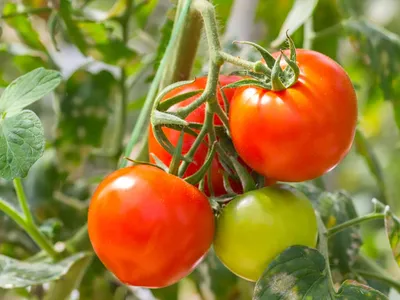
Ghana spends GHS 2.1 billion (US$168 million) annually on fresh and processed tomato imports. This significant expenditure highlights a critical gap in the nation's food production capabilities, according to researchers from the Council for Scientific and Industrial Research (CSIR).
The country's annual demand for fresh and processed tomatoes exceeds 1.4 million metric tonnes. However, domestic production satisfies only 15 to 18 percent of this requirement. This forces Ghana to import large quantities, primarily from Burkina Faso for fresh tomatoes and China and Europe for processed varieties.
This import dependency strains Ghana's foreign exchange reserves and exposes the economy to external supply shocks. The situation is exacerbated by factors such as poor access to quality seeds, limited irrigation, declining soil fertility, and pest outbreaks. These issues collectively hinder local farmers from achieving higher yields, despite the availability of over 400,000 hectares of suitable land.
Dr. Michael Kwabena Osei, a Principal Research Scientist at the CSIR Crop Research Institute, stated that Ghana's reliance on imported seeds contributes significantly to its food import bill. He emphasized, "A country that imports its seed will always import its food." This underscores the need for robust local seed production and agricultural research.
The implications of this import reliance are far-reaching. It impacts food security, local farmer livelihoods, and the national balance of payments. Addressing these production gaps could reduce the import bill, strengthen local value chains, and retain more foreign exchange within the economy. CSIR researchers propose investments in certified seed production, improved irrigation, and better farmer extension services.
The ginger sector faces an even more severe challenge. A bacterial wilt outbreak in 2022 caused domestic production to plummet. Ghana now depends on imports for over 99 percent of its ginger, spending approximately GHS 6.3 million (US$500,000) annually. This dramatic shift has also led to a sharp increase in ginger prices, with a sack rising from GHS 250 in 2022 to GHS 6,000 in 2025.
CSIR researchers are advocating for comprehensive strategies to reverse these trends. For tomatoes, they recommend establishing a Tomato Board by 2028 and a dedicated Horticultural Research Institute by 2030. These bodies would coordinate research, seed development, processing, financing, and market integration. Such initiatives are crucial for converting Ghana's agricultural potential into commercially viable production.
The challenges in both tomato and ginger production highlight a broader vulnerability in Ghana's agricultural economy. The country's inability to meet domestic demand for key commodities leads to substantial foreign exchange outflows. This situation calls for urgent policy interventions and strategic investments to bolster local agricultural capacity and reduce import dependence.